Institute of High-Frequency Technology, Hamburg University of Technology, 21073, Hamburg, Germany.
Institute for Electronics Engineering, Friedrich-Alexander-Universität Erlangen-Nürnberg (FAU), 91058, Erlangen, Germany.
Sci Data. 2020 Sep 8;7(1):291. doi: 10.1038/s41597-020-00629-5.
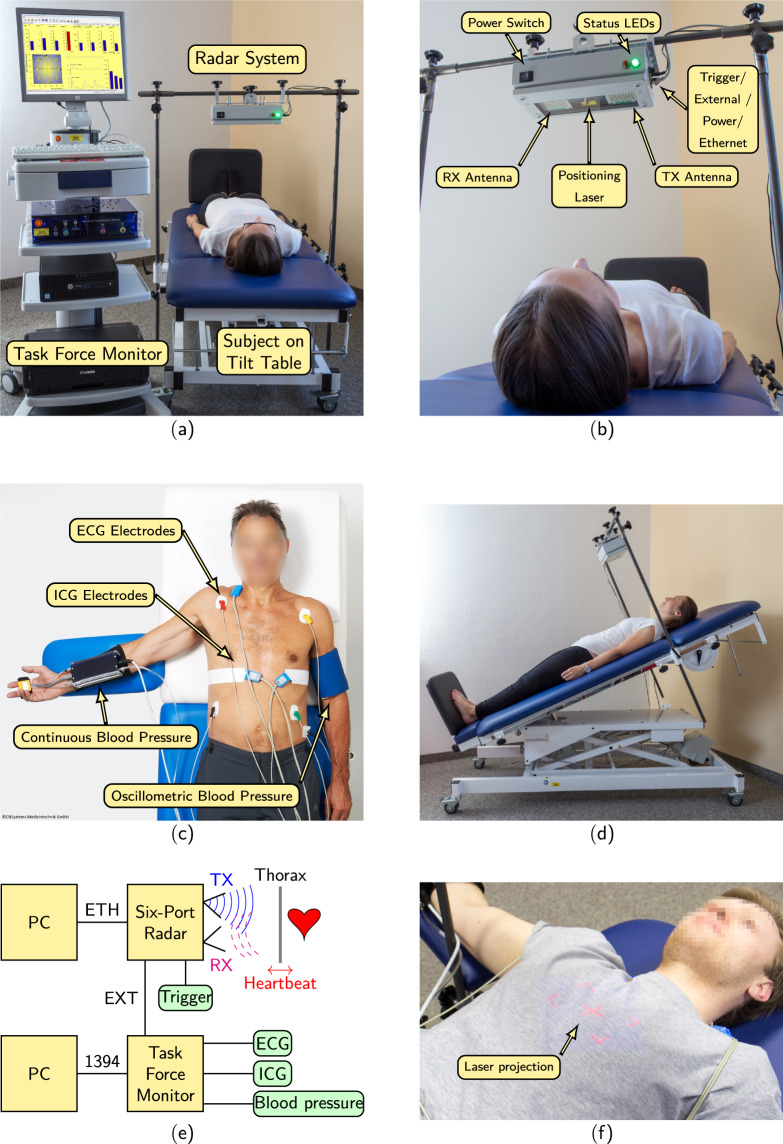
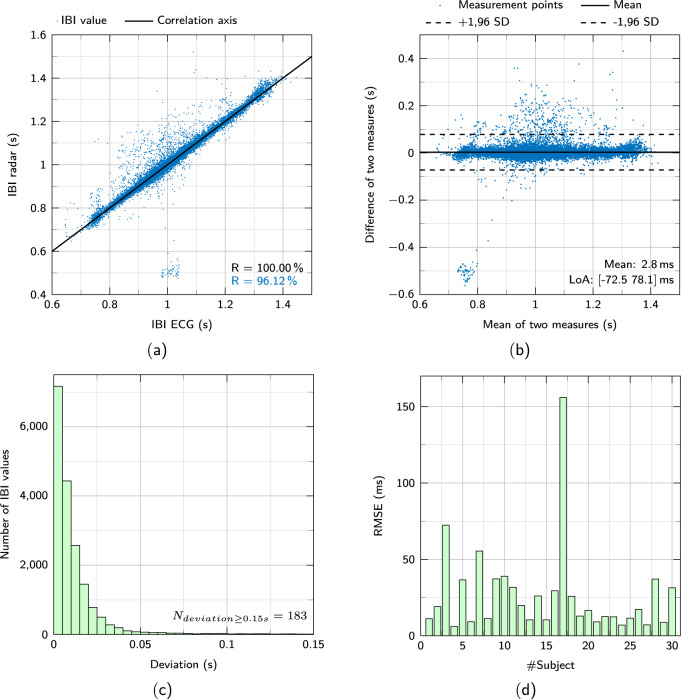
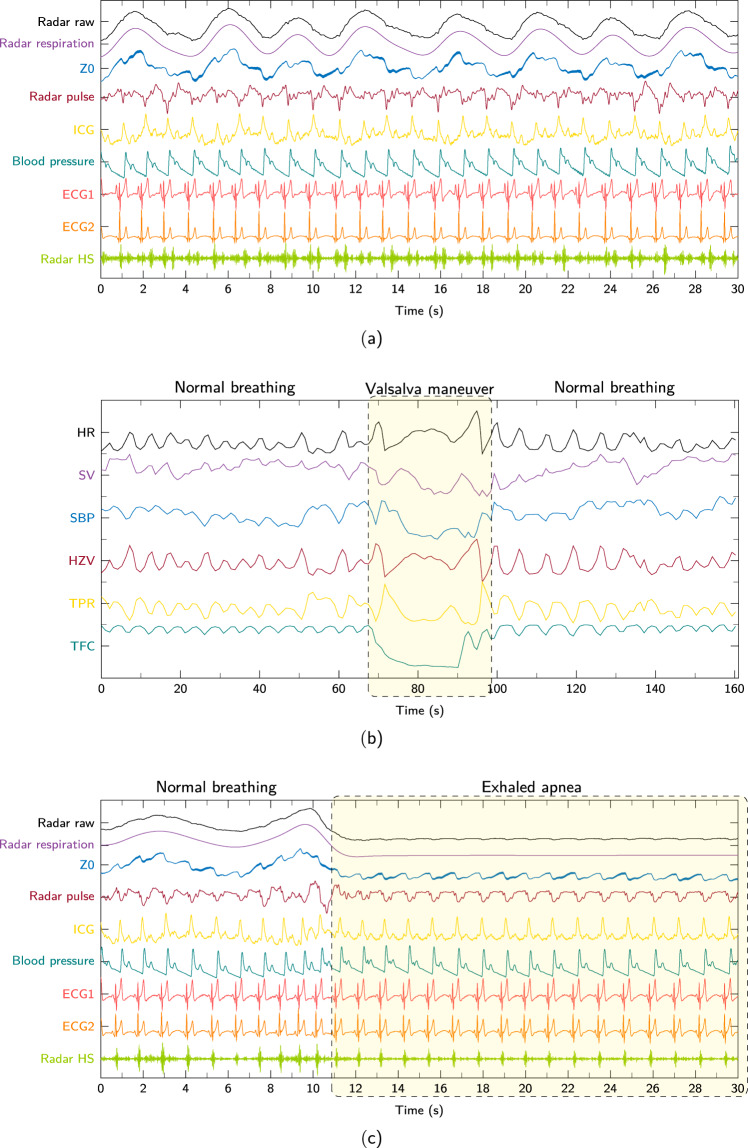
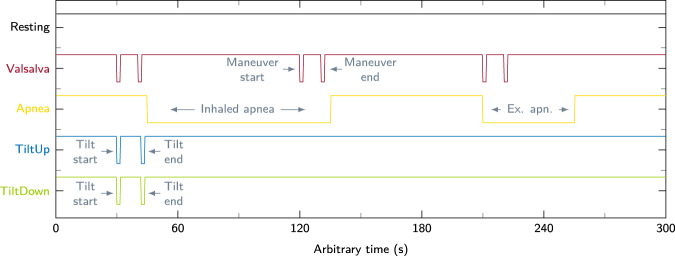
Using Radar it is possible to measure vital signs through clothing or a mattress from the distance. This allows for a very comfortable way of continuous monitoring in hospitals or home environments. The dataset presented in this article consists of 24 h of synchronised data from a radar and a reference device. The implemented continuous wave radar system is based on the Six-Port technology and operates at 24 GHz in the ISM band. The reference device simultaneously measures electrocardiogram, impedance cardiogram and non-invasive continuous blood pressure. 30 healthy subjects were measured by physicians according to a predefined protocol. The radar was focused on the chest while the subjects were lying on a tilt table wired to the reference monitoring device. In this manner five scenarios were conducted, the majority of them aimed to trigger hemodynamics and the autonomic nervous system of the subjects. Using the database, algorithms for respiratory or cardiovascular analysis can be developed and a better understanding of the characteristics of the radar-recorded vital signs can be gained.
利用雷达,可以透过衣物或床垫从远处测量生命体征。这使得在医院或家庭环境中进行非常舒适的连续监测成为可能。本文所呈现的数据集包含来自雷达和参考设备的 24 小时同步数据。所实现的连续波雷达系统基于六端口技术,工作在 ISM 频段的 24GHz。参考设备同时测量心电图、阻抗心动图和无创连续血压。30 名健康受试者根据预定义的协议由医生进行测量。雷达集中在胸部,而受试者躺在连接到参考监测设备的倾斜台上。以这种方式进行了五种情况,其中大部分旨在触发受试者的血液动力学和自主神经系统。使用该数据库,可以开发用于呼吸或心血管分析的算法,并更好地了解雷达记录的生命体征的特征。