Lalumiere Mathieu, Villeneuve Cloé, Bellavance Cassandra, Goyette Michel, Bourbonnais Daniel
School of Rehabilitation, University de Montréal, C.P. 6128, succursale Centre-ville, Montreal, H3C 3J7 Canada.
Centre for Interdisciplinary Research in Rehabilitation of Greater Montreal (CRIR), Montreal, Canada.
BMC Biomed Eng. 2020 Jan 8;2:1. doi: 10.1186/s42490-019-0035-7. eCollection 2020.
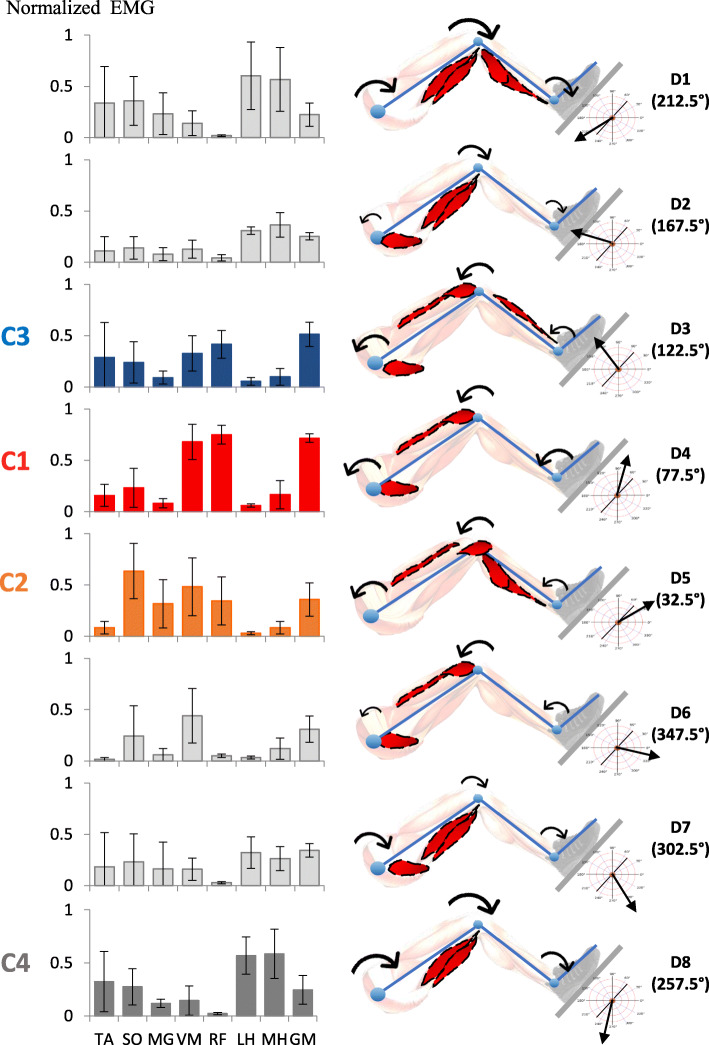
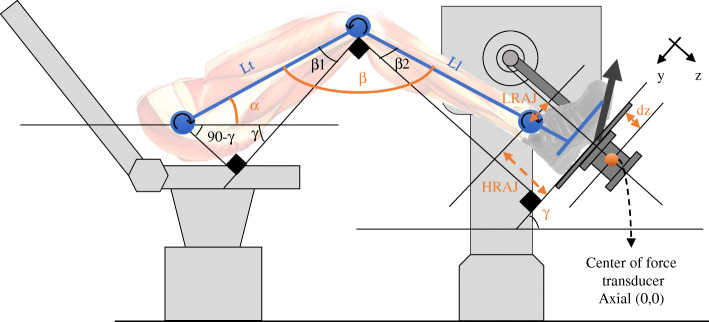
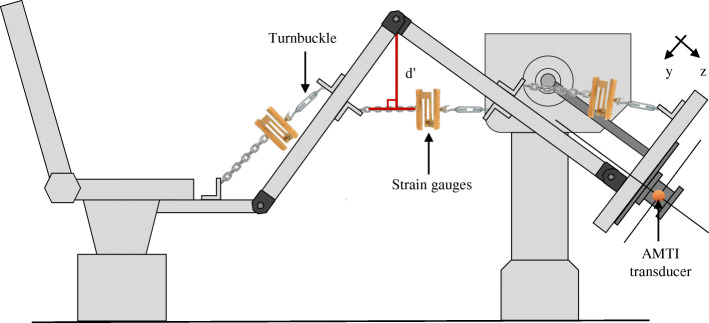
Strength and coordination of lower muscle groups typically identified in healthy subjects are two prerequisites to performing functional activities. These physical qualities can be impaired following a neurological insult. A static dynamometer apparatus that measures lower limb joint moments during directional efforts at the foot was developed to recruit different patterns of muscular activity. The objectives of the present study were to 1) validate joint moments estimated by the apparatus, and 2) to characterize lower limb joint moments and muscular activity patterns of healthy subjects during progressive static efforts. Subjects were seated in a semi-reclined position with one foot attached to a force platform interfaced with a laboratory computer. Forces and moments exerted under the foot were computed using inverse dynamics, allowing for the estimation of lower limb joint moments.To achieve the study's first objective, joint moments were validated by comparing moments of various magnitudes of force applied by turnbuckles on an instrumented leg equipped with strain gauges with those estimated by the apparatus. Concurrent validity and agreement were assessed using Pearson correlation coefficients and Bland and Altman analysis, respectively. For the second objective, joint moments and muscular activity were characterized for five healthy subjects while exerting progressive effort in eight sagittal directions. Lower limb joint moments were estimated during directional efforts using inverse dynamics. Muscular activity of eight muscles of the lower limb was recorded using surface electrodes and further analyzed using normalized root mean square data.
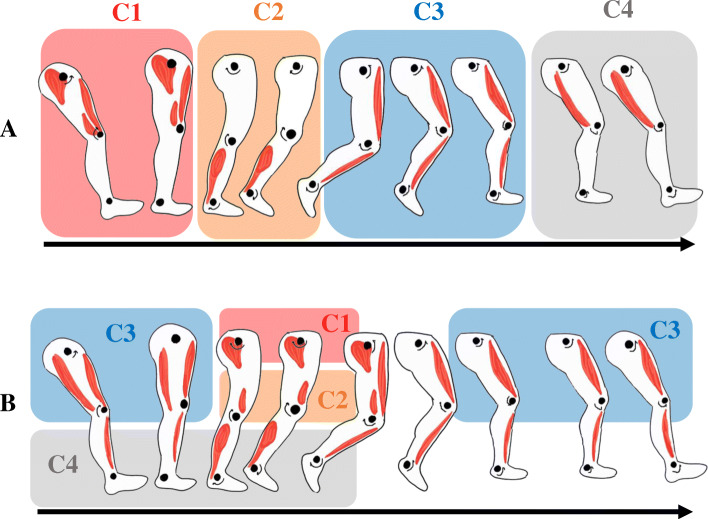
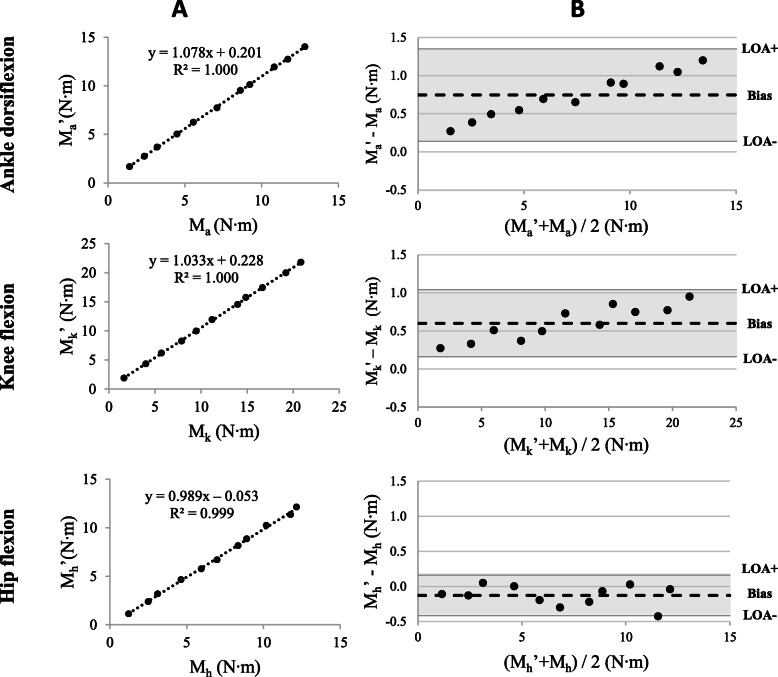
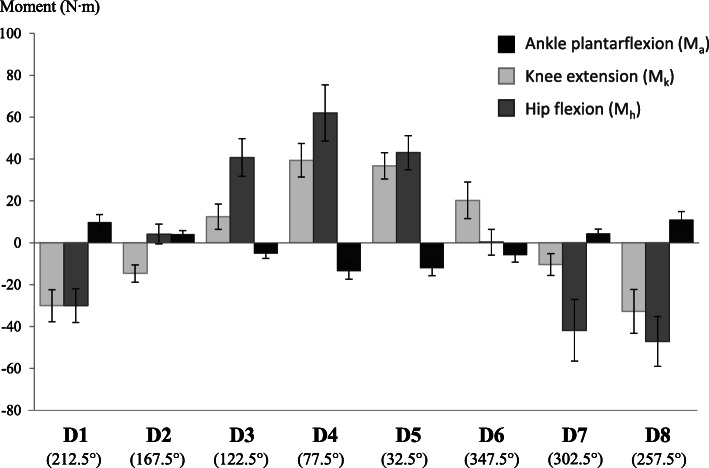
The joint moments estimated with the instrumented leg were correlated (r > 0.999) with those measured by the dynamometer. Limits of agreement ranged between 8.5 and 19.2% of the average joint moment calculated by both devices. During progressive efforts on the apparatus, joint moments and patterns of muscular activity were specific to the direction of effort. Patterns of muscular activity in four directions were similar to activation patterns reported in the literature for specific portions of gait cycle.
This apparatus provides valid joint moments exerted at the lower limbs. It is suggested that this methodology be used to recruit muscular activity patterns impaired in neurological populations.
健康受试者中通常可识别的下肢肌肉群的力量和协调性是进行功能性活动的两个先决条件。这些身体素质可能会在神经损伤后受到损害。开发了一种静态测力计装置,用于在足部进行定向用力时测量下肢关节力矩,以募集不同的肌肉活动模式。本研究的目的是:1)验证该装置估计的关节力矩;2)描述健康受试者在渐进性静态用力过程中的下肢关节力矩和肌肉活动模式。受试者半躺就座,一只脚连接到与实验室计算机相连的力平台上。使用逆动力学计算足部施加的力和力矩,从而估计下肢关节力矩。为实现研究的第一个目标,通过比较在装有应变片的仪器化腿上由螺丝扣施加的不同大小力的力矩与该装置估计的力矩,来验证关节力矩。分别使用Pearson相关系数和Bland-Altman分析评估同时效度和一致性。对于第二个目标,对五名健康受试者在八个矢状方向上进行渐进性用力时的关节力矩和肌肉活动进行了描述。在定向用力过程中使用逆动力学估计下肢关节力矩。使用表面电极记录下肢八块肌肉的肌肉活动,并使用归一化均方根数据进行进一步分析。
仪器化腿估计的关节力矩与测力计测量的关节力矩相关(r > 0.999)。一致性界限介于两台设备计算的平均关节力矩的8.5%至19.2%之间。在仪器上进行渐进性用力时,关节力矩和肌肉活动模式因用力方向而异。四个方向的肌肉活动模式与文献中报道的步态周期特定部分的激活模式相似。
该装置可提供有效的下肢关节力矩。建议使用这种方法来募集神经疾病人群中受损的肌肉活动模式。