Meng Fanqiao, Li Lijuan, Lu Fengzhu, Yue Jing, Liu Zhaoyun, Zhang Wei, Fu Rong
Department of Hematology, Tianjin Medical University General Hospital, Tianjin, China.
Front Oncol. 2020 Aug 7;10:1595. doi: 10.3389/fonc.2020.01595. eCollection 2020.
Targeting immune checkpoints, such as PD-1, represents a promising approach for cancer immunotherapy, achieving long-term disease remission rates in numerous types of cancer. T cell immunoglobulin and ITIM domain (TIGIT) is a checkpoint receptor associated with the antitumor roles of NK and T cells. Notably, the blockade of TIGIT has been revealed as a potential promising approach in cancer immunotherapy. However, the therapeutic potential of blocking TIGIT in myelodysplastic syndrome (MDS) remains unclear and further research is required to reveal their role.
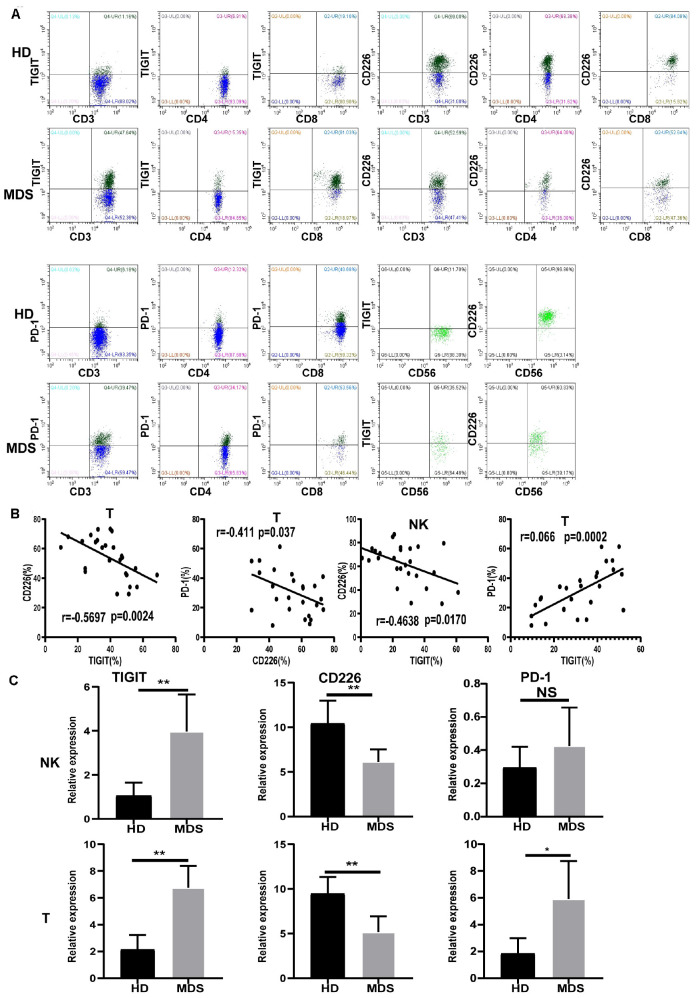
Fresh peripheral blood (PB) and bone marrow (BM) were obtained from patients with MDS and healthy donors (HDs) at the Tianjin Medical University General Hospital between January 21 2018 and March 22 2019. The present study investigated the expression levels of TIGIT on NK and T cells using flow cytometry (FCM) and PCR. In addition, other checkpoint receptors, such as CD226 and PD-1, were also investigated. To determine the mechanisms of antitumor immunity, the functions of NK and T cells expressing TIGIT were determined.
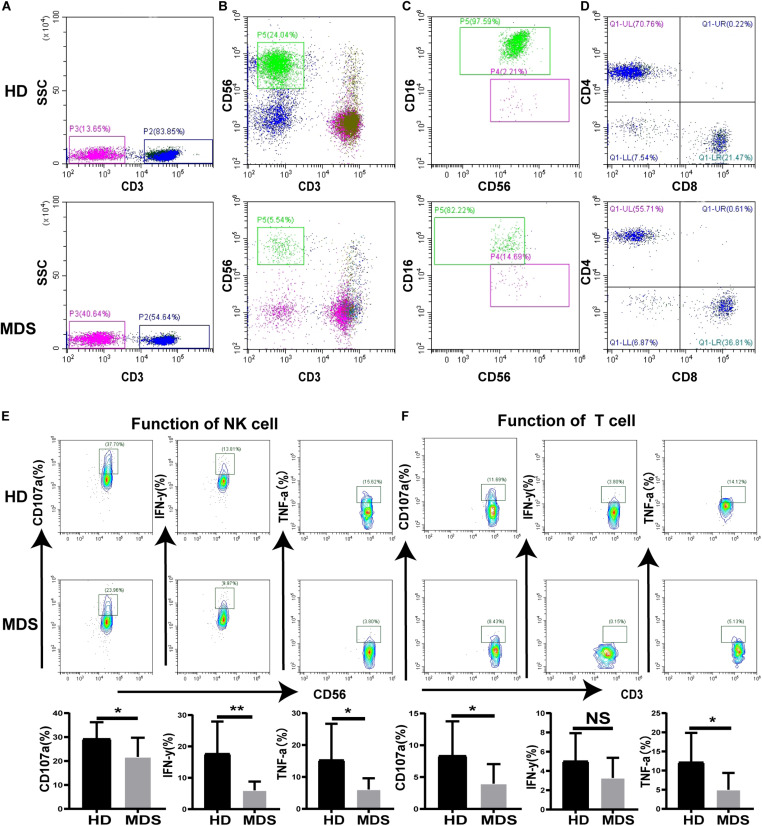
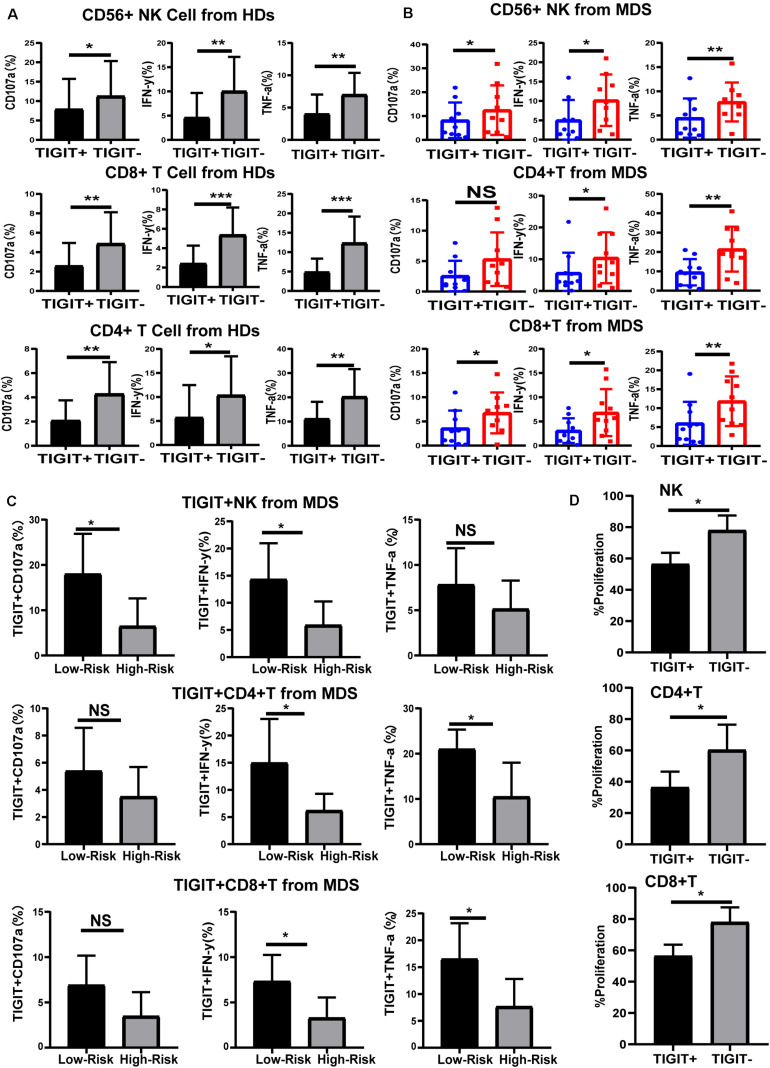
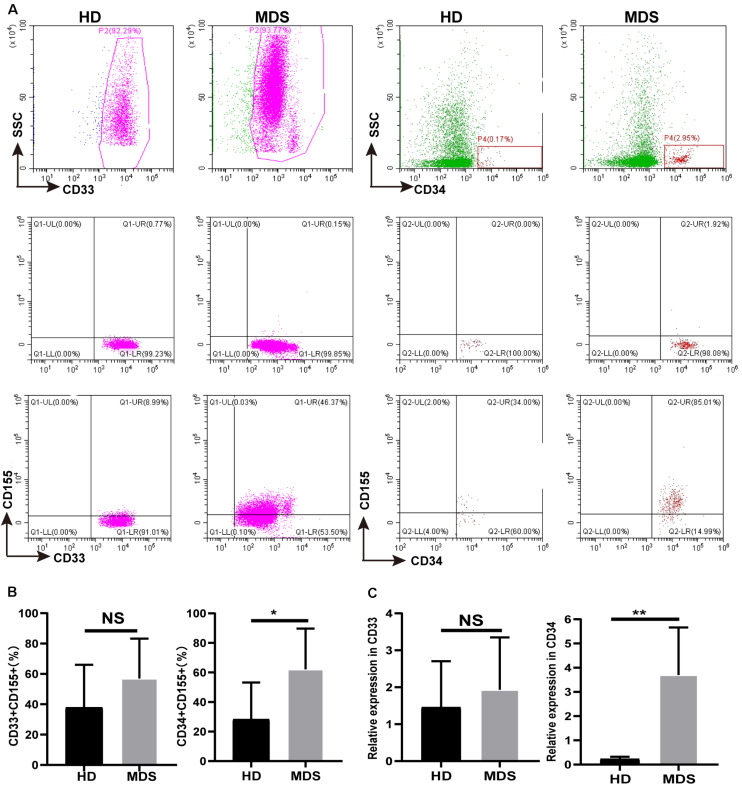
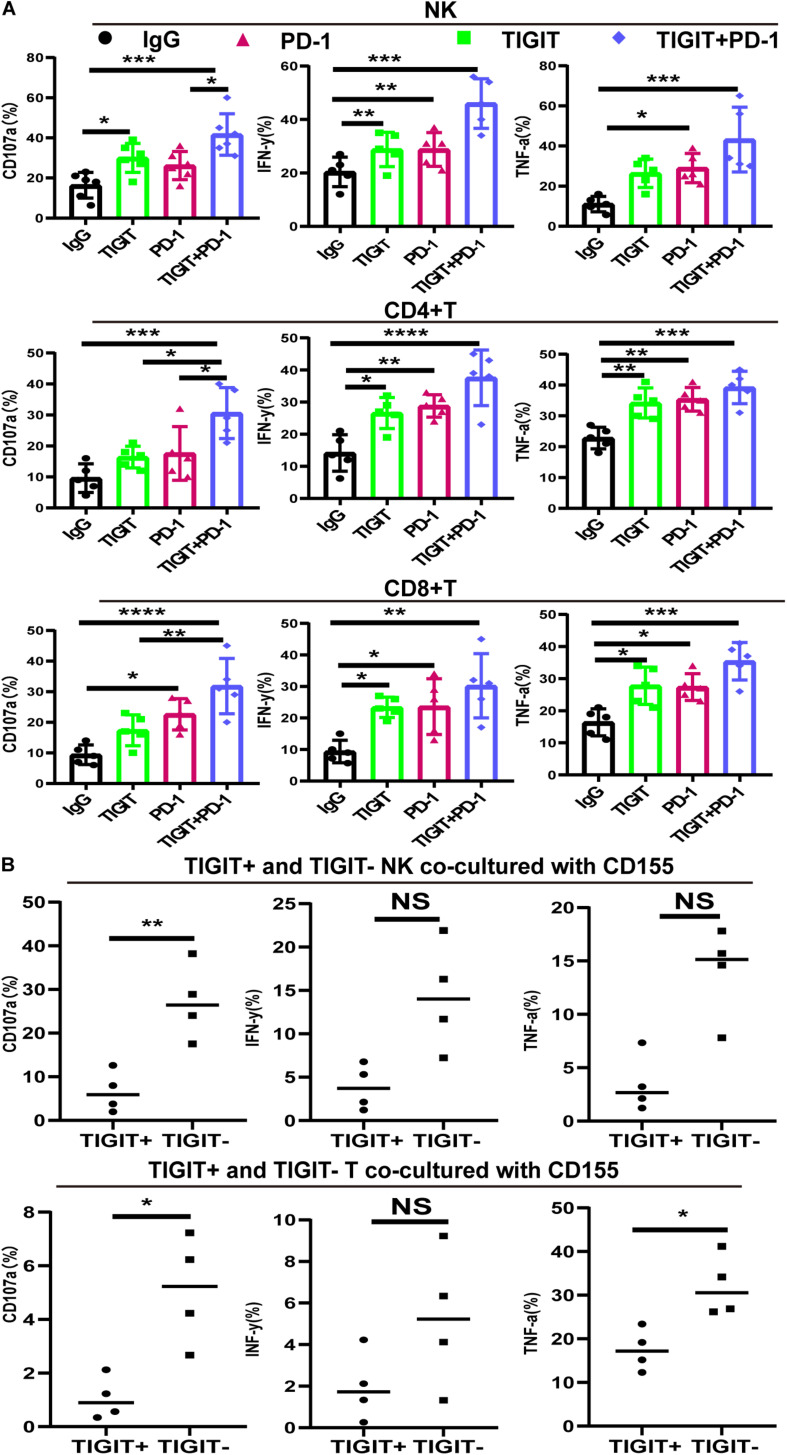
TIGIT was found to be highly expressed on NK and T cells of the PB, where it was involved in disease progression and the immune escape of MDS. The high expression levels of TIGIT were associated with decreased NK and T cell function, and significantly lower secretions of activation factors, such as CD107a, IFN-γ and TNF-α. Notably, blocking TIGIT enhanced the antitumor effects of NK and T cells.
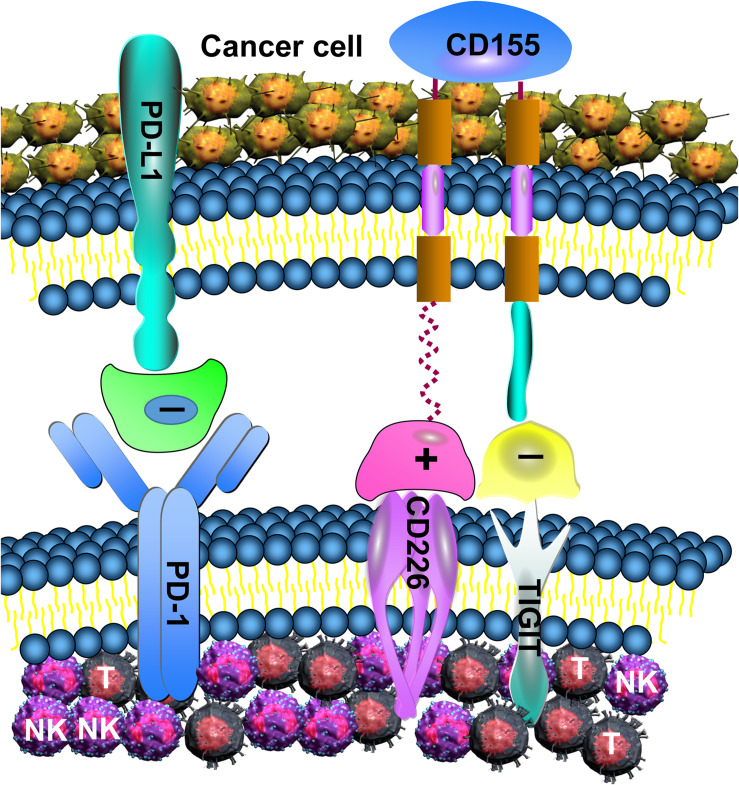
The results of the present study suggested that targeting TIGIT alone or in combination with PD-1 may be a promising anticancer therapeutic strategy in MDS.
靶向免疫检查点,如程序性死亡受体1(PD-1),是癌症免疫治疗的一种有前景的方法,可在多种癌症中实现长期疾病缓解率。T细胞免疫球蛋白和免疫酪氨酸抑制基序结构域(TIGIT)是一种与自然杀伤细胞(NK)和T细胞的抗肿瘤作用相关的检查点受体。值得注意的是,阻断TIGIT已被证明是癌症免疫治疗中一种潜在的有前景的方法。然而,在骨髓增生异常综合征(MDS)中阻断TIGIT的治疗潜力仍不清楚,需要进一步研究以揭示其作用。
2018年1月21日至2019年3月22日期间,从天津医科大学总医院的MDS患者和健康供体(HD)中获取新鲜外周血(PB)和骨髓(BM)。本研究采用流式细胞术(FCM)和聚合酶链反应(PCR)研究NK和T细胞上TIGIT的表达水平。此外,还研究了其他检查点受体,如CD226和PD-1。为了确定抗肿瘤免疫的机制,测定了表达TIGIT的NK和T细胞的功能。
发现TIGIT在PB的NK和T细胞上高表达,它参与了MDS的疾病进展和免疫逃逸。TIGIT的高表达与NK和T细胞功能降低以及激活因子如CD107a、干扰素-γ(IFN-γ)和肿瘤坏死因子-α(TNF-α)的分泌显著减少有关。值得注意的是,阻断TIGIT增强了NK和T细胞的抗肿瘤作用。
本研究结果表明,单独靶向TIGIT或与PD-1联合靶向可能是MDS中有前景的抗癌治疗策略。