Christian Doppler Laboratory for Innovative Gut Health Concepts of Livestock, Institute of Animal Nutrition and Functional Plant Compounds, Department for Farm Animals and Veterinary Public Health, University of Veterinary Medicine, Vienna, Austria.
BIOMIN Research Center, BIOMIN Holding GmbH, Tulln, Austria.
Metabolomics. 2020 Sep 9;16(9):96. doi: 10.1007/s11306-020-01712-z.
Feeding of high-grain diets is common in cows during early lactation, but increases the odds of metabolic derailments, which can likely be detected as undesirable shifts in the serum metabolome signature.
The present study aimed to identify the metabolic signatures of the serum metabolome of early lactation dairy cows switched from a moderate to a high-grain diet.
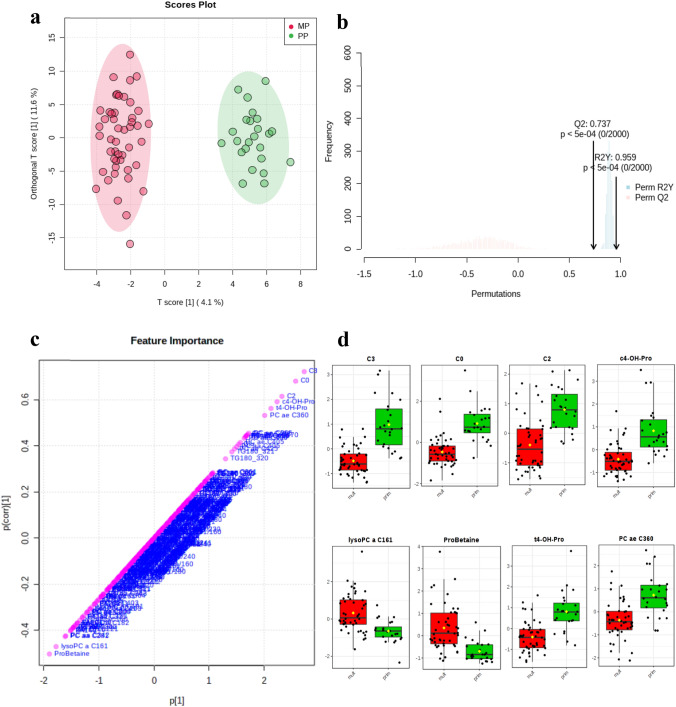
Targeted ESI-LC-MS/MS-based metabolomics was used to characterize metabolic alterations in the serum of early lactation multiparous (MP, n = 16) and primiparous (PP, n = 8) Simmental cows, according to parity and feeding phase. Data were analysed using different data mining approaches.
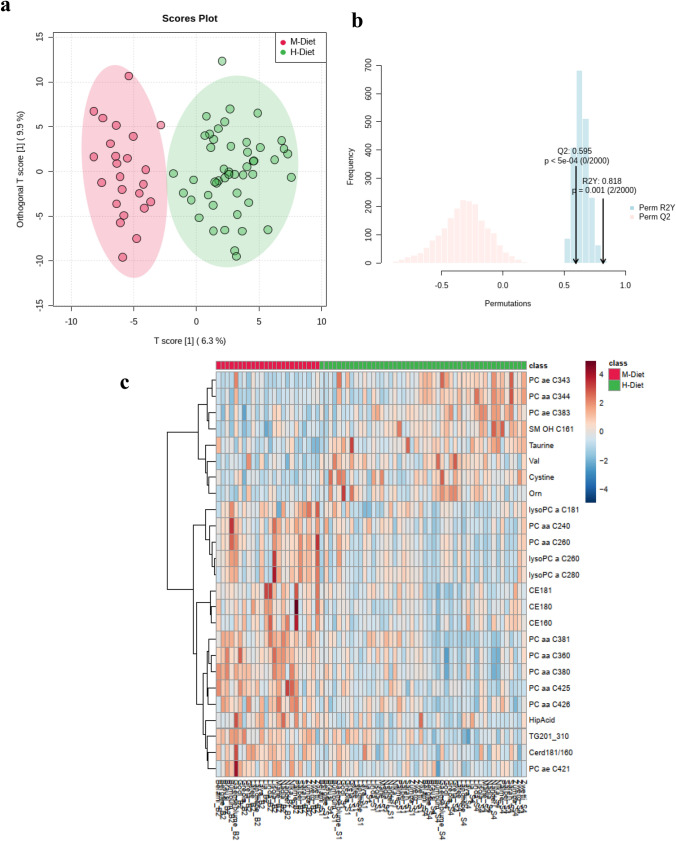
Carnitine, acetylcarnitine, propionoylcarnitine, amino acid related compounds cis-4-hydroxyproline, trans-4-hydroxyproline, proline betaine, lysophosphatidylcholine PC a C16:1 and phosphatidylcholine PC ae C36:0 were identified as the key metabolites distinguishing MP from PP cows. A different serum metabolite composition during moderate and high-grain diet was also evident. Notably, cows fed high grain diet had higher serum concentrations of primary bile acids and triglycerides, but lower levels of conjugated bile acids and carboxylic acids during the first week in grain. Amino acids valine, cystine and taurine together with lysophosphatidylcholine PC a C26:0 and several phosphatidylcholines were classified as important features for cluster separation.
Our study greatly expands earlier observations on dietary effects on serum metabolome composition of cows. The altered metabolomic fingerprints clearly distinguishable by diet and cow parity hold potential to be used as early diagnostic tools for cows experiencing grain-induced metabolic disturbances.
在奶牛泌乳早期,高谷物日粮的喂养很常见,但会增加代谢紊乱的可能性,这可能表现在血清代谢组特征的不良变化上。
本研究旨在确定从中等谷物日粮切换到高谷物日粮的泌乳早期奶牛的血清代谢组的代谢特征。
采用靶向 ESI-LC-MS/MS 代谢组学方法,根据胎次和饲养阶段,对泌乳早期经产(MP,n=16)和初产(PP,n=8)西门塔尔奶牛的血清代谢变化进行特征分析。使用不同的数据挖掘方法对数据进行分析。
鉴定出肉碱、乙酰肉碱、丙酰肉碱、与氨基酸有关的化合物顺式-4-羟脯氨酸、反式-4-羟脯氨酸、脯氨酸甜菜碱、溶血磷脂酰胆碱 PC a C16:1 和磷脂酰胆碱 PC ae C36:0 是区分 MP 和 PP 奶牛的关键代谢物。中等和高谷物日粮期间的血清代谢物组成也存在差异。值得注意的是,高谷物日粮组奶牛在谷物喂养的第一周血清中初级胆汁酸和甘油三酯浓度较高,但结合胆汁酸和羧酸浓度较低。天冬氨酸、半胱氨酸和牛磺酸以及溶血磷脂酰胆碱 PC a C26:0 和几种磷脂酰胆碱被归类为聚类分离的重要特征。
本研究极大地扩展了之前关于日粮对奶牛血清代谢组组成影响的观察。通过饮食和奶牛胎次明显区分的代谢组指纹图谱具有作为因谷物引起的代谢紊乱而经历的奶牛的早期诊断工具的潜力。