Department of Biochemistry and Biophysics, Texas A&M University, College Station, TX, USA.
Department of Chemistry, Texas A&M University, College Station, TX, USA.
Nature. 2020 Nov;587(7835):673-677. doi: 10.1038/s41586-020-2749-z. Epub 2020 Sep 10.
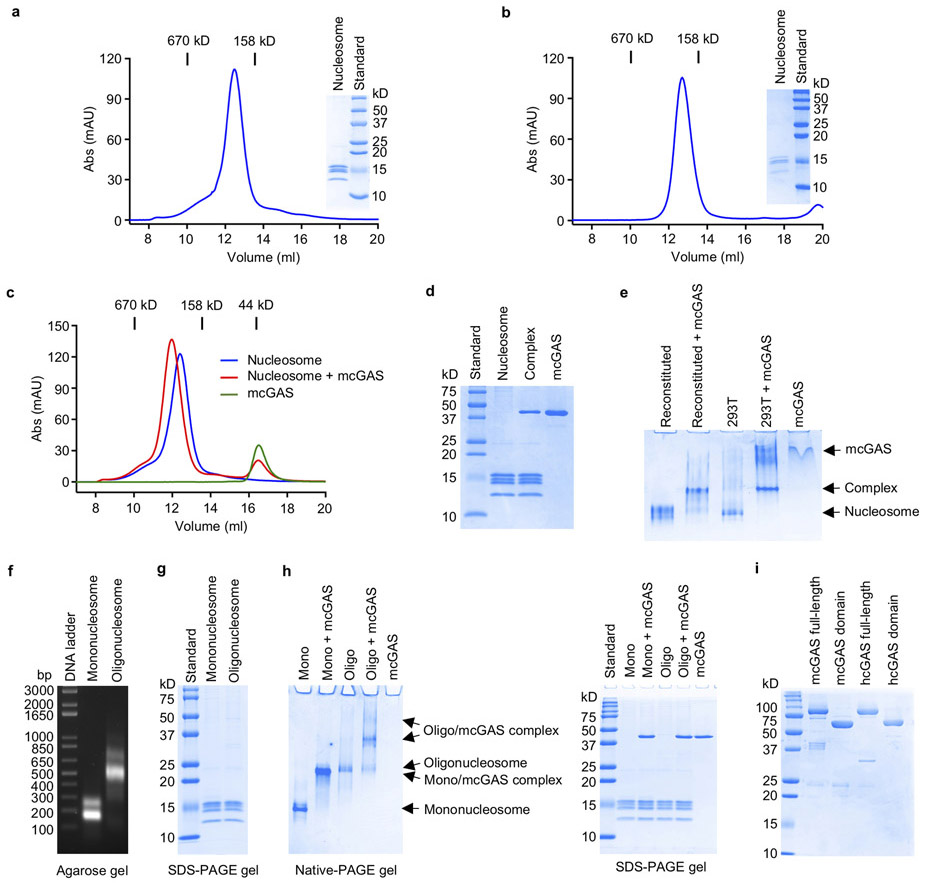
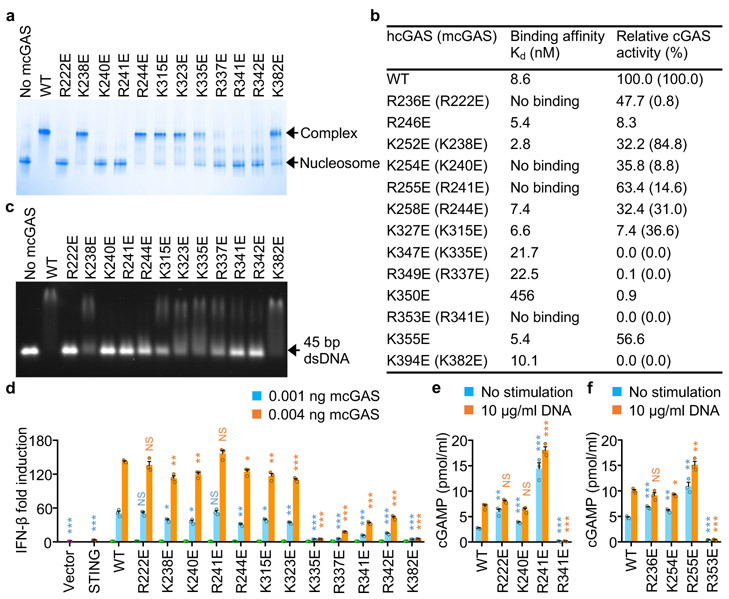
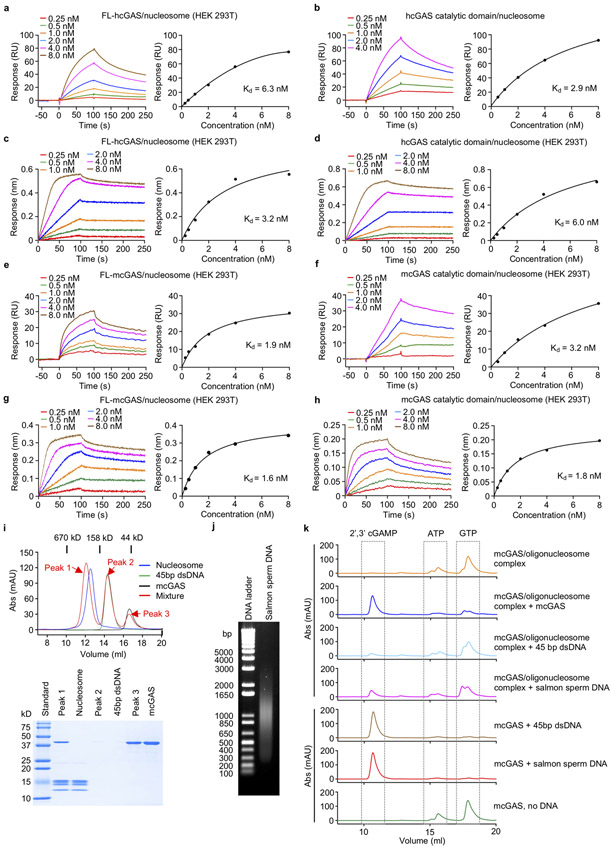
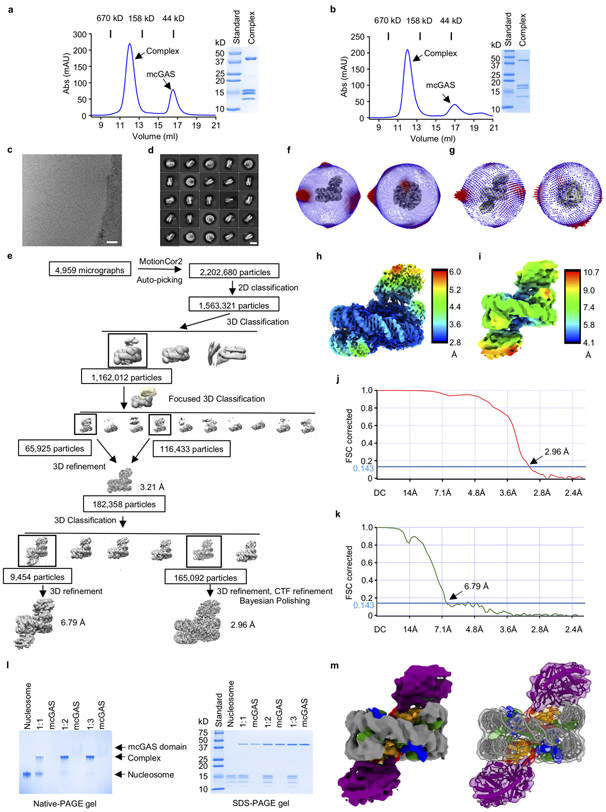
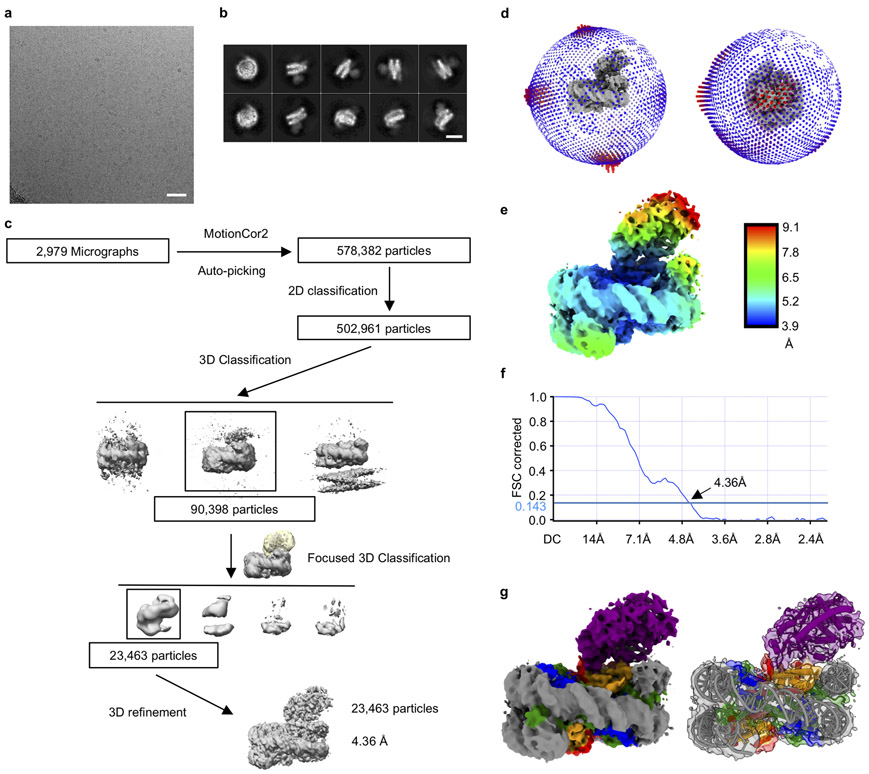
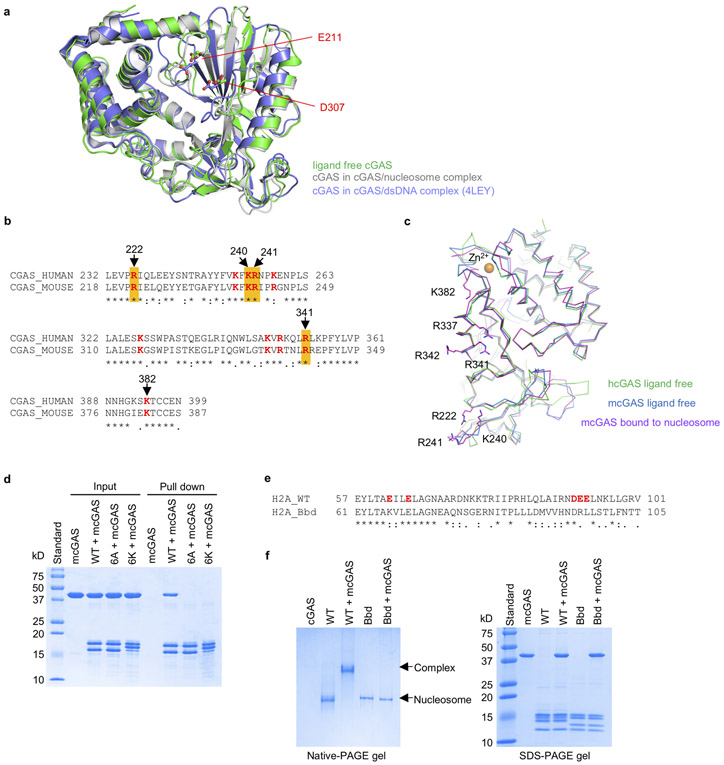
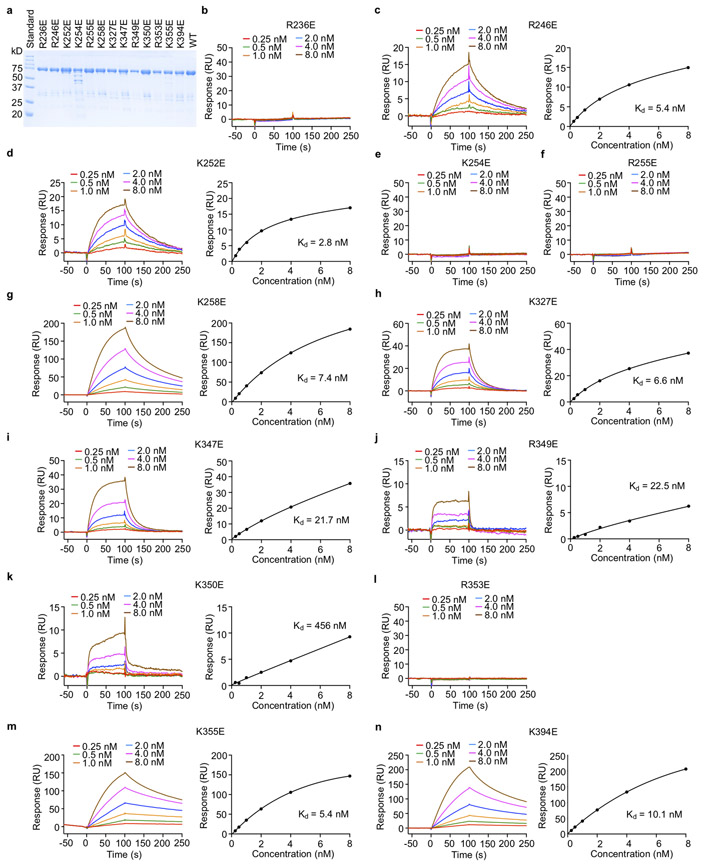
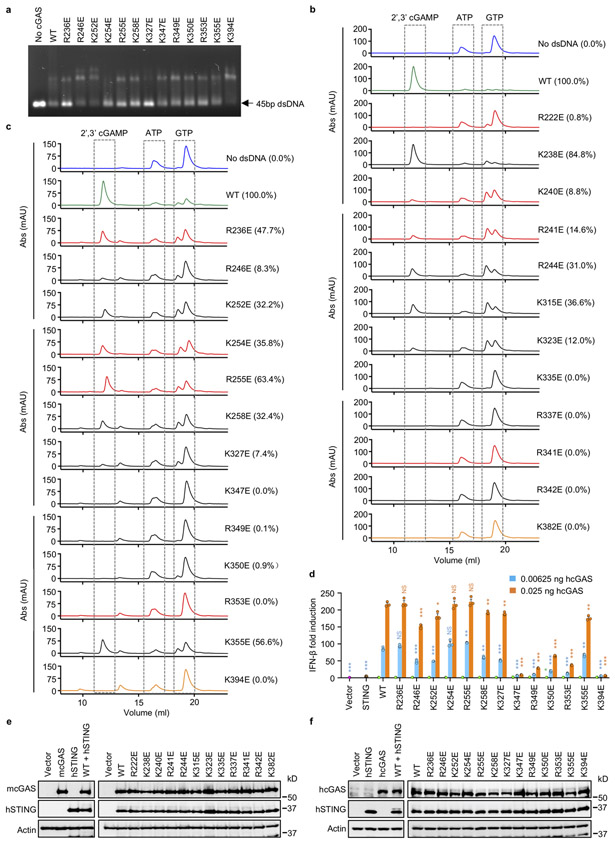
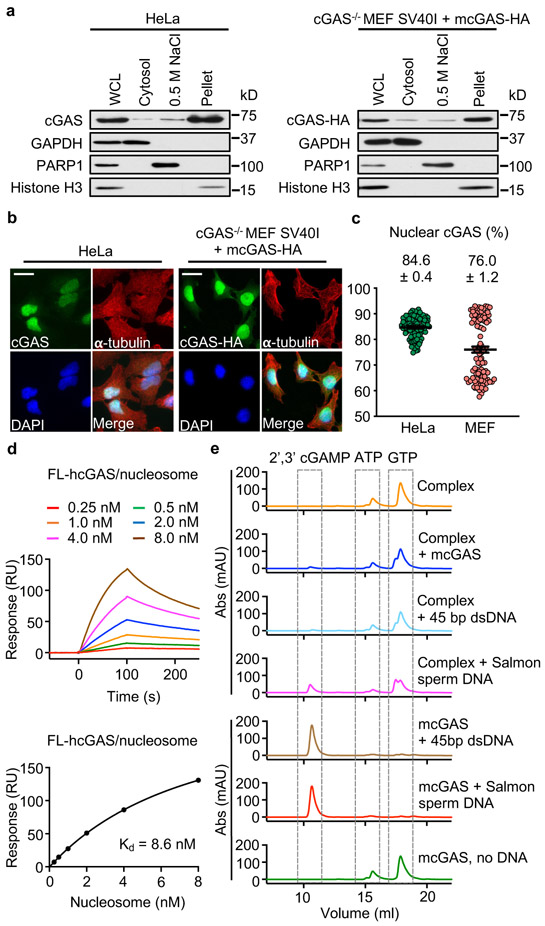
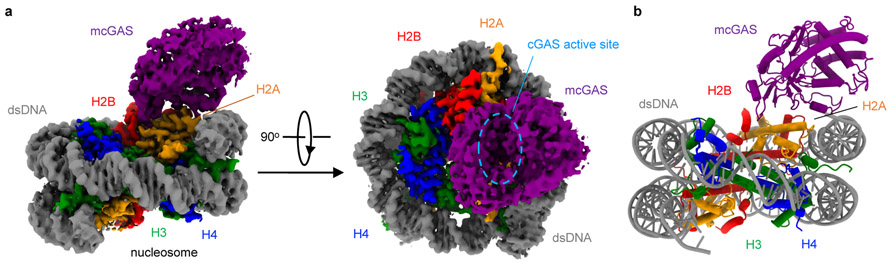
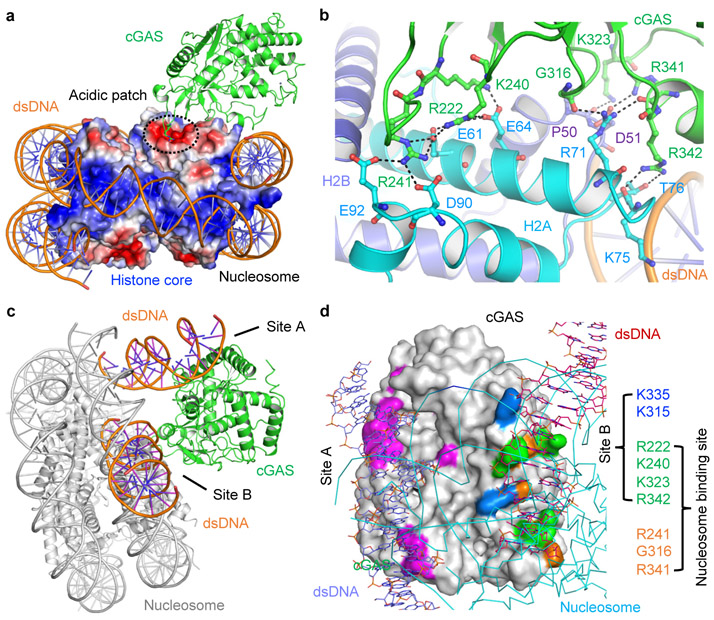
Nucleic acids derived from pathogens induce potent innate immune responses. Cyclic GMP-AMP synthase (cGAS) is a double-stranded DNA sensor that catalyses the synthesis of the cyclic dinucleotide cyclic GMP-AMP, which mediates the induction of type I interferons through the STING-TBK1-IRF3 signalling axis. cGAS was previously thought to not react with self DNA owing to its cytosolic localization; however, recent studies have shown that cGAS is localized mostly in the nucleus and has low activity as a result of tight nuclear tethering. Here we show that cGAS binds to nucleosomes with nanomolar affinity and that nucleosome binding potently inhibits its catalytic activity. To elucidate the molecular basis of cGAS inactivation by nuclear tethering, we determined the structure of mouse cGAS bound to human nucleosome by cryo-electron microscopy. The structure shows that cGAS binds to a negatively charged acidic patch formed by histones H2A and H2B via its second DNA-binding site. High-affinity nucleosome binding blocks double-stranded DNA binding and maintains cGAS in an inactive conformation. Mutations of cGAS that disrupt nucleosome binding alter cGAS-mediated signalling in cells.
核酸来源于病原体诱导强烈的先天免疫反应。环鸟苷酸-腺苷酸合酶(cGAS)是一种双链 DNA 传感器,它催化环二核苷酸环鸟苷酸-腺苷酸的合成,通过 STING-TBK1-IRF3 信号轴介导 I 型干扰素的诱导。cGAS 以前由于其在细胞质中的定位而被认为不会与自身 DNA 反应;然而,最近的研究表明,cGAS 主要定位于细胞核中,由于与核的紧密结合而活性较低。在这里,我们表明 cGAS 以纳摩尔亲和力结合核小体,并且核小体结合强烈抑制其催化活性。为了阐明核结合对 cGAS 失活的分子基础,我们通过冷冻电镜确定了与人类核小体结合的小鼠 cGAS 的结构。该结构表明,cGAS 通过其第二个 DNA 结合位点与组蛋白 H2A 和 H2B 形成的带负电荷的酸性斑块结合。高亲和力核小体结合阻止双链 DNA 结合并使 cGAS 保持非活性构象。破坏核小体结合的 cGAS 突变改变了细胞中介导的 cGAS 信号。