
术前全身免疫炎症指数和预后营养指数与上尿路尿路上皮癌患者生存率的相关性
Association of preoperative systemic Immune-inflammation Index and Prognostic Nutritional Index with survival in patients with Upper Tract Urothelial Carcinoma.
作者信息
Zheng Yangqin, Yu Dongdong, Yu Zhixian, Zhao Dewei, Chen Yuming, Chen Wu, Li Yeping, Lin Binwei, Gao Xiaomin
机构信息
Department of Hematology, The Third Clinical Institute Affiliated to Wenzhou Medical University, People's Hospital of Wenzhou, Wenzhou, Zhejiang province, 325006, P.R. China.
Department of Andrology, The First Affiliated Hospital of Wenzhou Medical University, Wenzhou, Zhejiang province, 325006, P.R. China.
出版信息
J Cancer. 2020 Jul 25;11(19):5665-5677. doi: 10.7150/jca.44915. eCollection 2020.
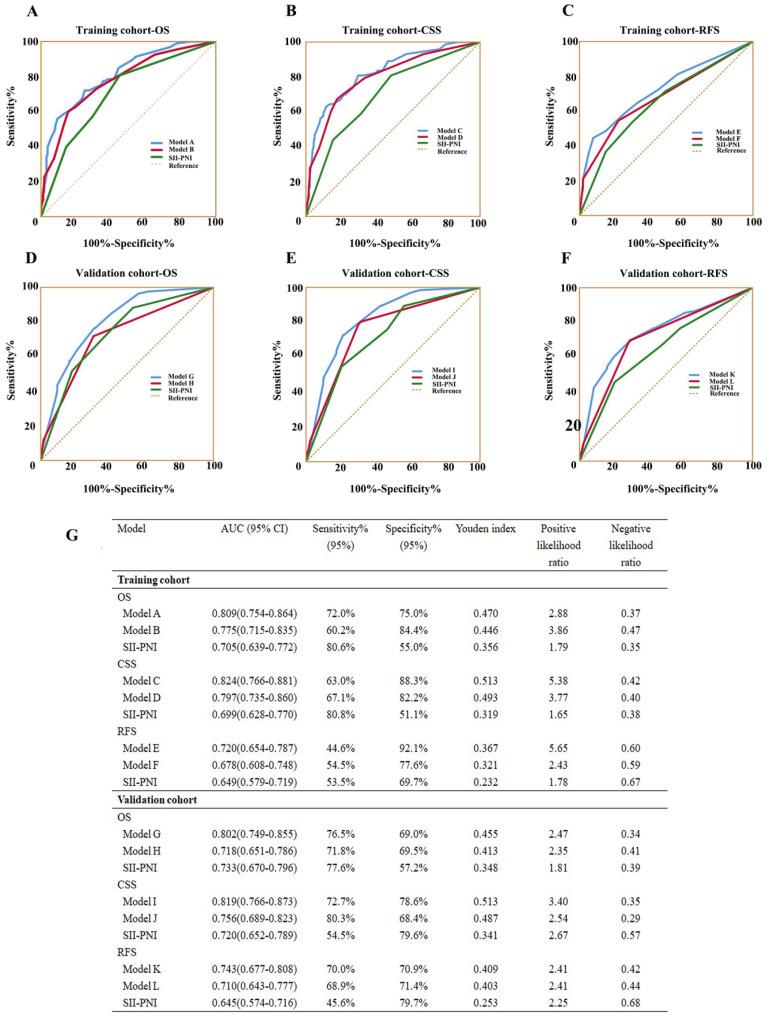
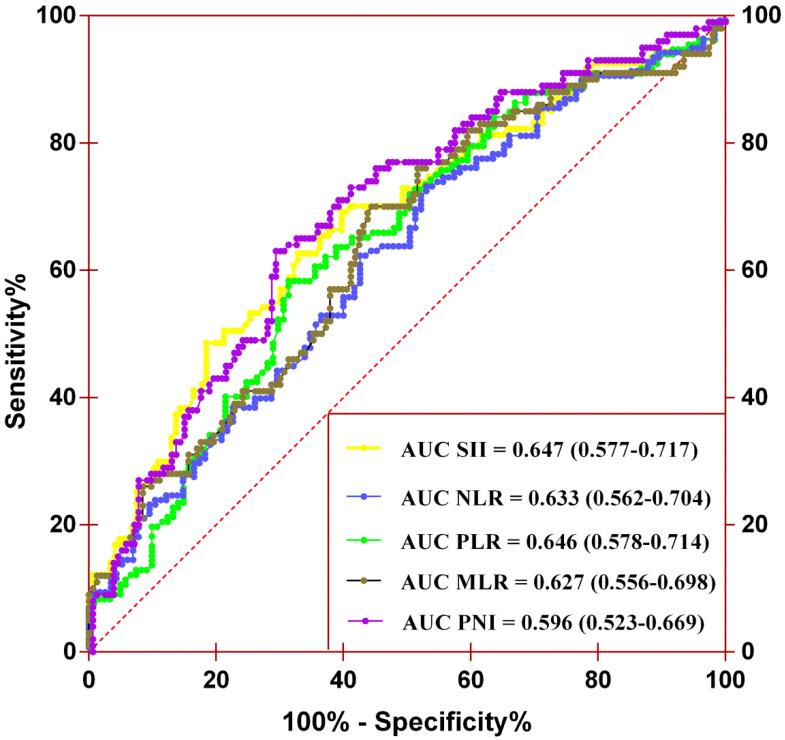
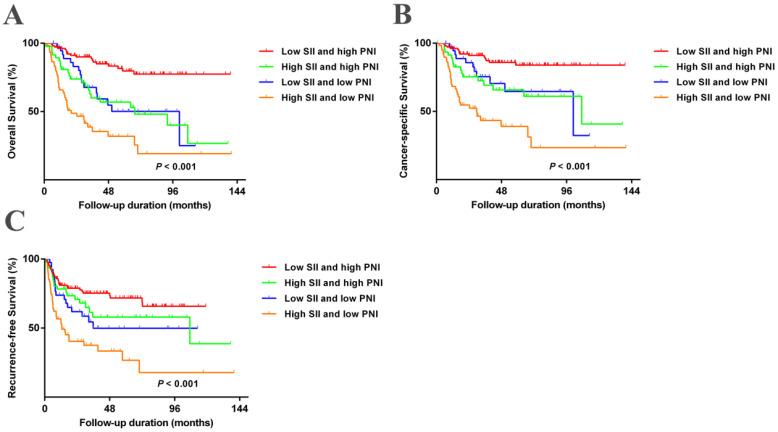
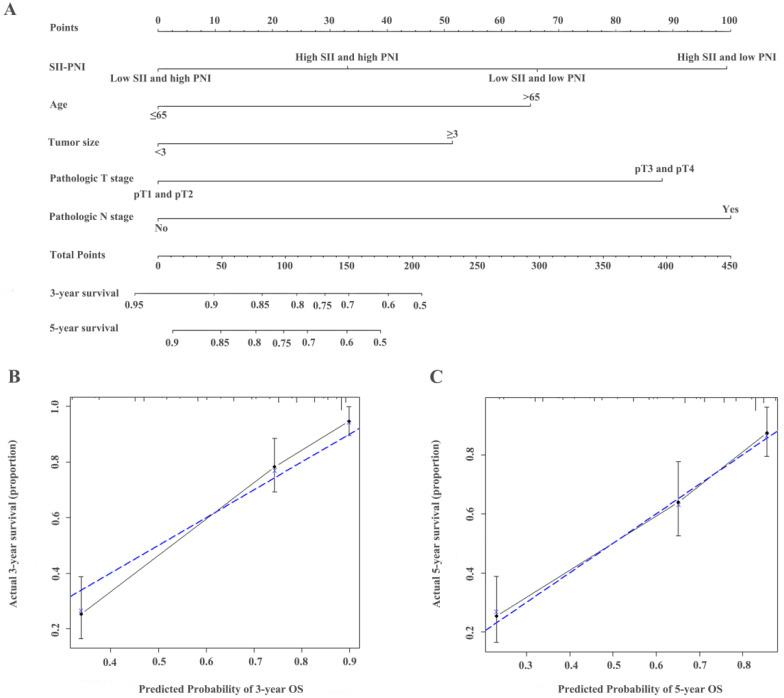
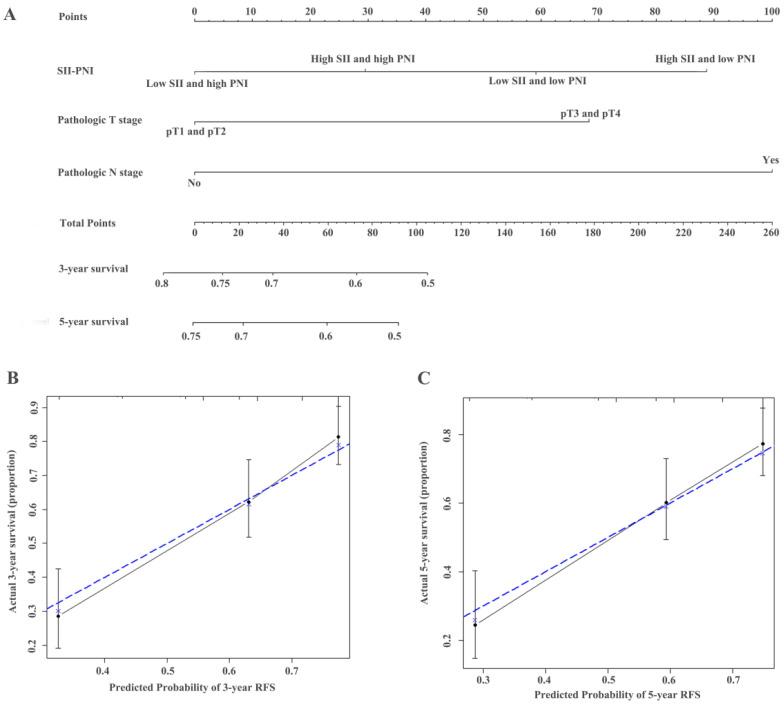
Both systemic inflammation response and malnutrition are closely related to poor prognosis in patients with certain types of solid tumor. This study investigated the prognostic value of the preoperative combination of systemic immune-inflammation index and prognostic nutritional index (SII-PNI) in patients with upper tract urothelial carcinoma (UTUC) undergoing radical nephroureterectomy (RNU). The predictive ability of SII-PNI was developed and further validated in a cohort of 525 UTUC patients (253 in the training cohort and 272 in the validation cohort) who received RNU. Survival analysis indicated that a SII ≥672.44 was significantly associated with worse overall survival (OS), cancer-specific survival (CSS), and recurrence-free survival (RFS) while a PNI ≥47.83 was associated with better survival outcomes (All -values < 0.05). The combination of simultaneously SII ≥672.44 and PNI <47.83 was a powerful independent risk factor for OS, CSS, and RFS ( < 0.05). The SII-PNI had the largest area under the curve (AUC) compared to that for SII or PNI alone and other clinical factors, indicating its superior for predicting survival. In addition, the incorporation of the SII-PNI into established nomograms or current clinical parameters such as pathologic T stage and N stage, achieved higher c-indexes or larger AUC than without, indicating that adding SII-PNI helped predict prognosis. All results were found in the training cohort and confirmed in the validation cohort. SII-PNI was a strong independent predictor of UTUC patients after RNU.
全身炎症反应和营养不良均与某些类型实体瘤患者的不良预后密切相关。本研究调查了术前全身免疫炎症指数与预后营养指数(SII-PNI)联合应用在上尿路尿路上皮癌(UTUC)患者行根治性肾输尿管切除术(RNU)中的预后价值。在一组接受RNU的525例UTUC患者(训练队列253例,验证队列272例)中对SII-PNI的预测能力进行了开发并进一步验证。生存分析表明,SII≥672.44与较差的总生存期(OS)、癌症特异性生存期(CSS)和无复发生存期(RFS)显著相关,而PNI≥47.83与较好的生存结果相关(所有P值<0.05)。SII≥672.44且PNI<47.83的联合情况是OS、CSS和RFS的有力独立危险因素(P<0.05)。与单独的SII或PNI以及其他临床因素相比,SII-PNI的曲线下面积(AUC)最大,表明其在预测生存方面具有优越性。此外,将SII-PNI纳入既定的列线图或当前临床参数(如病理T分期和N分期)中,比不纳入时具有更高的c指数或更大的AUC,表明添加SII-PNI有助于预测预后。所有结果在训练队列中得到发现,并在验证队列中得到证实。SII-PNI是RNU术后UTUC患者的有力独立预测指标。


 Zotero 插件