Pritchett Michael A, Camidge D Ross, Patel Manu, Khatri Jamil, Boniol Steven, Friedman Elke K, Khomani Abderrahim, Dalia Samir, Baker-Neblett Katherine, Plagnol Vincent, Howarth Karen D, Jones Gregory R, Rosenfeld Nitzan, Morris Clive D, Govindan Ramaswamy
FirstHealth of the Carolinas, Pinehurst Medical Clinic, Pinehurst, NC.
University of Colorado-Denver, Aurora, CO.
JCO Precis Oncol. 2019 Apr 25;3. doi: 10.1200/PO.18.00299. eCollection 2019.
Guidelines advocate molecular profiling in the evaluation of advanced non-small-cell lung cancer (NSCLC) and support the use of plasma circulating tumor DNA (ctDNA)-based profiling for patients with insufficient tissue. Thorough prospective clinical validation studies of next-generation sequencing (NGS)-based ctDNA assays are lacking. We report the multicentered prospective clinical validation of the InVision ctDNA assay in patients with advanced untreated NSCLC.
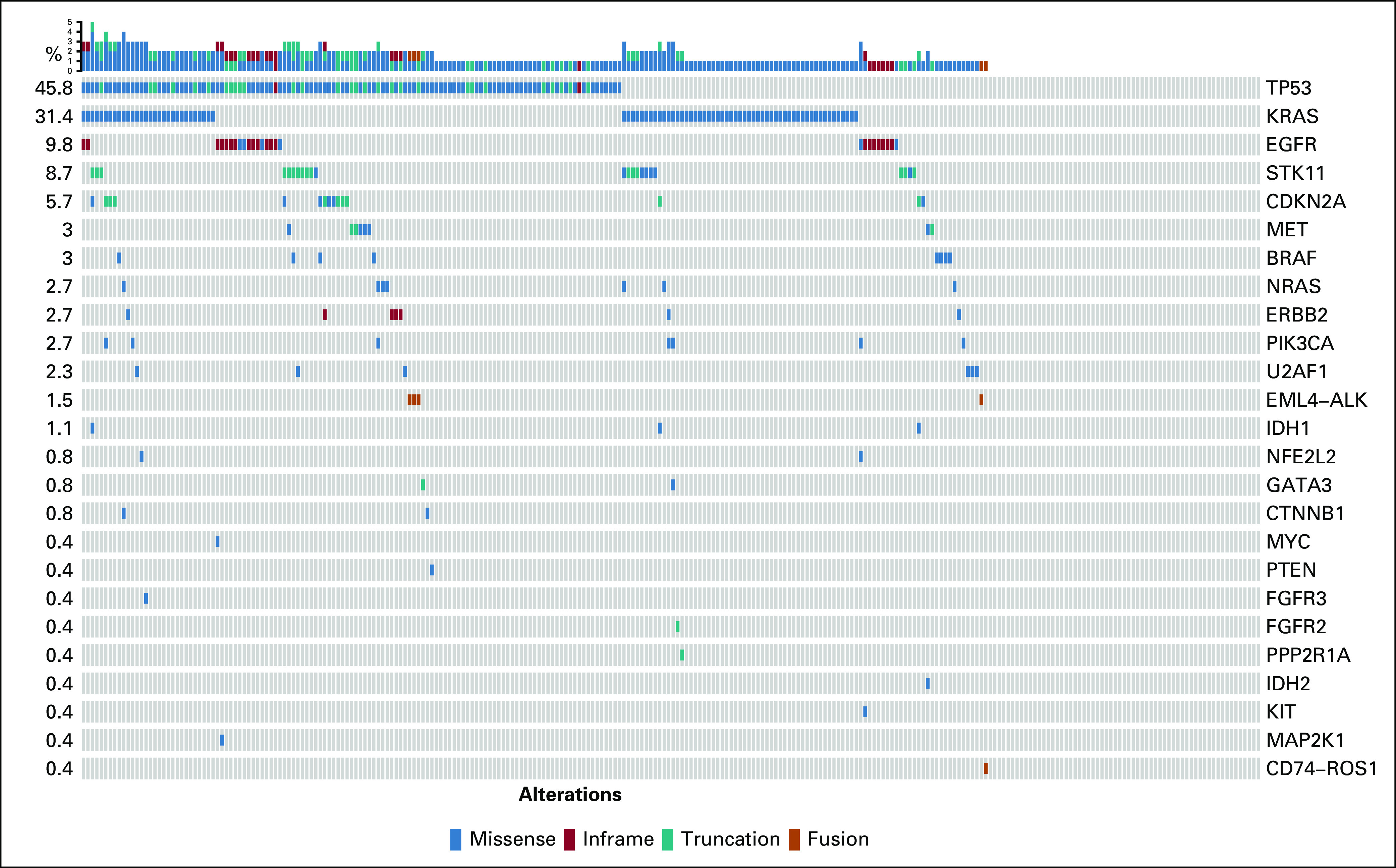
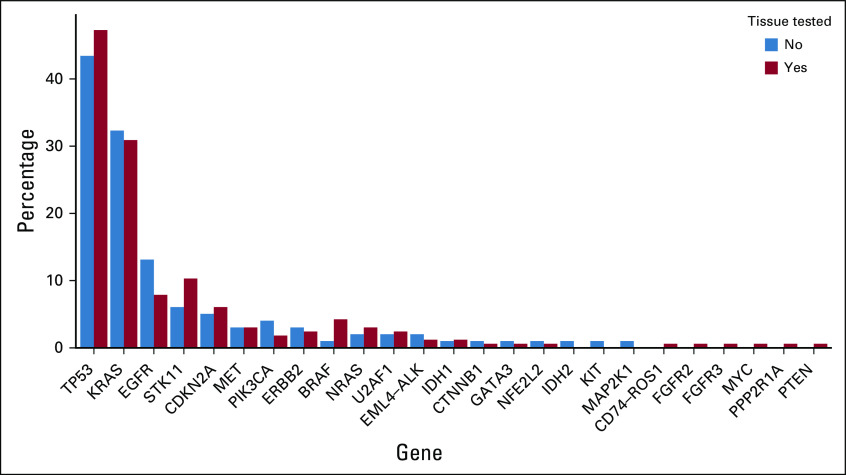
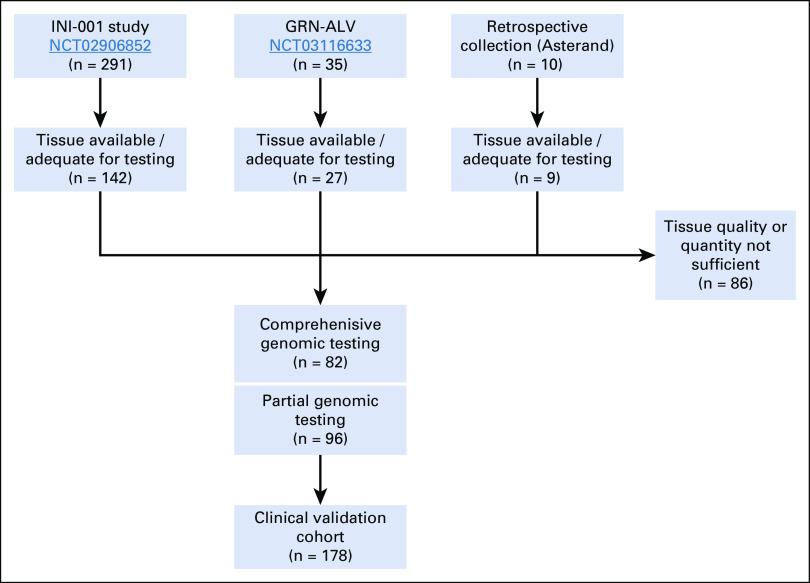
A total of 264 patients with untreated advanced NSCLC were prospectively recruited, and their plasma was analyzed using a ctDNA NGS assay for detection of genomic alterations in 36 commonly mutated genes. Tumor tissue was available in 178 patients for molecular profiling for comparison with plasma profiling. The remaining 86 patients were included to compare ctDNA profiles in patients with and without tissue for profiling.
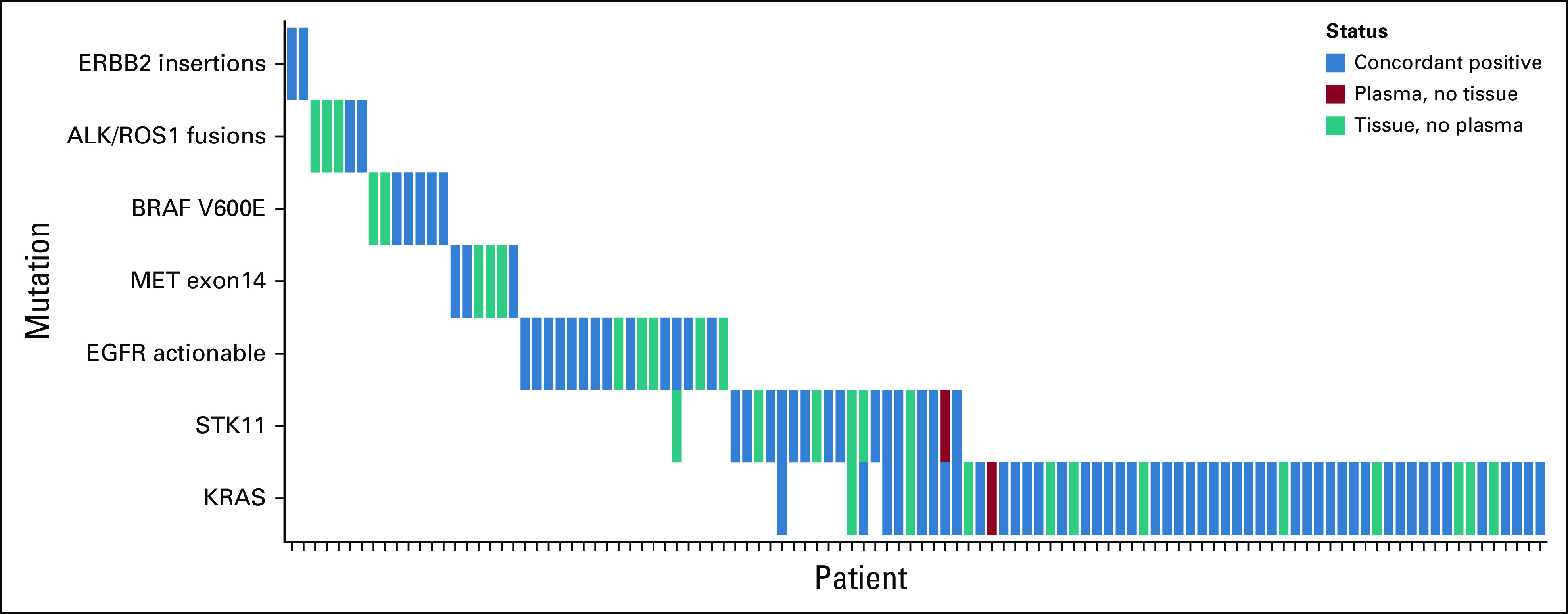
Concordance of InVisionFirst with matched tissue profiling was 97.8%, with 82.9% positive predictive value, 98.5% negative predictive value, 70.6% sensitivity, and 99.2% specificity. Considering specific alterations in eight genes that most influence patient management, the positive predictive value was 97.8%, with 97.1% negative predictive value, 73.9% sensitivity, and 99.8% specificity. Across the entire study, 48 patients with actionable alterations were identified by ctDNA testing compared with only 38 by tissue testing. ctDNA NGS reported either an actionable alteration or an alteration generally considered mutually exclusive for such actionable changes in 53% of patients.
The liquid biopsy NGS assay demonstrated excellent concordance with tissue profiling in this multicenter, prospective, clinical validation study, with sensitivity and specificity equivalent to Food and Drug Administration-approved single-gene ctDNA assays. The use of plasma-based molecular profiling using NGS led to the detection of 26% more actionable alterations compared with standard-of-care tissue testing in this study.
指南提倡在晚期非小细胞肺癌(NSCLC)评估中进行分子分析,并支持对组织不足的患者使用基于血浆循环肿瘤DNA(ctDNA)的分析。基于下一代测序(NGS)的ctDNA检测缺乏全面的前瞻性临床验证研究。我们报告了InVision ctDNA检测在未治疗的晚期NSCLC患者中的多中心前瞻性临床验证。
前瞻性招募了总共264例未治疗的晚期NSCLC患者,并使用ctDNA NGS检测分析其血浆,以检测36个常见突变基因中的基因组改变。178例患者有肿瘤组织可用于分子分析,以与血浆分析进行比较。其余86例患者被纳入,以比较有和没有组织用于分析的患者的ctDNA谱。
InVisionFirst与匹配的组织分析的一致性为97.8%,阳性预测值为82.9%,阴性预测值为98.5%,敏感性为70.6%,特异性为99.2%。考虑到对患者管理影响最大的八个基因的特定改变,阳性预测值为97.8%,阴性预测值为97.1%,敏感性为73.9%,特异性为99.8%。在整个研究中,通过ctDNA检测鉴定出48例有可操作改变的患者,而通过组织检测仅鉴定出38例。ctDNA NGS在53%的患者中报告了可操作改变或通常被认为与这种可操作改变相互排斥的改变。
在这项多中心、前瞻性临床验证研究中,液体活检NGS检测与组织分析显示出极好的一致性,其敏感性和特异性与美国食品药品监督管理局批准的单基因ctDNA检测相当。在本研究中,与标准治疗组织检测相比,使用基于NGS的血浆分子分析可多检测出26%的可操作改变。