Volchuk Allen, Ye Anna, Chi Leon, Steinberg Benjamin E, Goldenberg Neil M
Program in Cell Biology, Hospital for Sick Children, 686 Bay St, Toronto, ON, M5G 0A4, Canada.
Department of Physiology, The University of Toronto, 1 King's College Circle, Toronto, ON, M5S 1A8, Canada.
Nat Commun. 2020 Sep 11;11(1):4561. doi: 10.1038/s41467-020-18443-3.
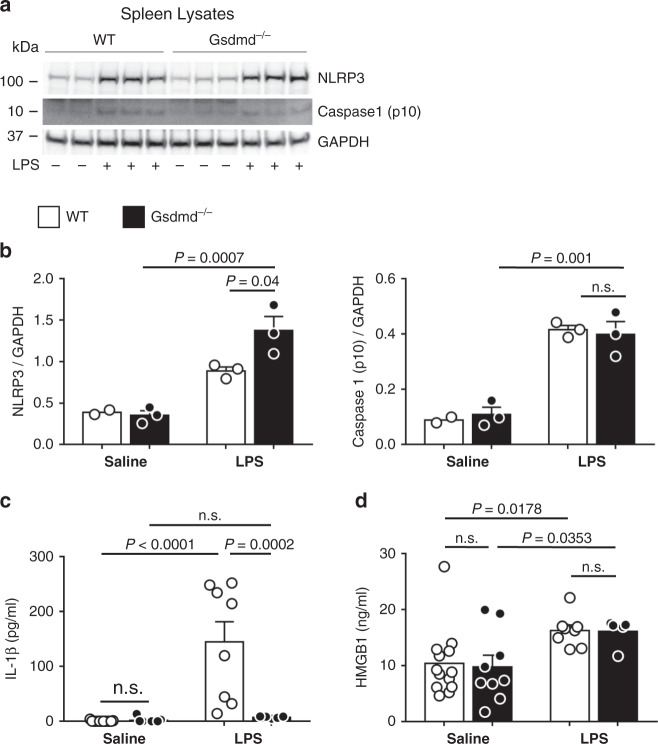
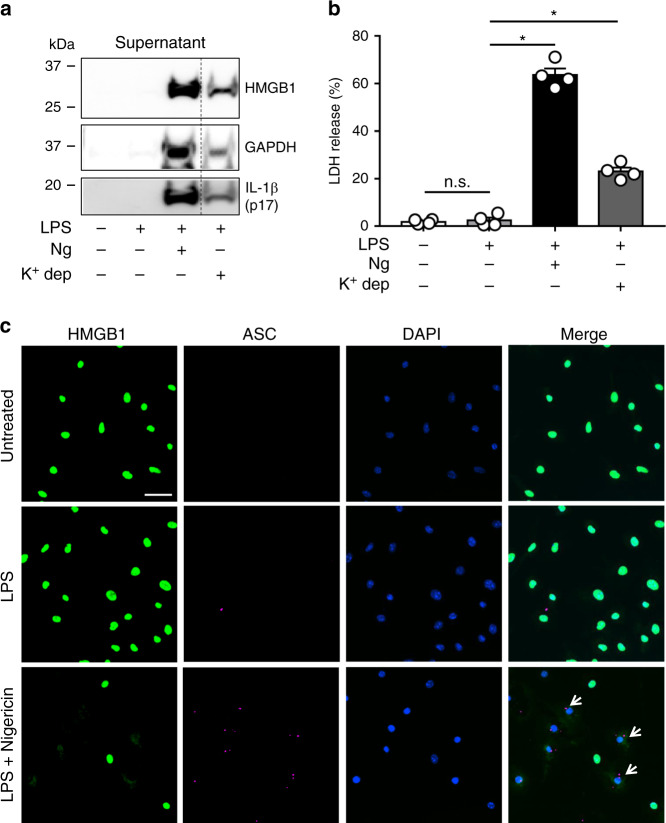
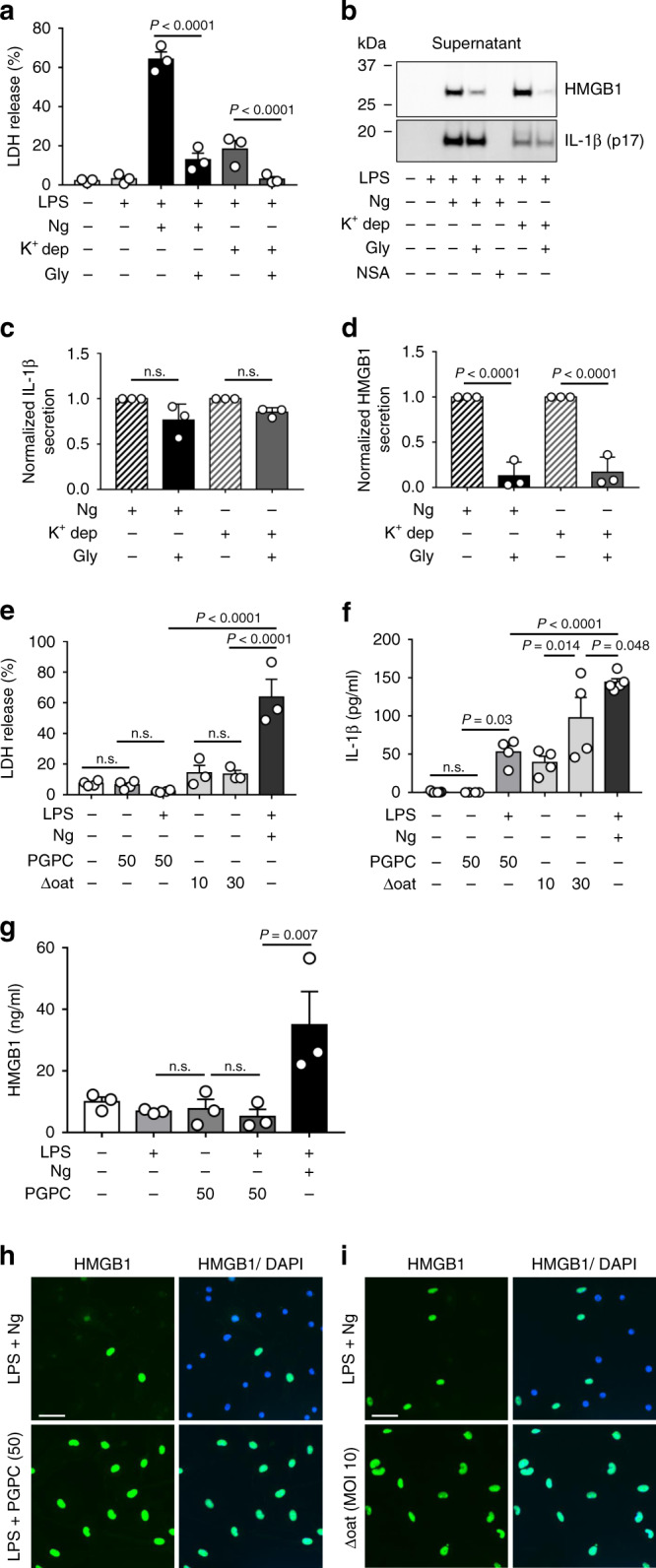
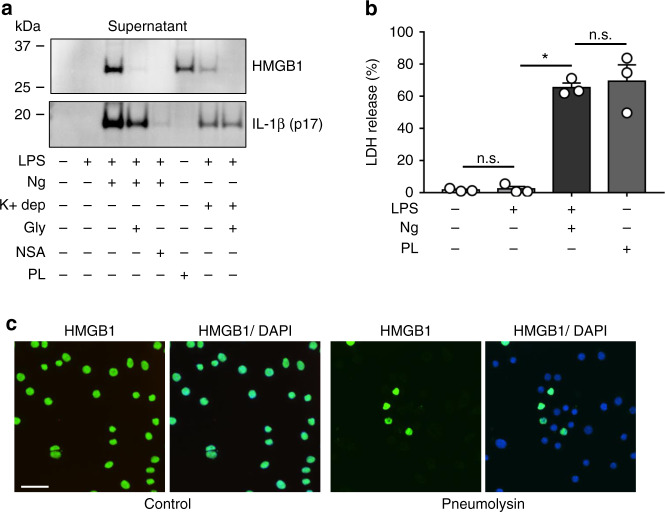
The protein high-mobility group box 1 (HMGB1) is released into the extracellular space in response to many inflammatory stimuli, where it is a potent signaling molecule. Although research has focused on downstream HMGB1 signaling, the means by which HMGB1 exits the cell is controversial. Here we demonstrate that HMGB1 is not released from bone marrow-derived macrophages (BMDM) after lipopolysaccharide (LPS) treatment. We also explore whether HMGB1 is released via the pore-forming protein gasdermin D after inflammasome activation, as is the case for IL-1β. HMGB1 is only released under conditions that cause cell lysis (pyroptosis). When pyroptosis is prevented, HMGB1 is not released, despite inflammasome activation and IL-1β secretion. During endotoxemia, gasdermin D knockout mice secrete HMGB1 normally, yet secretion of IL-1β is completely blocked. Together, these data demonstrate that in vitro HMGB1 release after inflammasome activation occurs after cellular rupture, which is probably inflammasome-independent in vivo.
蛋白质高迁移率族蛋白B1(HMGB1)在受到多种炎症刺激时会释放到细胞外空间,在那里它是一种强效信号分子。尽管研究主要集中在HMGB1的下游信号传导,但HMGB1离开细胞的方式仍存在争议。在此我们证明,脂多糖(LPS)处理后,骨髓来源的巨噬细胞(BMDM)不会释放HMGB1。我们还探讨了炎性小体激活后,HMGB1是否像白细胞介素-1β(IL-1β)那样通过成孔蛋白gasdermin D释放。HMGB1仅在导致细胞裂解(细胞焦亡)的条件下释放。当细胞焦亡被阻止时,尽管炎性小体激活且IL-1β分泌,但HMGB1不会释放。在内毒素血症期间,gasdermin D基因敲除小鼠能正常分泌HMGB1,但IL-1β的分泌则完全被阻断。总之,这些数据表明,炎性小体激活后,体外HMGB1的释放发生在细胞破裂之后,而在体内这可能与炎性小体无关。