Cancer Immunology, Regeneron Pharmaceuticals, Tarrytown, NY, USA.
Oncoimmunology. 2020 May 13;9(1):1758602. doi: 10.1080/2162402X.2020.1758602.
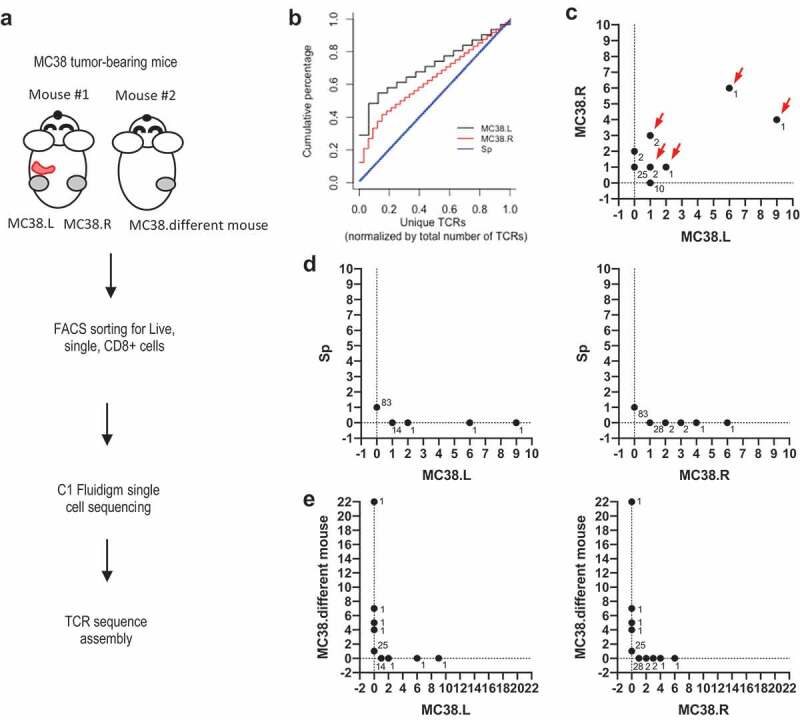
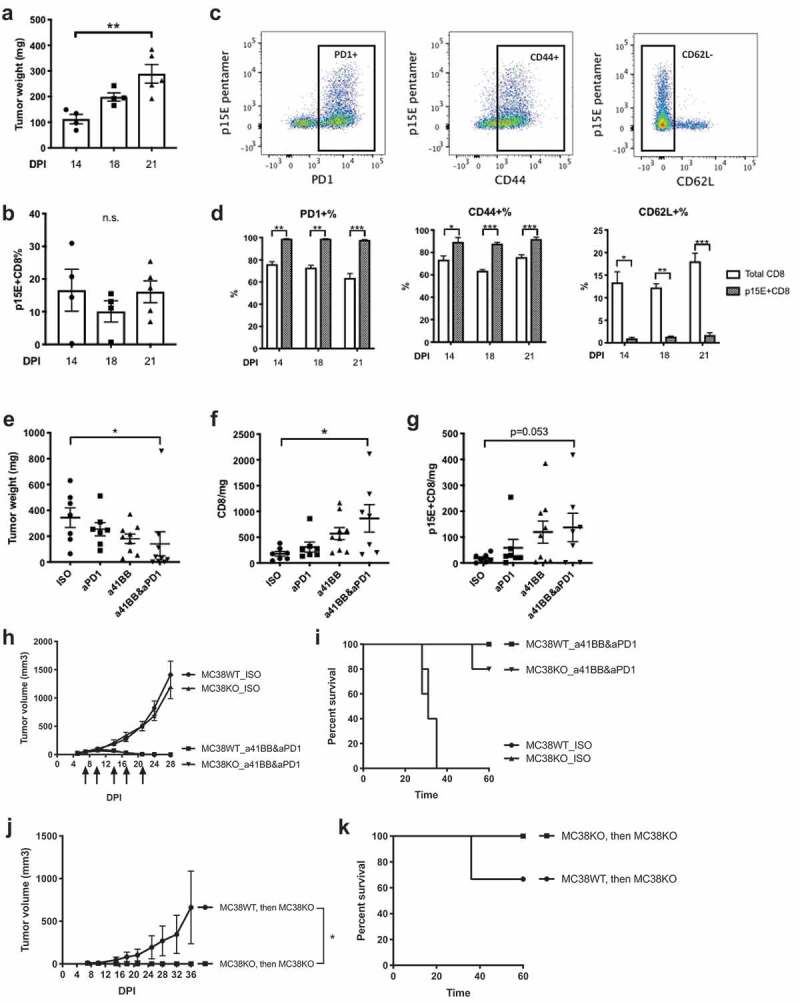
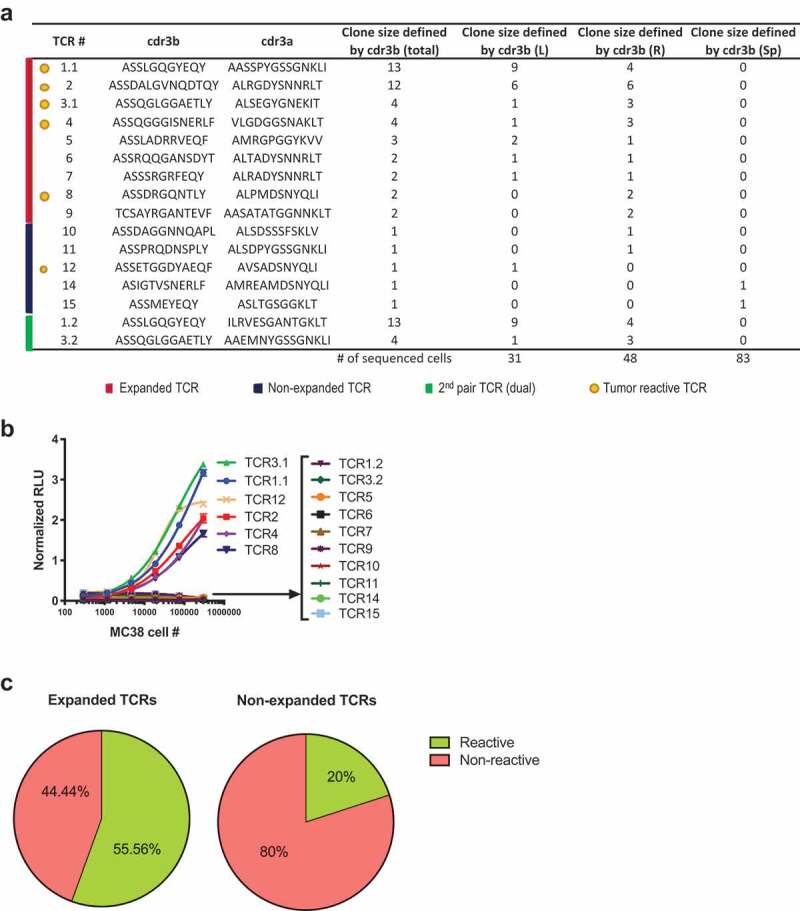
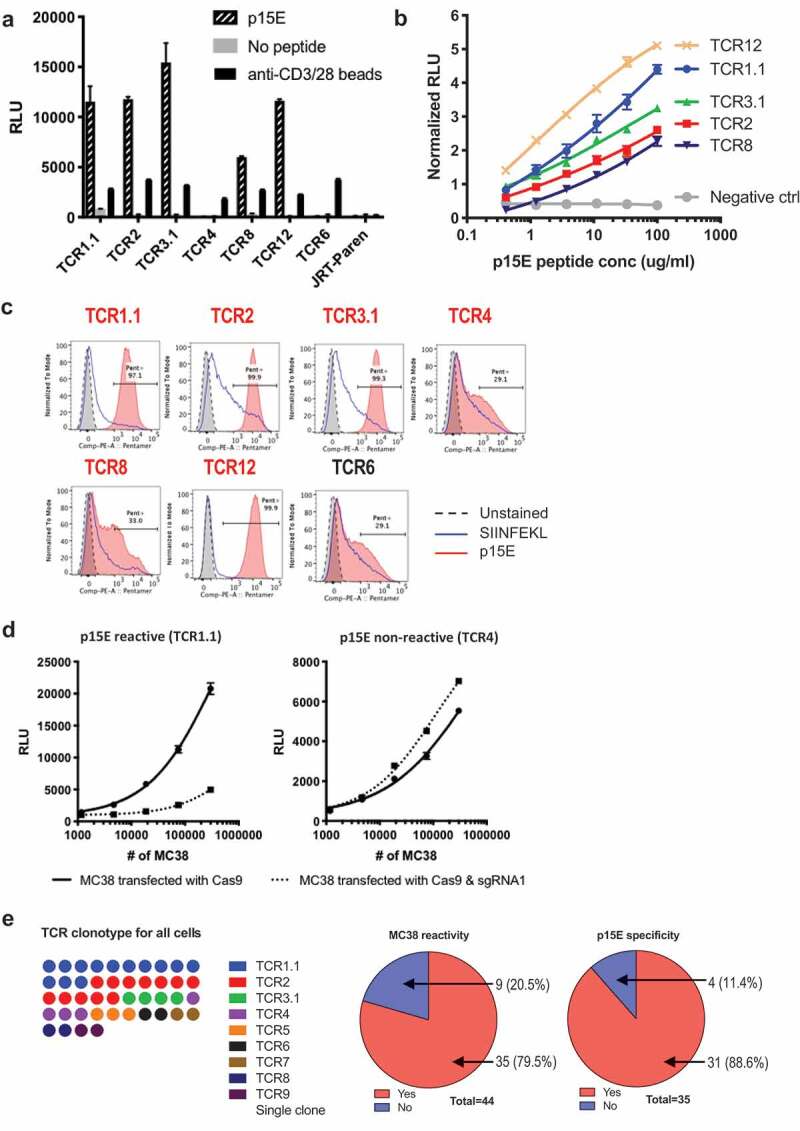
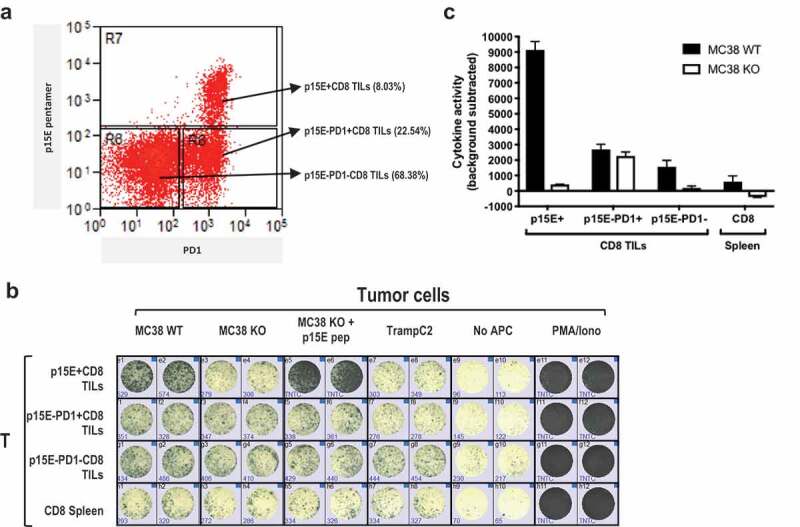
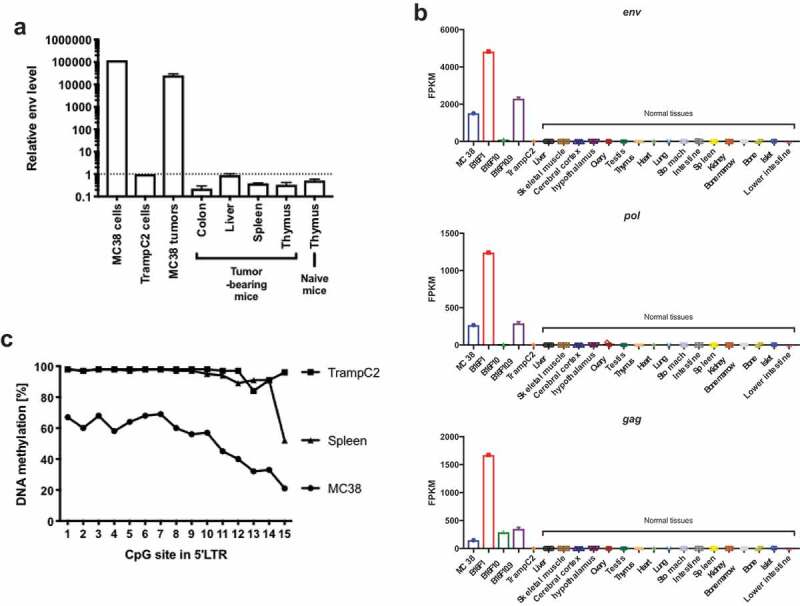
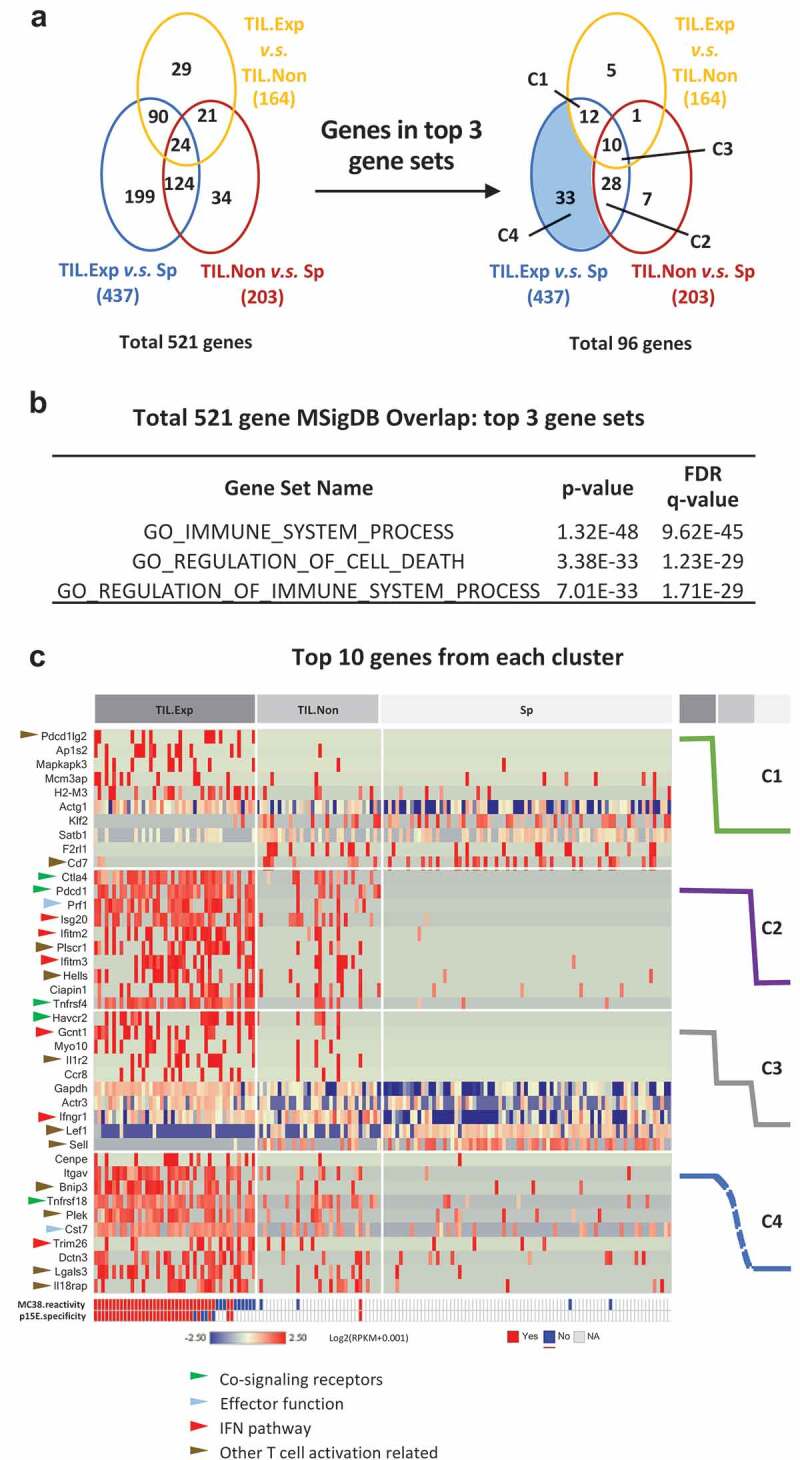
Clinical observations suggest that responses to cancer immunotherapy are correlated with intra-tumoral T cell receptor (TCR) clonality, tumor mutation burden (TMB) and host HLA genotype, highlighting the importance of host T cell recognition of tumor antigens. However, the dynamic interplay between T cell activation state and changes in TCR repertoire in driving the identification of potential immunodominant antigen(s) remains largely unexplored. Here, we performed single-cell RNA-sequencing on CD8 tumor-infiltrating T cells (TILs) using the murine colorectal tumor model MC38 to identify unique TCR sequences and validate their tumor reactivity. We found that the majority of clonally expanded TILs are tumor-reactive and their TCR repertoire is unique amongst individual MC38 tumor-bearing mice. Our query identified that multiple expanded TCR clones recognized the retroviral epitope p15E as an immunodominant antigen. In addition, we found that the endogenous retroviral genome encoding for p15E is highly expressed in MC38 tumors, but not in normal tissues, due to epigenetic derepression. Further, we demonstrated that the p15E-specific TILs exhibit an activated phenotype and an increase in frequency upon treatment with anti-41BB and anti-PD-1 combination immunotherapy. Importantly, we showed that although p15E-specific TILs are not required to mount a primary anti-tumor response, they contributed to the development of strong immune memory. Overall our results revealed that endogenous retroviral antigens expressed by tumor cells may represent an important and underappreciated category of tumor antigens that could be readily targeted in the clinic.
临床观察表明,癌症免疫疗法的反应与肿瘤内 T 细胞受体(TCR)克隆性、肿瘤突变负担(TMB)和宿主 HLA 基因型相关,这突显了宿主 T 细胞识别肿瘤抗原的重要性。然而,T 细胞激活状态与 TCR 库变化在驱动潜在免疫优势抗原(s)鉴定方面的动态相互作用在很大程度上仍未得到探索。在这里,我们使用鼠结直肠肿瘤模型 MC38 对 CD8 肿瘤浸润性 T 细胞(TIL)进行了单细胞 RNA 测序,以鉴定独特的 TCR 序列并验证其肿瘤反应性。我们发现,大多数克隆扩增的 TIL 是肿瘤反应性的,它们的 TCR 库在个体 MC38 荷瘤小鼠中是独特的。我们的查询确定了多个扩增的 TCR 克隆识别逆转录病毒表位 p15E 作为免疫优势抗原。此外,我们发现,编码 p15E 的内源性逆转录病毒基因组在 MC38 肿瘤中高度表达,但在正常组织中不表达,这是由于表观遗传去抑制。此外,我们证明了 p15E 特异性 TIL 表现出激活表型,并在接受抗 41BB 和抗 PD-1 联合免疫治疗时频率增加。重要的是,我们表明,尽管 p15E 特异性 TIL 对于引发原发性抗肿瘤反应不是必需的,但它们有助于产生强大的免疫记忆。总的来说,我们的结果表明,肿瘤细胞表达的内源性逆转录病毒抗原可能代表一类重要但尚未被充分认识的肿瘤抗原,这些抗原在临床上可能很容易被靶向。