Cao Zheming, Cao Jiri, Pang Xiaoyang, Du Wei, Wu Panfeng
Department of Orthopedics, Xiangya Hospital of Central South University.
Xiangya Nursing School of Central South University, Changsha, China.
Medicine (Baltimore). 2020 Sep 11;99(37):e22096. doi: 10.1097/MD.0000000000022096.
Adverse outcomes after unilateral vs bilateral breast reconstruction involve an unknown level of risk that warrants thorough investigation.
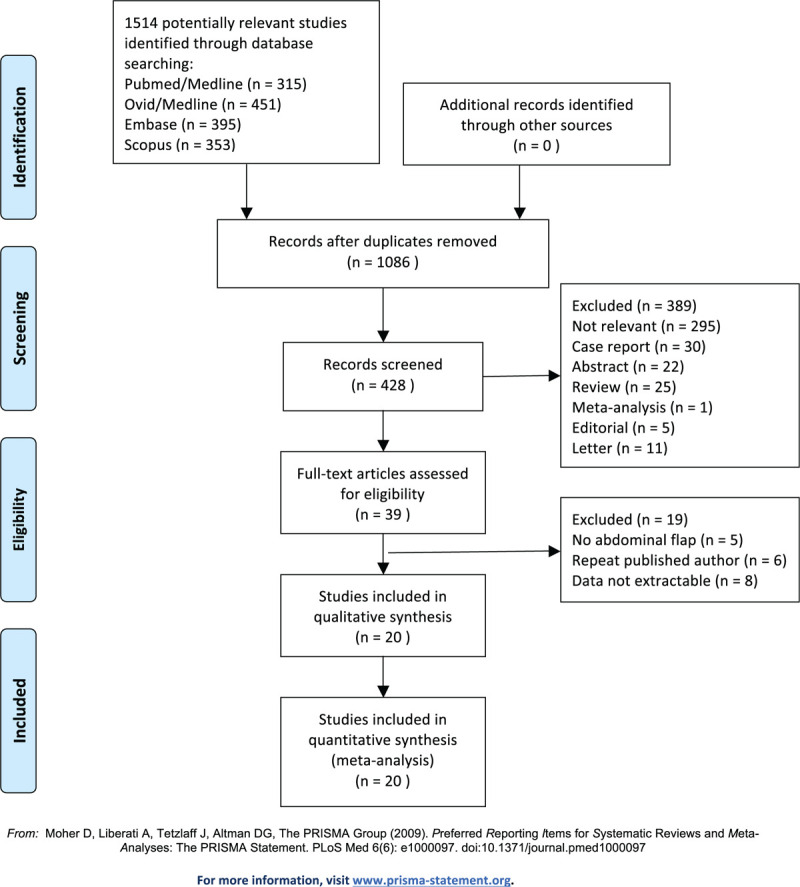
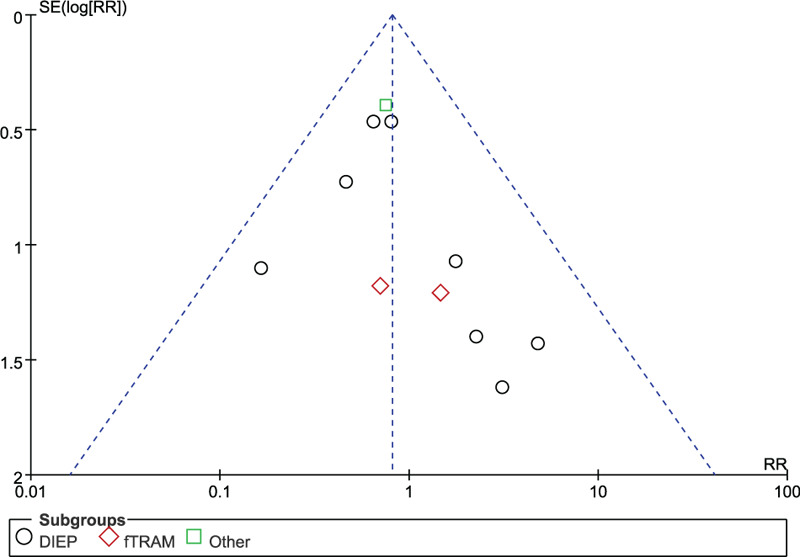
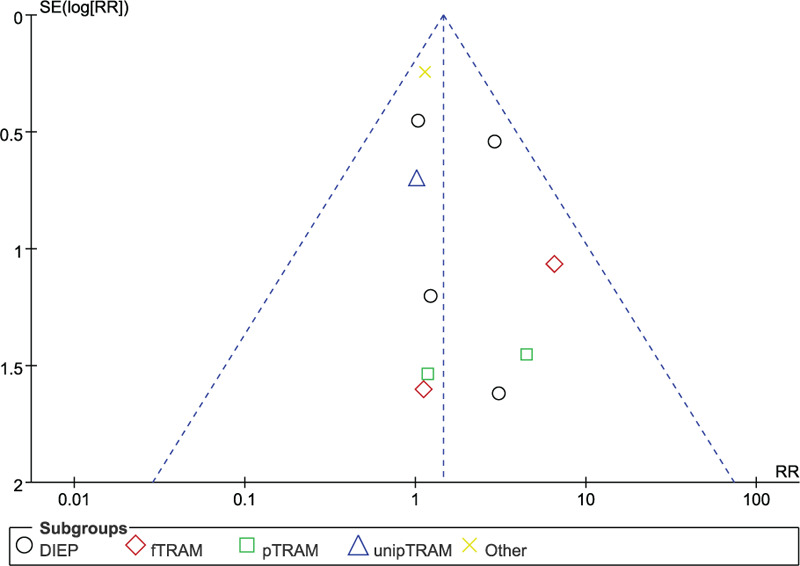
To address this research need, PubMed, Ovid, Medline, EMBASE, and Scopus databases were searched through systematically from January 1, 1990, to January 1, 2019 to retrieve the relevant studies on the risk of postoperative complications after unilateral vs bilateral abdominal flap breast reconstruction. According to the pre-designed inclusion criteria, available data were extracted from the relevant studies, and then analyzed comparatively in order to identify the relative risk (RR) and 95% confidence intervals (CI) applying either a random or a fixed effects model.
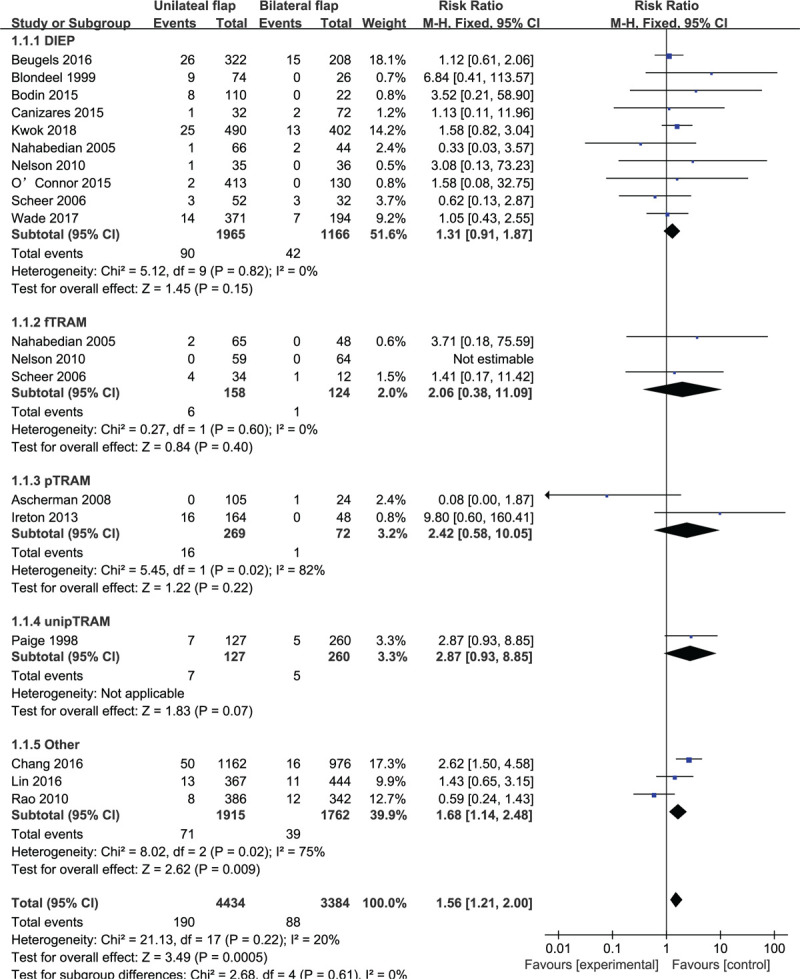
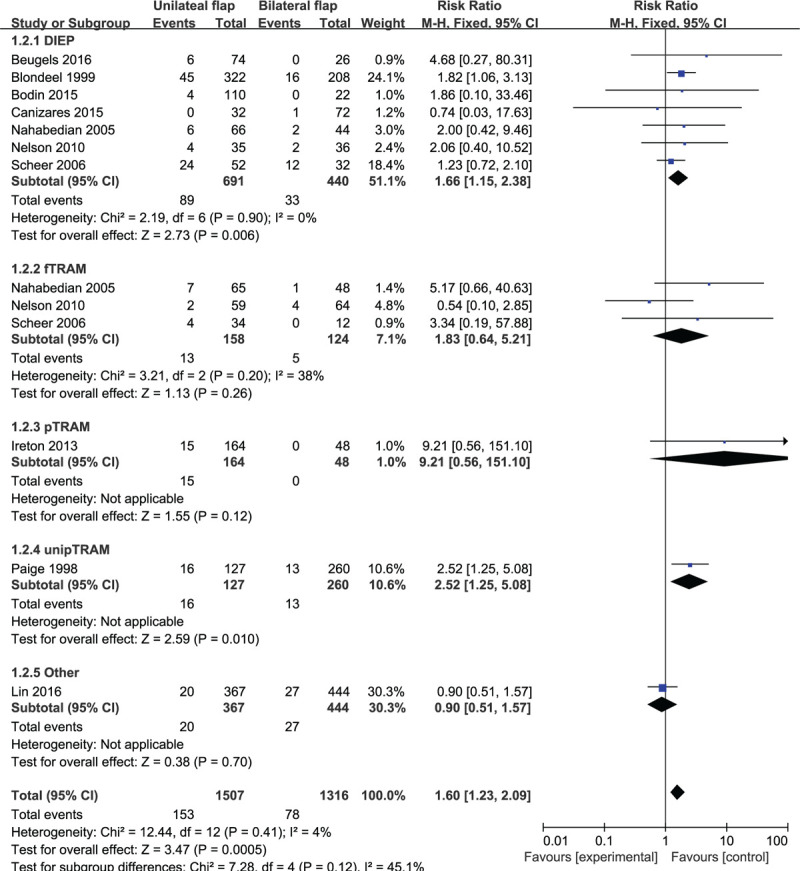
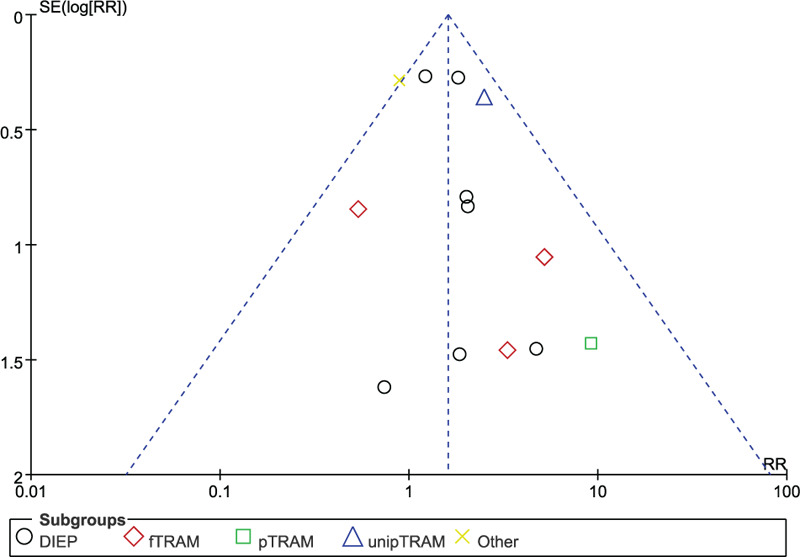
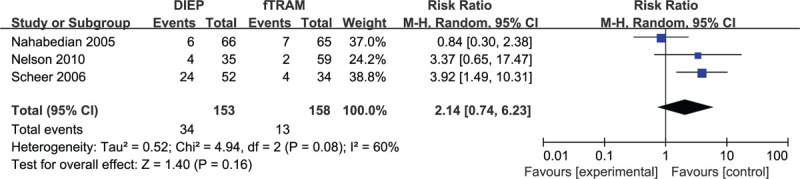
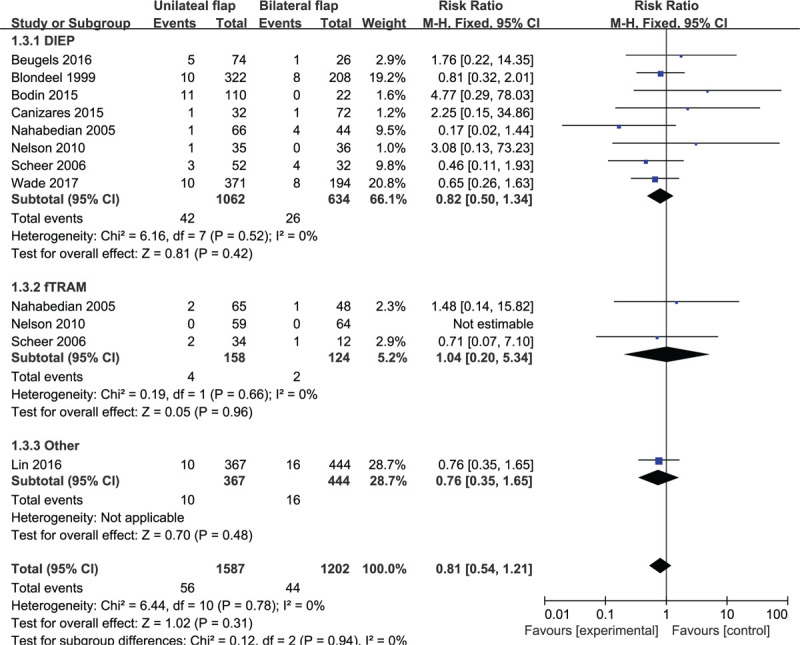
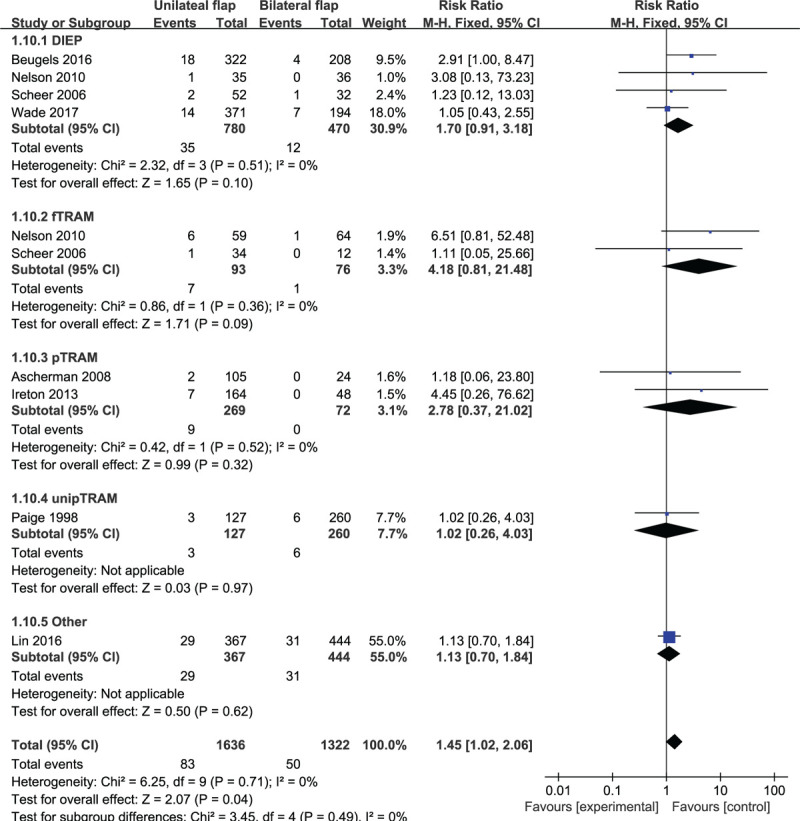
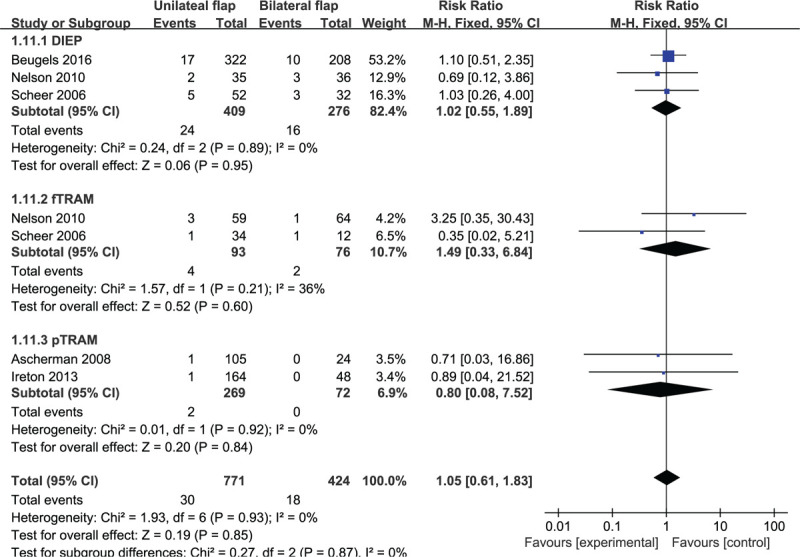
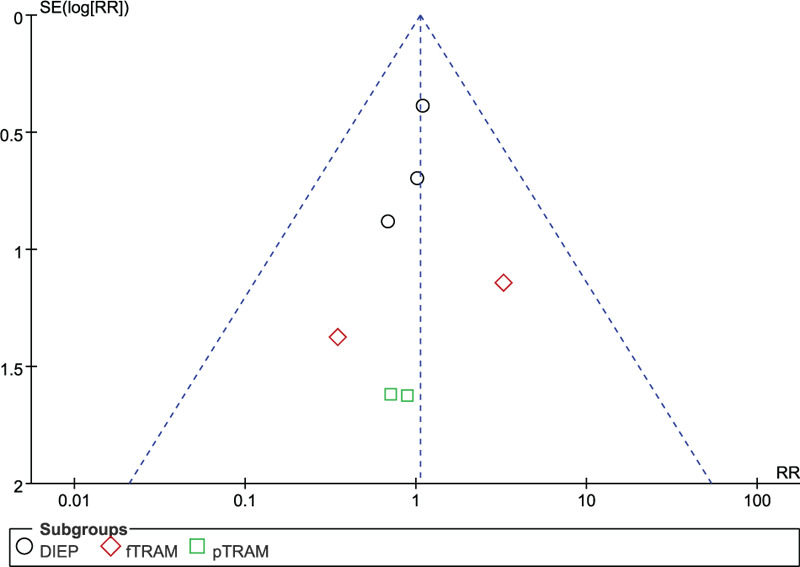
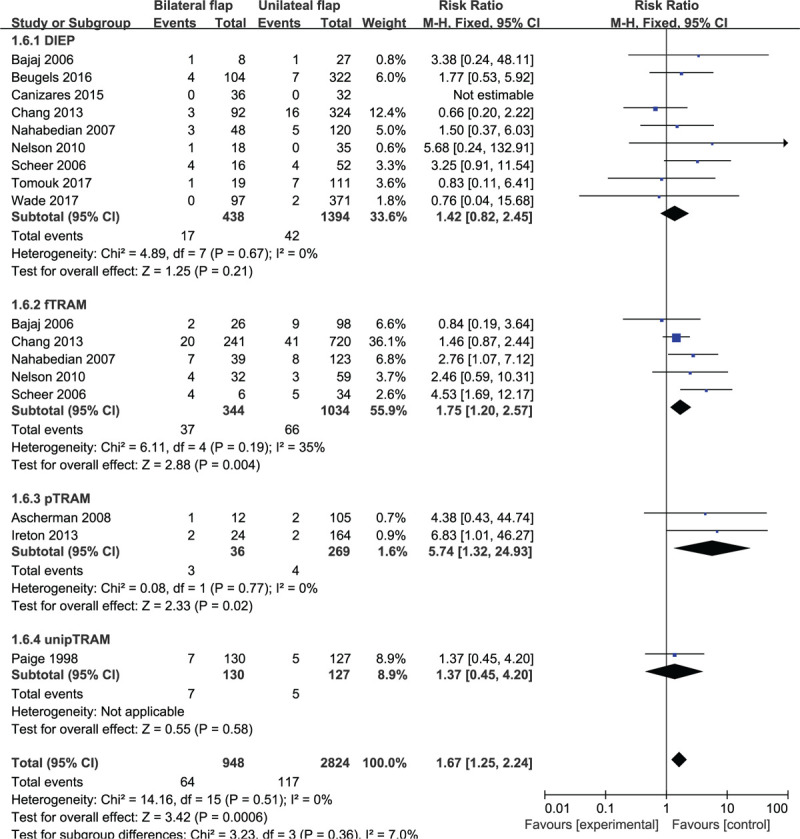
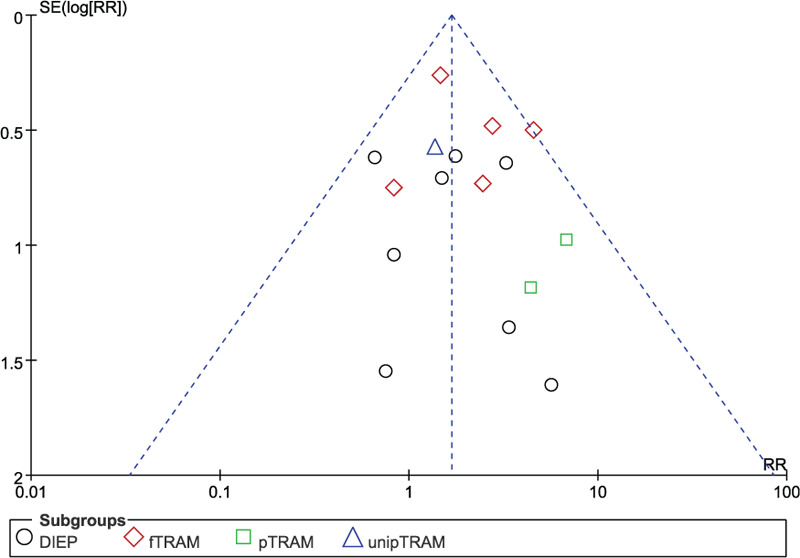
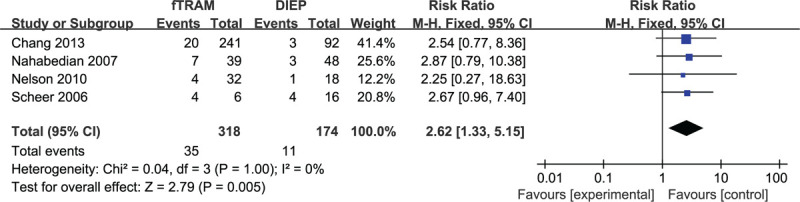
Eventually, 20 studies involving 8122 female subjects met the inclusion criteria. It was found that unilateral reconstruction involved a significantly higher risk of flap loss (RR: 1.56, 95% CI: 1.21-2.00; P < .05) and fat necrosis (RR: 1.60, 95% CI: 1.23-2.09; P < .05) compared to bilateral reconstruction, while bilateral reconstruction involved a greater risk of abdominal hernia/bulge (RR: 1.67, 95% CI: 1.25-2.24; P < .05). The risk was found to be higher following bilateral free transverse rectus abdominis myocutaneous (fTRAM) flaps in comparison with deep inferior epigastric perforator (DIEP) flaps (RR: 2.62, 95% CI: 1.33-5.15; P < .05).
The risk of postoperative flap complications in unilateral breast reconstruction is significantly higher than that in bilateral reconstruction. Contrarily, the abdominal complications were significantly higher in the bilateral group vs the unilateral group. Meanwhile, the risk of abdominal hernia/bulge complication after bilateral breast reconstruction was significantly higher with fTRAM vs DIEP. Therefore, DIEP flaps are recommended in priority for bilateral breast reconstruction, unless specifically contraindicated.
单侧与双侧乳房重建后的不良结局存在未知程度的风险,值得进行深入研究。
为满足这一研究需求,于1990年1月1日至2019年1月1日对PubMed、Ovid、Medline、EMBASE和Scopus数据库进行系统检索,以获取有关单侧与双侧腹直肌肌皮瓣乳房重建术后并发症风险的相关研究。根据预先设计的纳入标准,从相关研究中提取可用数据,然后进行比较分析,以便使用随机或固定效应模型确定相对风险(RR)和95%置信区间(CI)。
最终,20项涉及8122名女性受试者的研究符合纳入标准。结果发现,与双侧重建相比,单侧重建的皮瓣丢失风险(RR:1.56,95%CI:1.21 - 2.00;P < 0.05)和脂肪坏死风险(RR:1.60,95%CI:1.23 - 2.09;P < 0.05)显著更高,而双侧重建的腹壁疝/膨出风险更大(RR:1.67,95%CI:1.25 - 2.24;P < 0.05)。与腹壁下动脉穿支(DIEP)皮瓣相比,双侧游离腹直肌肌皮(fTRAM)皮瓣术后风险更高(RR:2.62,95%CI:1.33 - 5.15;P < 0.05)。
单侧乳房重建术后皮瓣并发症的风险显著高于双侧重建。相反,双侧组的腹部并发症明显高于单侧组。同时,双侧乳房重建后采用fTRAM皮瓣的腹壁疝/膨出并发症风险显著高于DIEP皮瓣。因此,除非有特殊禁忌,双侧乳房重建优先推荐使用DIEP皮瓣。