Latif Azka, Lateef Noman, Ahsan Muhammad Junaid, Kapoor Vikas, Usman Rana Mohammad, Cooper Stephen, Andukuri Venkata, Mirza Mohsin, Ashfaq Muhammad Zubair, Khouzam Rami
Department of Internal Medicine, Creighton University, Omaha, NE 68124, USA.
Department of Internal Medicine, University of Tennessee, Memphis, TN 38152, USA.
J Cardiovasc Dev Dis. 2020 Sep 10;7(3):36. doi: 10.3390/jcdd7030036.
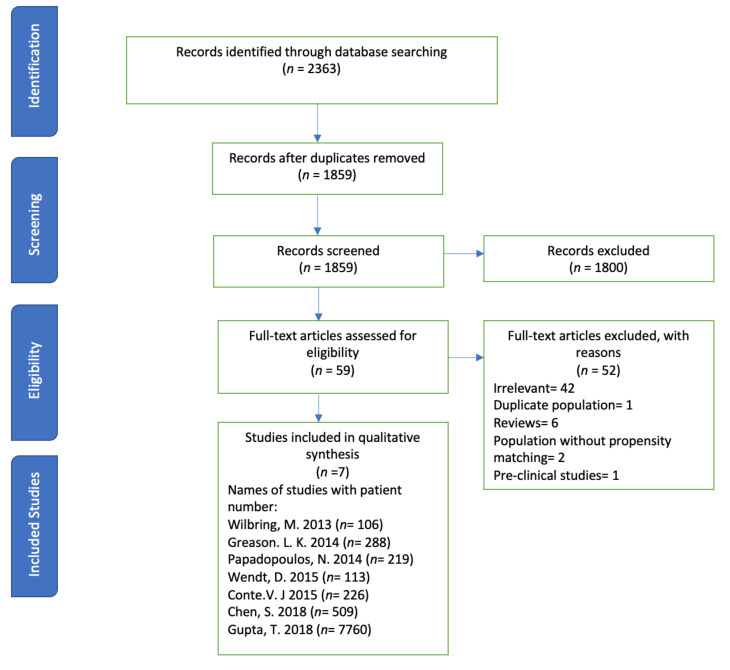
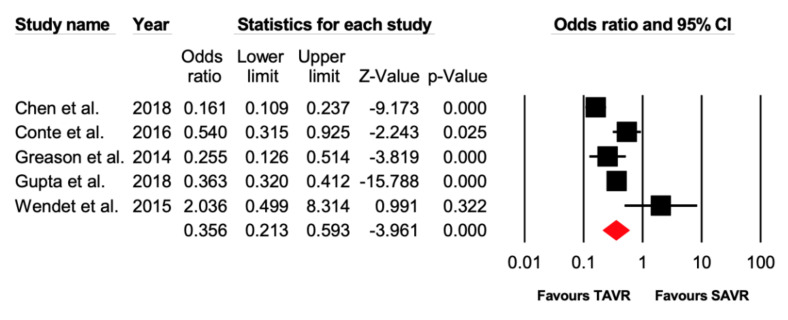
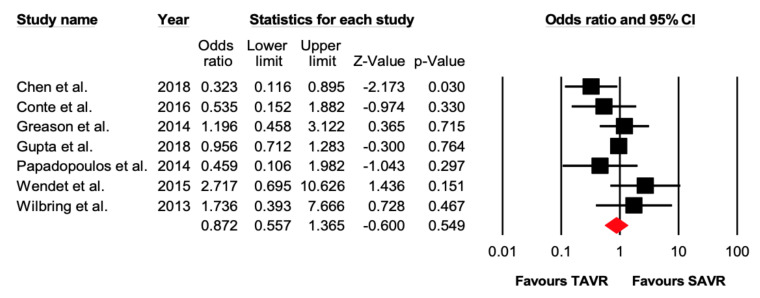
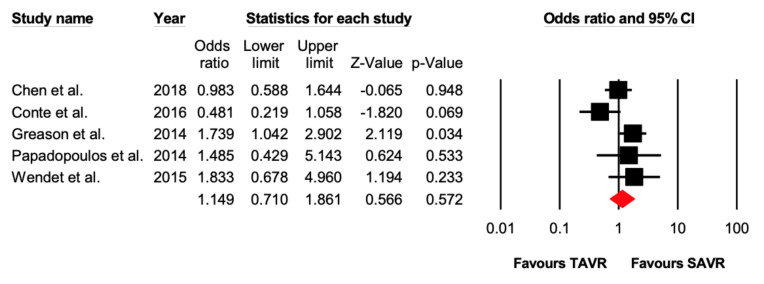
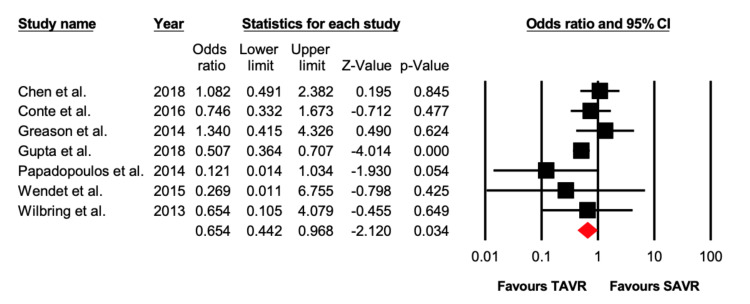
The number of patients with severe aortic stenosis (AS) and a history of prior cardiac surgery has increased. Prior cardiac surgery increases the risk of adverse outcomes in patients undergoing aortic valve replacement. To evaluate the impact of prior cardiac surgery on clinical endpoints in patients undergoing transcatheter aortic valve replacement (TAVR) versus surgical aortic valve replacement (SAVR), we performed a literature search using PubMed, Embase, Google Scholar, and Scopus databases. The clinical endpoints included in our study were 30-day mortality, 1-2-year mortality, acute kidney injury (AKI), bleeding, stroke, procedural time, and duration of hospital stay. Seven studies, which included a total of 8221 patients, were selected. Our study found that TAVR was associated with a lower incidence of stroke and bleeding complications. There was no significant difference in terms of AKI, 30-day all-cause mortality, and 1-2-year all-cause mortality between the two groups. The average procedure time and duration of hospital stay were 170 min less ( ≤ 0.01) and 3.6 days shorter ( < 0.01) in patients with TAVR, respectively. In patients with prior coronary artery bypass graft and severe AS, both TAVR and SAVR are reasonable options. However, TAVR may be associated with a lower incidence of complications like stroke and perioperative bleeding, in addition to a shorter length of stay.
重度主动脉瓣狭窄(AS)且有心脏手术史的患者数量有所增加。既往心脏手术会增加接受主动脉瓣置换术患者出现不良结局的风险。为评估既往心脏手术对经导管主动脉瓣置换术(TAVR)与外科主动脉瓣置换术(SAVR)患者临床终点的影响,我们使用PubMed、Embase、谷歌学术和Scopus数据库进行了文献检索。我们研究中纳入的临床终点包括30天死亡率、1 - 2年死亡率、急性肾损伤(AKI)、出血、中风、手术时间和住院时间。共选取了7项研究,涉及8221例患者。我们的研究发现,TAVR与中风和出血并发症的发生率较低相关。两组在AKI、30天全因死亡率和1 - 2年全因死亡率方面无显著差异。TAVR患者的平均手术时间和住院时间分别减少了170分钟(≤0.01)和3.6天(<0.01)。对于有冠状动脉搭桥术史和重度AS的患者,TAVR和SAVR都是合理的选择。然而,TAVR除了住院时间较短外,还可能与中风和围手术期出血等并发症的发生率较低相关。