Palano Maria Teresa, Giannandrea Domenica, Platonova Natalia, Gaudenzi Germano, Falleni Monica, Tosi Delfina, Lesma Elena, Citro Valentina, Colombo Michela, Saltarella Ilaria, Ria Roberto, Amodio Nicola, Taiana Elisa, Neri Antonino, Vitale Giovanni, Chiaramonte Raffaella
Department of Health Sciences, Università degli Studi di Milano, 20142 Milano, Italy.
Istituto Auxologico Italiano, IRCCS, Laboratory of Geriatric and Oncologic Neuroendocrinology Research, 20095 Cusano Milanino, Italy.
Cancers (Basel). 2020 Sep 11;12(9):2600. doi: 10.3390/cancers12092600.
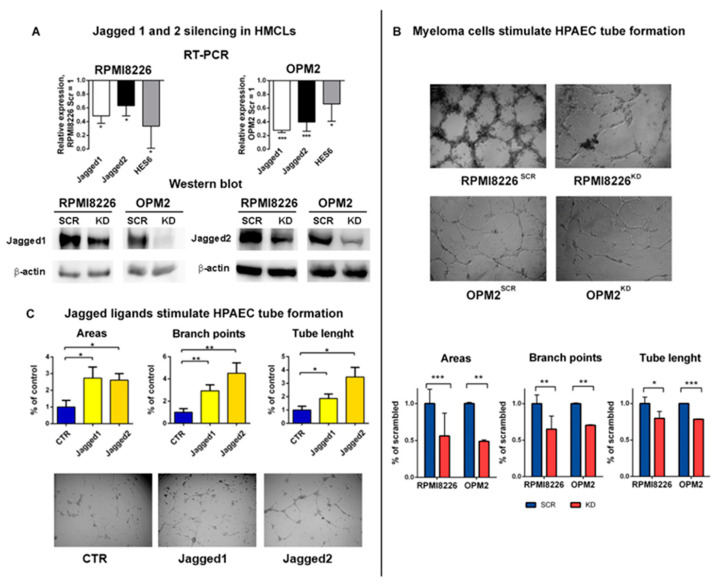
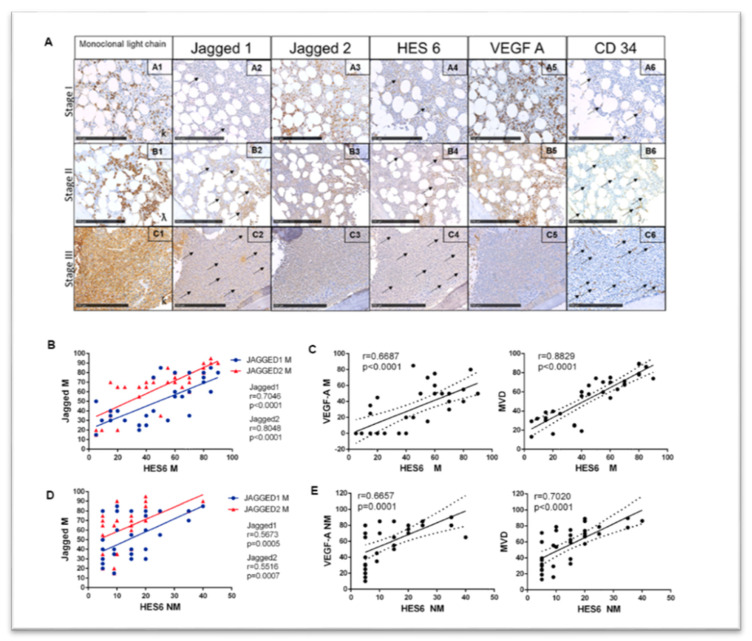
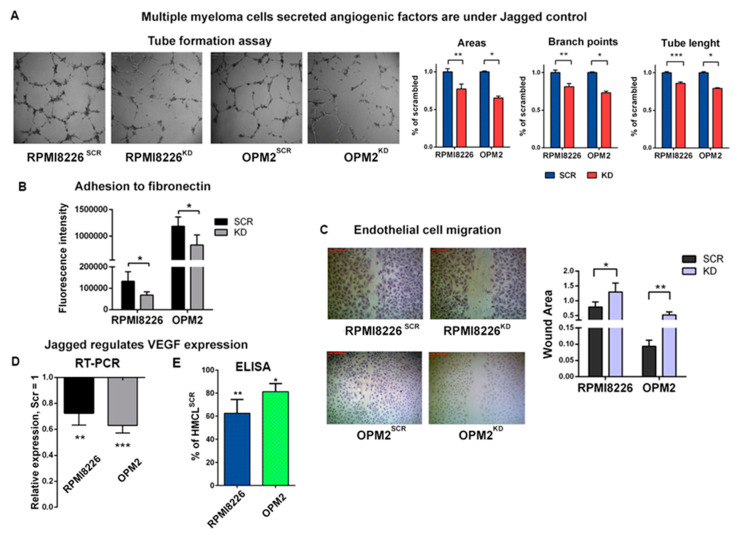
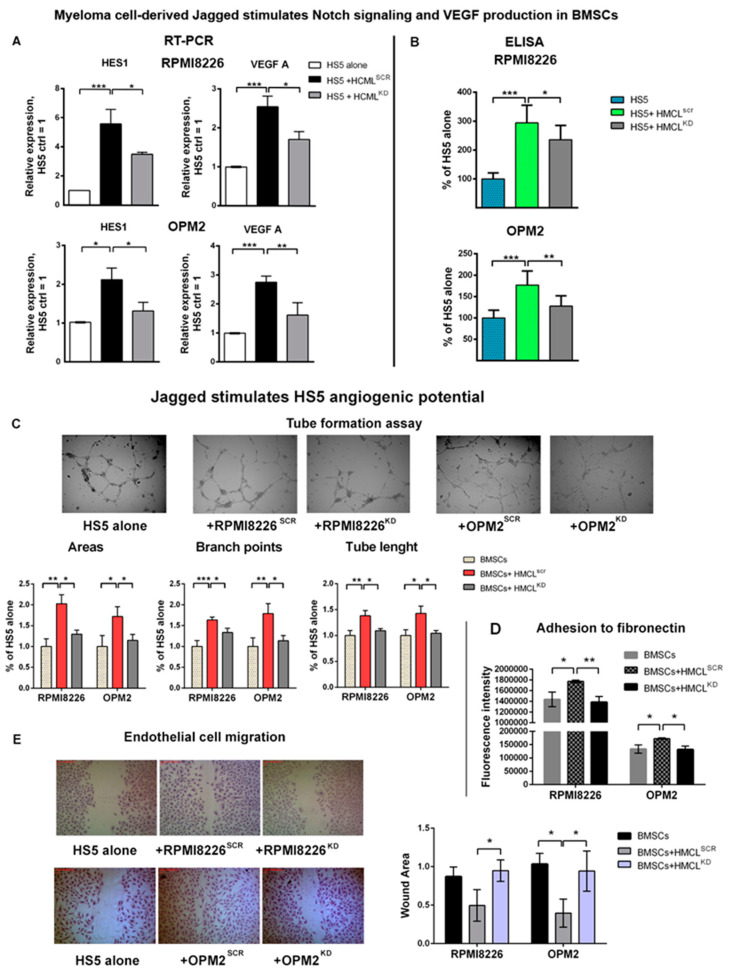
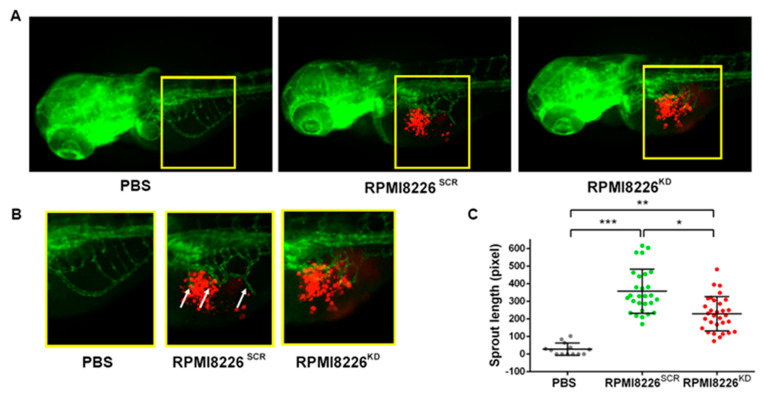
Multiple myeloma (MM) is an incurable plasma cell malignancy arising primarily within the bone marrow (BM). During MM progression, different modifications occur in the tumor cells and BM microenvironment, including the angiogenic shift characterized by the increased capability of endothelial cells to organize a network, migrate and express angiogenic factors, including vascular endothelial growth factor (VEGF). Here, we studied the functional outcome of the dysregulation of Notch ligands, Jagged1 and Jagged2, occurring during disease progression, on the angiogenic potential of MM cells and BM stromal cells (BMSCs). Jagged1-2 expression was modulated by RNA interference or soluble peptide administration, and the effects on the MM cell lines' ability to induce human pulmonary artery cells (HPAECs) angiogenesis or to indirectly increase the BMSC angiogenic potential was analyzed in vitro; in vivo validation was performed on a zebrafish model and MM patients' BM biopsies. Overall, our results indicate that the MM-derived Jagged ligands (1) increase the tumor cell angiogenic potential by directly triggering Notch activation in the HPAECs or stimulating the release of angiogenic factors, i.e., VEGF; and (2) stimulate the BMSCs to promote angiogenesis through VEGF secretion. The observed pro-angiogenic effect of Notch activation in the BM during MM progression provides further evidence of the potential of a therapy targeting the Jagged ligands.
多发性骨髓瘤(MM)是一种主要起源于骨髓(BM)的无法治愈的浆细胞恶性肿瘤。在MM进展过程中,肿瘤细胞和BM微环境会发生不同的改变,包括以内皮细胞组织网络、迁移和表达血管生成因子(包括血管内皮生长因子(VEGF))能力增强为特征的血管生成转变。在此,我们研究了疾病进展过程中Notch配体Jagged1和Jagged2失调对MM细胞和BM基质细胞(BMSCs)血管生成潜力的功能影响。通过RNA干扰或给予可溶性肽来调节Jagged1-2的表达,并在体外分析其对MM细胞系诱导人肺动脉细胞(HPAECs)血管生成或间接增加BMSC血管生成潜力的能力的影响;在斑马鱼模型和MM患者的BM活检组织上进行体内验证。总体而言,我们的结果表明,MM来源的Jagged配体:(1)通过直接触发HPAECs中的Notch激活或刺激血管生成因子(即VEGF)的释放来增加肿瘤细胞的血管生成潜力;(2)通过VEGF分泌刺激BMSCs促进血管生成。在MM进展过程中观察到的BM中Notch激活的促血管生成作用为靶向Jagged配体的治疗潜力提供了进一步证据。