González-H Guillermo, Contreras-García Itzel Jatziri, Sánchez-Huerta Karla, Queiroz Claudio M T, Gallardo Gudiño Luis Ricardo, Mendoza-Torreblanca Julieta G, Zamudio Sergio R
Laboratorio de Neurociencias, Subdirección de Medicina Experimental, Instituto Nacional de Pediatría, Ciudad de Mexico 04530, Mexico.
Departamento de Fisiología, Instituto Politécnico Nacional, Escuela Nacional de Ciencias Biológicas, Ciudad de Mexico 04530, Mexico.
Brain Sci. 2020 Sep 11;10(9):634. doi: 10.3390/brainsci10090634.
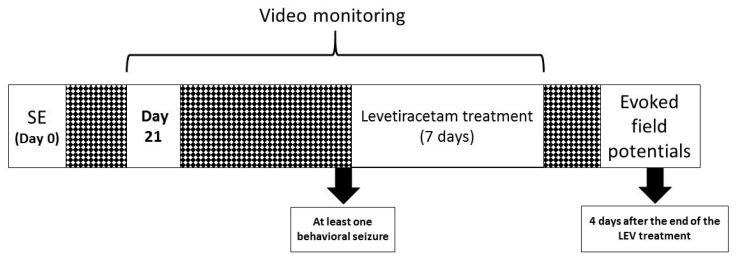
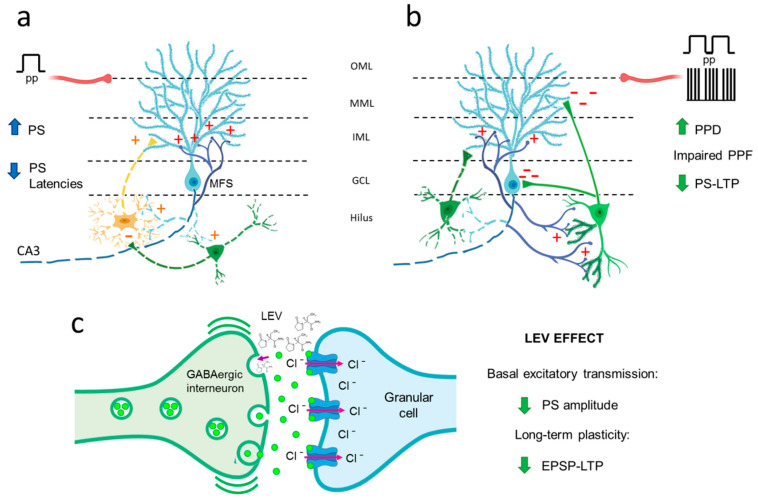
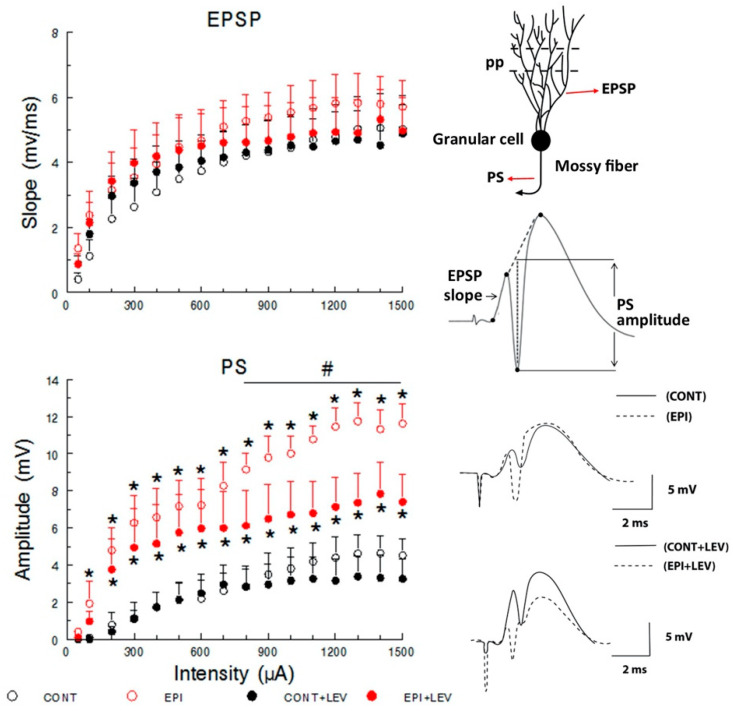
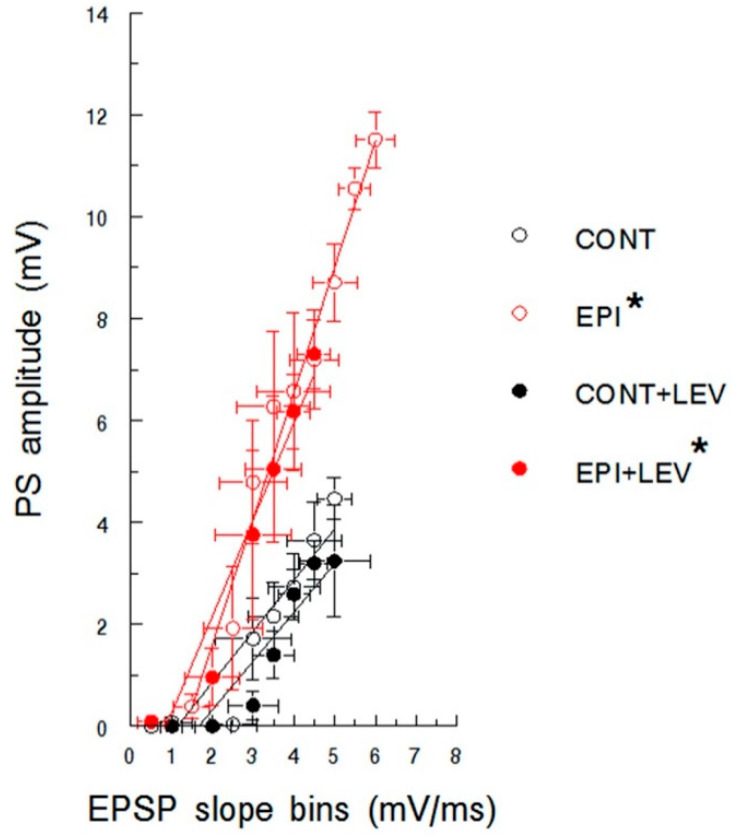
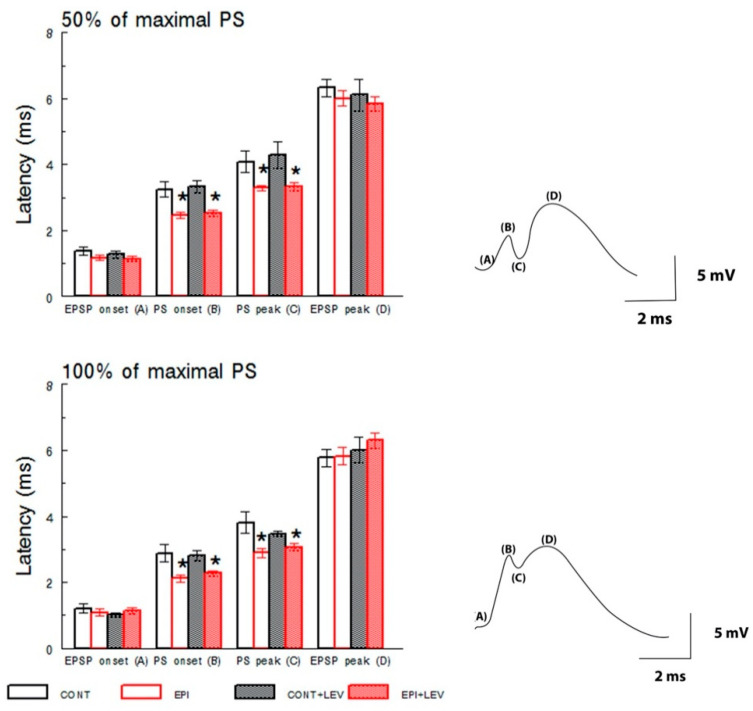
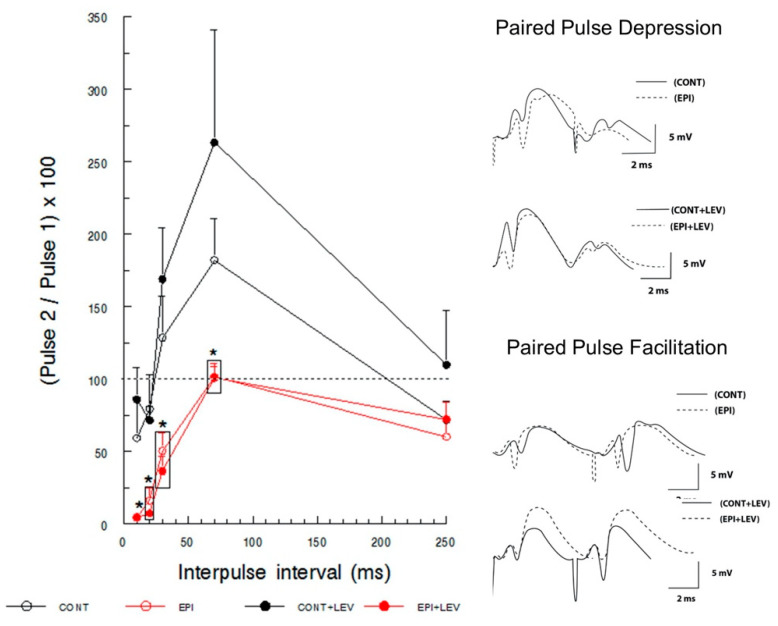
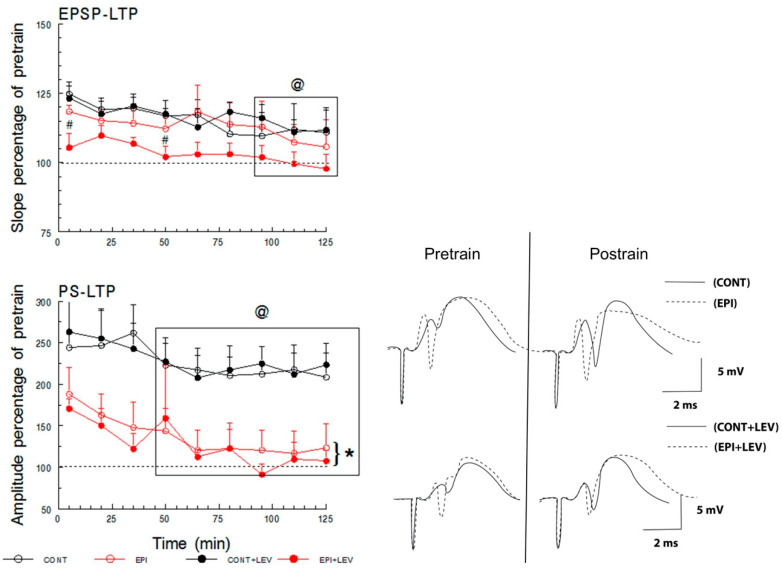
Temporal lobe epilepsy (TLE), the most common type of focal epilepsy, affects learning and memory; these effects are thought to emerge from changes in synaptic plasticity. Levetiracetam (LEV) is a widely used antiepileptic drug that is also associated with the reversal of cognitive dysfunction. The long-lasting effect of LEV treatment and its participation in synaptic plasticity have not been explored in early chronic epilepsy. Therefore, through the measurement of evoked field potentials, this study aimed to comprehensively identify the alterations in the excitability and the short-term (depression/facilitation) and long-term synaptic plasticity (long-term potentiation, LTP) of the dentate gyrus of the hippocampus in a lithium-pilocarpine rat model of TLE, as well as their possible restoration by LEV (1 week; 300 mg/kg/day). TLE increased the population spike (PS) amplitude (input/output curve); interestingly, LEV treatment partially reduced this hyperexcitability. Furthermore, TLE augmented synaptic depression, suppressed paired-pulse facilitation, and reduced PS-LTP; however, LEV did not alleviate such alterations. Conversely, the excitatory postsynaptic potential (EPSP)-LTP of TLE rats was comparable to that of control rats and was decreased by LEV. LEV caused a long-lasting attenuation of basal hyperexcitability but did not restore impaired synaptic plasticity in the early chronic phase of TLE.
颞叶癫痫(TLE)是最常见的局灶性癫痫类型,会影响学习和记忆;这些影响被认为源于突触可塑性的变化。左乙拉西坦(LEV)是一种广泛使用的抗癫痫药物,也与认知功能障碍的逆转有关。LEV治疗的长期效果及其在突触可塑性中的作用在早期慢性癫痫中尚未得到研究。因此,通过测量诱发电场电位,本研究旨在全面识别颞叶癫痫锂-匹罗卡品大鼠模型中海马齿状回的兴奋性、短期(抑制/易化)和长期突触可塑性(长时程增强,LTP)的改变,以及LEV(1周;300mg/kg/天)对其可能的恢复作用。TLE增加了群体峰电位(PS)幅度(输入/输出曲线);有趣的是,LEV治疗部分降低了这种过度兴奋性。此外,TLE增强了突触抑制,抑制了双脉冲易化,并降低了PS-LTP;然而,LEV并没有减轻这些改变。相反,TLE大鼠的兴奋性突触后电位(EPSP)-LTP与对照大鼠相当,并且被LEV降低。LEV导致基础过度兴奋性的长期减弱,但在TLE的早期慢性阶段并未恢复受损的突触可塑性。