
Sirt3与卵巢癌自噬之间的潜在关系。
Potential relationship between Sirt3 and autophagy in ovarian cancer.
作者信息
Shi Yuchuan, He Runhua, Yang Yu, He Yu, Zhan Lei, Wei Bing
机构信息
Department of Gynaecology and Obstetrics, The Second Affiliated Hospital of Anhui Medical University, Hefei, Anhui 230601, P.R. China.
Department of Cardiology, The First Affiliated Hospital of Anhui Medical University, Hefei, Anhui 230601, P.R. China.
出版信息
Oncol Lett. 2020 Nov;20(5):162. doi: 10.3892/ol.2020.12023. Epub 2020 Aug 26.
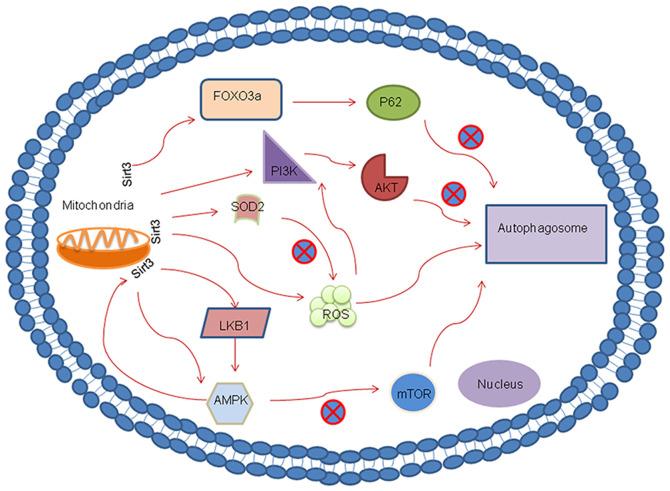
Sirtuin 3 (Sirt3) is an important member of the sirtuin protein family. It is a deacetylase that was previously reported to modulate the level of reactive oxygen species (ROS) production and limit the extent of oxidative damage in cellular components. As an important member of the class III type of histone deacetylases, Sirt3 has also been documented to mediate nuclear gene expression, metabolic control, neuroprotection, cell cycle and proliferation. In ovarian cancer (OC), Sirt3 has been reported to regulate cellular metabolism, apoptosis and autophagy. Sirt3 can regulate autophagy through a variety of different molecular signaling pathways, including the p62, 5'AMP-activated protein kinase and mitochondrial ROS-superoxide dismutase pathways. However, autophagy downstream of Sirt3 and its association with OC remains poorly understood. In the present review, the known characteristics of Sirt3 and autophagy were outlined, and their potential functional roles were discussed. Following a comprehensive analysis of the current literature, Sirt3 and autophagy may either serve positive or negative roles in the regulation of OC. Therefore, it is important to identify the appropriate expression level of Sirt3 to control the activation of autophagy in OC cells. This strategy may prove to be a novel therapeutic method to reduce the mortality of patients with OC. Finally, potential research directions into the association between Sirt3 and other signaling pathways were provided.
沉默调节蛋白3(Sirt3)是沉默调节蛋白家族的重要成员。它是一种脱乙酰酶,先前有报道称其可调节活性氧(ROS)的产生水平,并限制细胞成分中氧化损伤的程度。作为III类组蛋白脱乙酰酶的重要成员,Sirt3也被证明可介导核基因表达、代谢控制、神经保护、细胞周期和增殖。在卵巢癌(OC)中,据报道Sirt3可调节细胞代谢、凋亡和自噬。Sirt3可通过多种不同的分子信号通路调节自噬,包括p62、5'AMP激活的蛋白激酶和线粒体ROS-超氧化物歧化酶通路。然而,Sirt3下游的自噬及其与OC的关联仍知之甚少。在本综述中,概述了Sirt3和自噬的已知特征,并讨论了它们的潜在功能作用。在对当前文献进行全面分析后,Sirt3和自噬在OC的调节中可能发挥正向或负向作用。因此,确定Sirt3的适当表达水平以控制OC细胞中自噬的激活非常重要。该策略可能被证明是一种降低OC患者死亡率的新型治疗方法。最后,提供了Sirt3与其他信号通路之间关联的潜在研究方向。

 Zotero 插件