Department of Endocrinology and Metabolism, Fujian Medical University Xiamen Humanity Hospital, Xiamen, Fujian Province, People's Republic of China.
Department of Vascular Surgery, Zhongshan Hospital Affiliated to Xiamen University, Xiamen, Fujian Province, People's Republic of China.
PLoS One. 2020 Sep 16;15(9):e0239236. doi: 10.1371/journal.pone.0239236. eCollection 2020.
A considerable number of diabetic foot ulcer (DFU) patients require amputation every year, which worsens their quality of life, aggravates the social burden, and shortens their life expectancy. Considering these negative effects, it is important to explore the relative risk factors affecting amputation in DFU patients.
The PubMed, SCIE and Embase databases were comprehensively searched for prospective or retrospective studies published before October 31, 2019. All English language studies involving DFU patients were included, and RevMan 5.3 software was used to analyse the data.
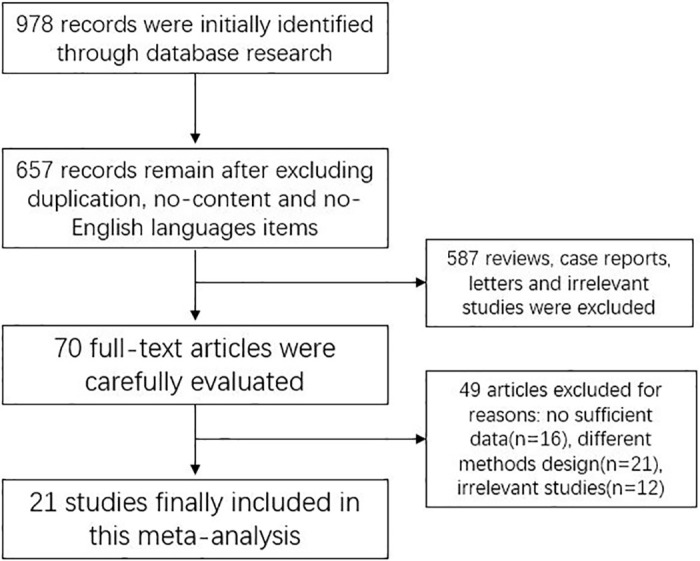
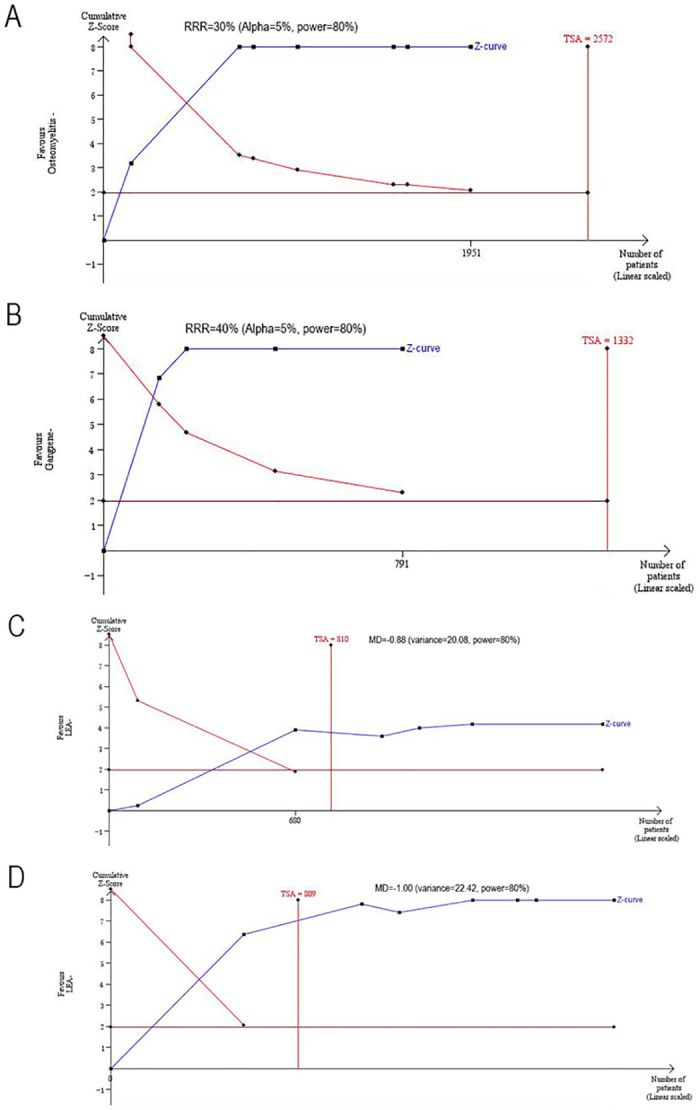
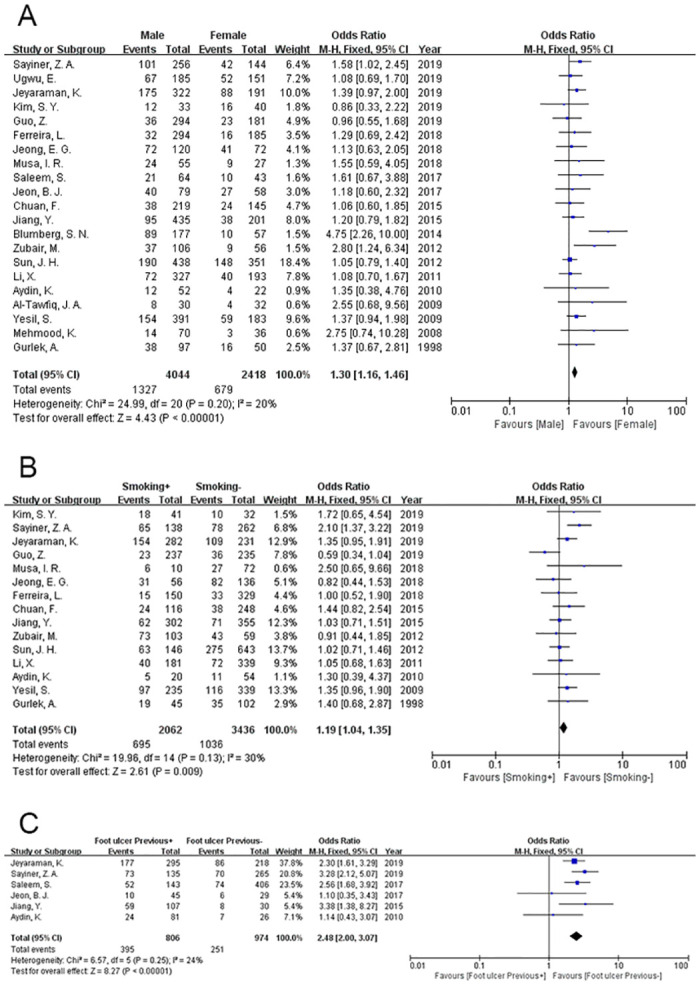
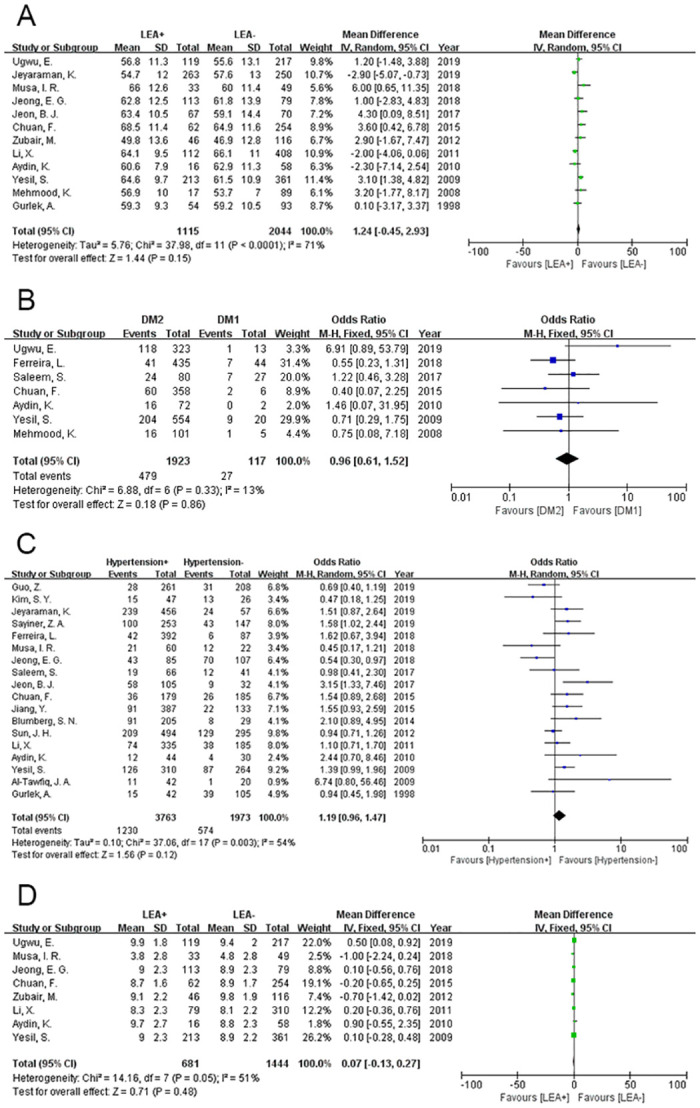
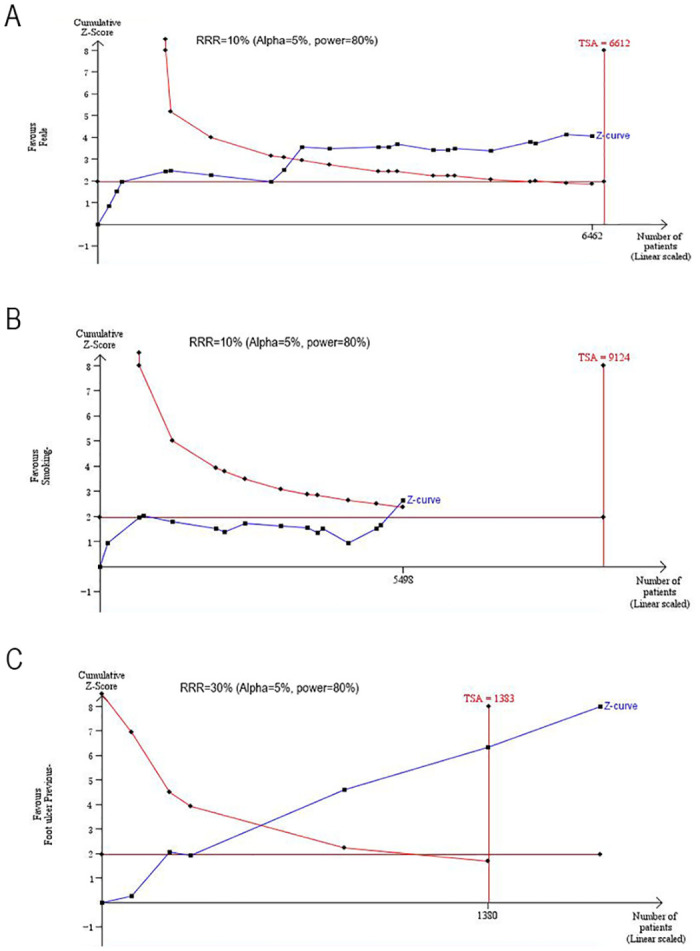
This meta-analysis includes 21 studies involving 6505 participants, including 2006 patients who required a lower limb amputation. The following variables were associated with an increased risk of amputation: male sex (odds ratios (OR) = 1.30, 95% confidence interval (CI) = 1.161.46, P<0.00001), smoking history (OR = 1.19, 95% CI = 1.041.35, P = 0.009), a history of foot ulcers (OR = 2.48, 95% CI = 2.003.07, P<0.00001), osteomyelitis (OR = 3.70, 95% CI = 3.024.53, P<0.00001), gangrene (OR = 10.90, 95% CI = 5.7320.8, P<0.00001), a lower body mass index (mean difference IV (MD) = -0.88, 95% CI = -1.30-0.47, P<0.0001), and a higher white blood cell count (MD = 2.42, 95% CI = 2.022.82, P<0.00001). However, age (MD = 1.24, 95% CI = -0.452.93, P = 0.15), type of diabetes (OR = 0.96, 95% CI = 0.611.52, P = 0.86), hypertension (OR = 1.19, 95% CI = 0.961.47, P = 0.12), and HbA1c level (MD = 0.02, 95% CI = -0.28~0.33, P = 0.87) were not associated with amputation in patients with DFU.
Our meta-analysis identified several risk factors for amputation in DFU patients, including the male sex, a smoking history, a history of foot ulcers, osteomyelitis, gangrene, a lower body mass index, and a higher white blood cell count. Once gangrene occurs, the risk of amputation rapidly increases.
每年都有相当数量的糖尿病足溃疡(DFU)患者需要截肢,这不仅降低了他们的生活质量,加重了社会负担,还缩短了他们的预期寿命。鉴于这些负面影响,探讨影响 DFU 患者截肢的相关风险因素非常重要。
全面检索了 2019 年 10 月 31 日前发表的前瞻性或回顾性研究,包括 PubMed、SCIE 和 Embase 数据库。纳入所有涉及 DFU 患者的英文研究,使用 RevMan 5.3 软件进行数据分析。
该荟萃分析纳入了 21 项研究,共涉及 6505 名参与者,其中 2006 名患者需要进行下肢截肢。以下变量与截肢风险增加相关:男性(比值比(OR)=1.30,95%置信区间(CI)=1.161.46,P<0.00001)、吸烟史(OR=1.19,95%CI=1.041.35,P=0.009)、足部溃疡史(OR=2.48,95%CI=2.003.07,P<0.00001)、骨髓炎(OR=3.70,95%CI=3.024.53,P<0.00001)、坏疽(OR=10.90,95%CI=5.7320.8,P<0.00001)、较低的身体质量指数(均数差值 IV(MD)=-0.88,95%CI=-1.30-0.47,P<0.0001)和较高的白细胞计数(MD=2.42,95%CI=2.022.82,P<0.00001)。然而,年龄(MD=1.24,95%CI=-0.452.93,P=0.15)、糖尿病类型(OR=0.96,95%CI=0.611.52,P=0.86)、高血压(OR=1.19,95%CI=0.961.47,P=0.12)和 HbA1c 水平(MD=0.02,95%CI=-0.28~0.33,P=0.87)与 DFU 患者的截肢无关。
我们的荟萃分析确定了 DFU 患者截肢的几个风险因素,包括男性、吸烟史、足部溃疡史、骨髓炎、坏疽、较低的身体质量指数和较高的白细胞计数。一旦发生坏疽,截肢风险迅速增加。