From the Division of Clinical Neurosciences (J.O.T.S.), Heart Center (V.K.), and Center for Population Health Research (V.K.), Turku University Hospital and University of Turku; Department of Neurology (J.O.T.S.), Siun Sote North Karelia Central Hospital, Joensuu; Kuopio Epilepsy Center, Department of Clinical Neurophysiology (J.H.), and Epilepsy Center, Neuro Center (R.K.), Kuopio University Hospital, Member of the European Reference Network for Rare and Complex Epilepsies EpiCARE; Administrative Center (V.K.), Hospital District of Southwest Finland, Turku; and Institute of Clinical Medicine (R.K.), University of Eastern Finland, Kuopio.
Neurology. 2020 Dec 8;95(23):e3117-e3123. doi: 10.1212/WNL.0000000000010911. Epub 2020 Sep 17.
To investigate the epidemiology and prognosis of Unverricht-Lundborg disease (EPM1) in a nationwide, population-based setting.
Data from multiple registries were combined and analyzed. Clinical data were obtained from medical records. All patients treated for EPM1 in Finland between January 1, 1998, and December 31, 2016 were included.
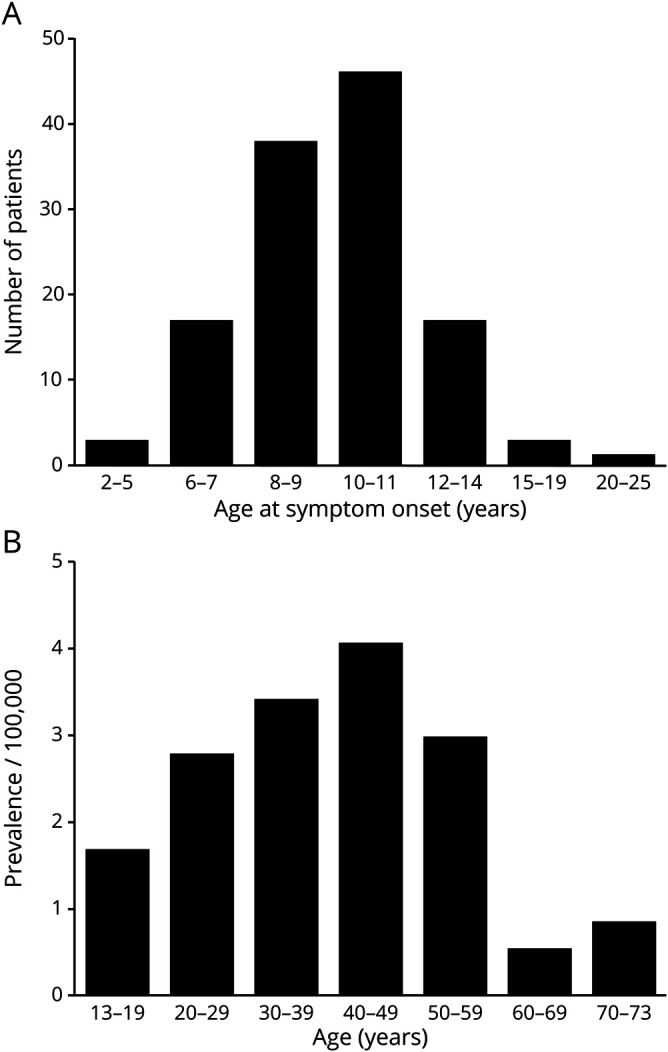
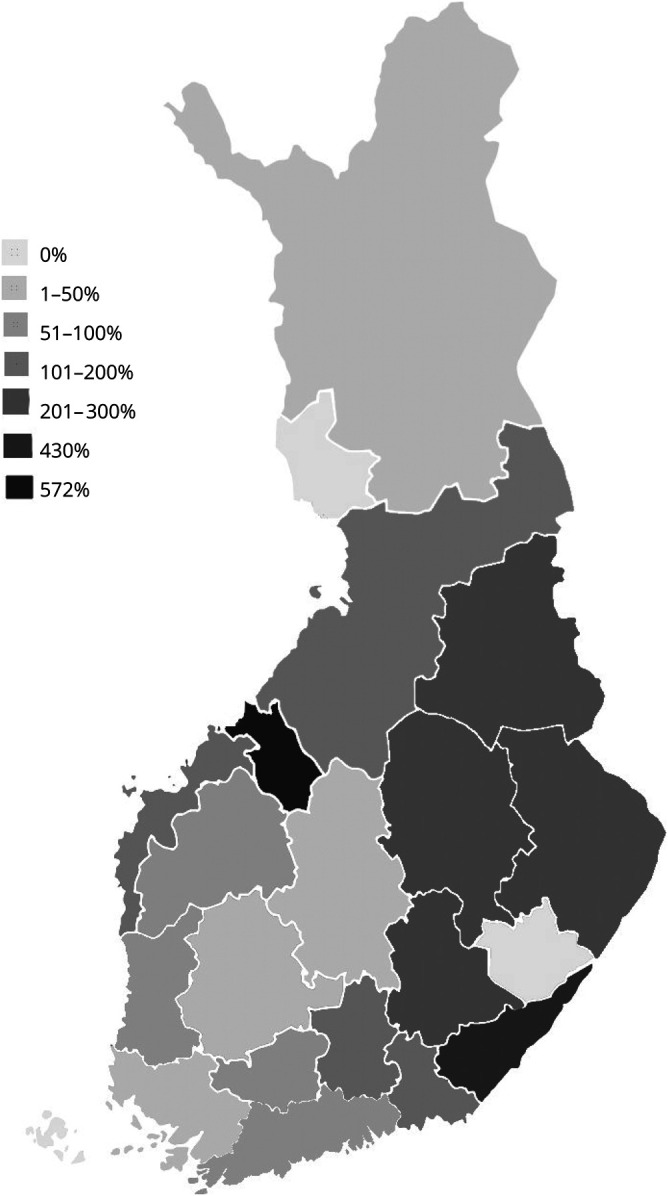
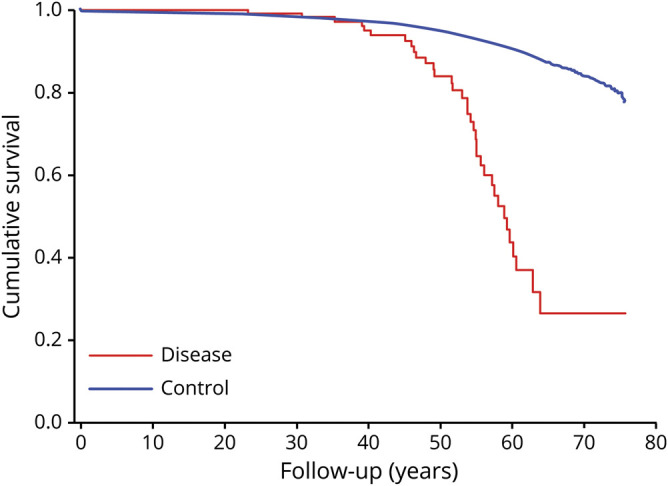
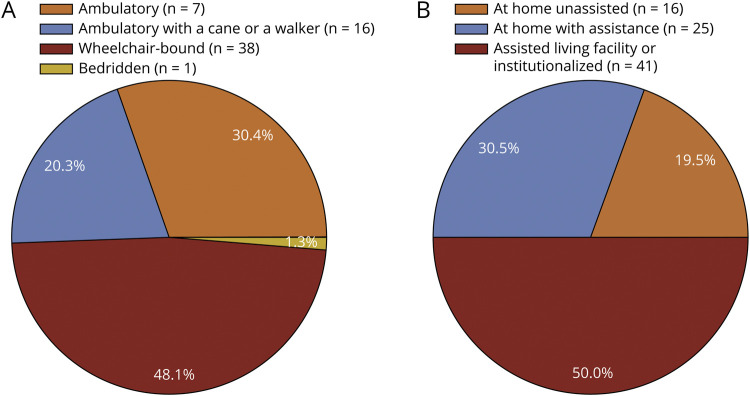
A total of 135 persons with EPM1 (54% women) were identified and 105 were alive on December 31, 2016 (point prevalence 1.91/100,000 persons). The age-standardized (European Standard Population 2013) prevalence was 1.53/100,000 persons. Annual incidence during the study period was 0.022/100,000 person-years, with a mean age at onset of 9.4 ± 2.3 years (range 7.0-14.6 years, no sex difference). The median age at death (n = 34) was 53.9 years (interquartile range 46.4, 60.3; range 23.2-63.8), with no sex differences. The immediate cause of death was a lower respiratory tract infection in 56% of deaths. The survival rates of the patients were comparable to matched controls up to 40 years of age, but poorer during long-term follow-up (cumulative survival 26.4% vs 78.0%), with a hazard ratio (HR) for death of 4.61. The risk of death decreased with increasing age at onset (HR 0.76 per year, 95% confidence interval 0.65-0.89). In approximately 10% of all cases, the disease progression appeared very mild; some patients retained functional independence for decades.
Unverricht-Lundborg disease is rare in Finland but still more common than anywhere else in the world. The disease course appears somewhat more severe than elsewhere, disability mounts early, and death occurs prematurely.
在全国范围内,基于人群的研究调查 Unverricht-Lundborg 病(EPM1)的流行病学和预后。
合并并分析来自多个登记处的数据。临床数据来自病历。纳入 1998 年 1 月 1 日至 2016 年 12 月 31 日期间在芬兰接受 EPM1 治疗的所有患者。
共发现 135 例 EPM1 患者(54%为女性),截至 2016 年 12 月 31 日,105 例存活(时点患病率为 1.91/100,000 人)。年龄标准化(2013 年欧洲标准人群)患病率为 1.53/100,000 人。研究期间的年发病率为 0.022/100,000 人年,发病年龄平均为 9.4±2.3 岁(范围 7.0-14.6 岁,无性别差异)。34 例死亡患者的中位年龄为 53.9 岁(四分位间距 46.4-60.3;范围 23.2-63.8),男女无差异。56%的死亡直接原因是下呼吸道感染。患者的生存率在 40 岁之前与匹配的对照组相当,但在长期随访中较差(累积生存率 26.4%比 78.0%),死亡风险比(HR)为 4.61。发病年龄越大,死亡风险越低(每年 HR 为 0.76,95%置信区间为 0.65-0.89)。大约 10%的病例疾病进展似乎非常轻微;一些患者在数十年内仍保持功能独立。
芬兰的 Unverricht-Lundborg 病较为罕见,但比世界其他地方更为常见。疾病进程似乎比其他地方稍严重,残疾出现较早,死亡过早。