Department of Cell Biology, Albert Einstein College of Medicine, Bronx, NY, 10461, USA.
Laboratory of Muscle Stem Cells and Gene Regulation, National Institute of Arthritis and Musculoskeletal and Skin Disease, Bethesda, MD, 20892, USA.
Nat Commun. 2020 Sep 17;11(1):4693. doi: 10.1038/s41467-020-18447-z.
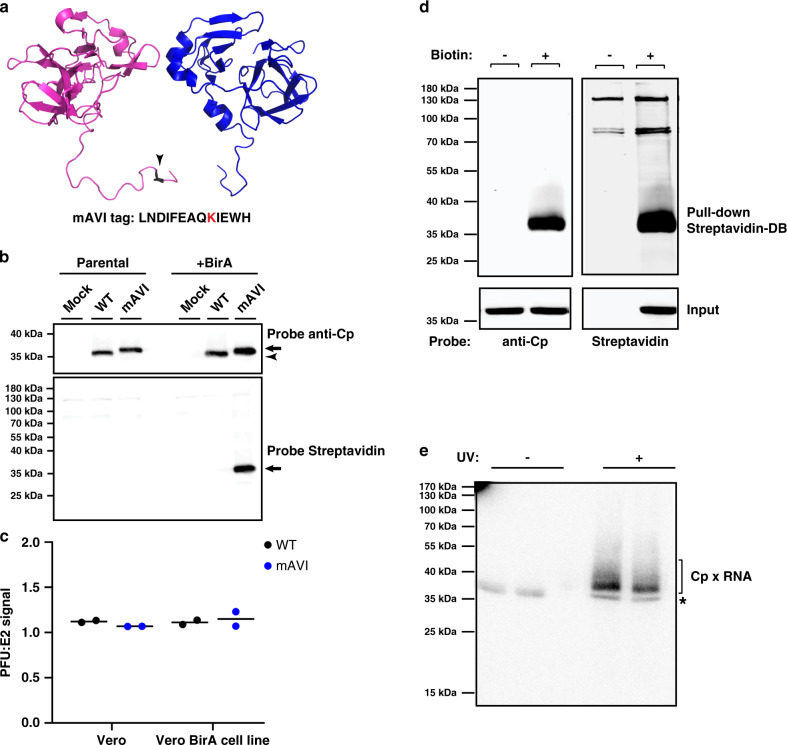
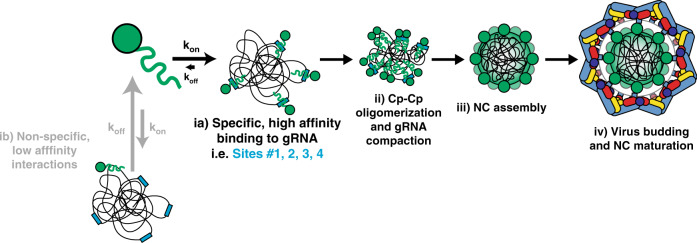
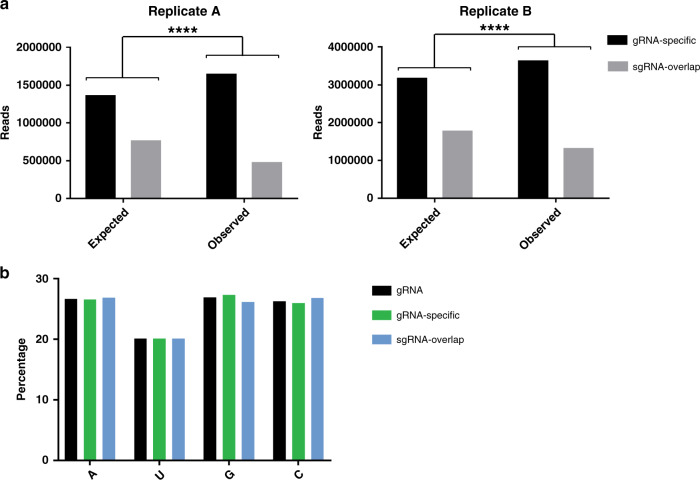
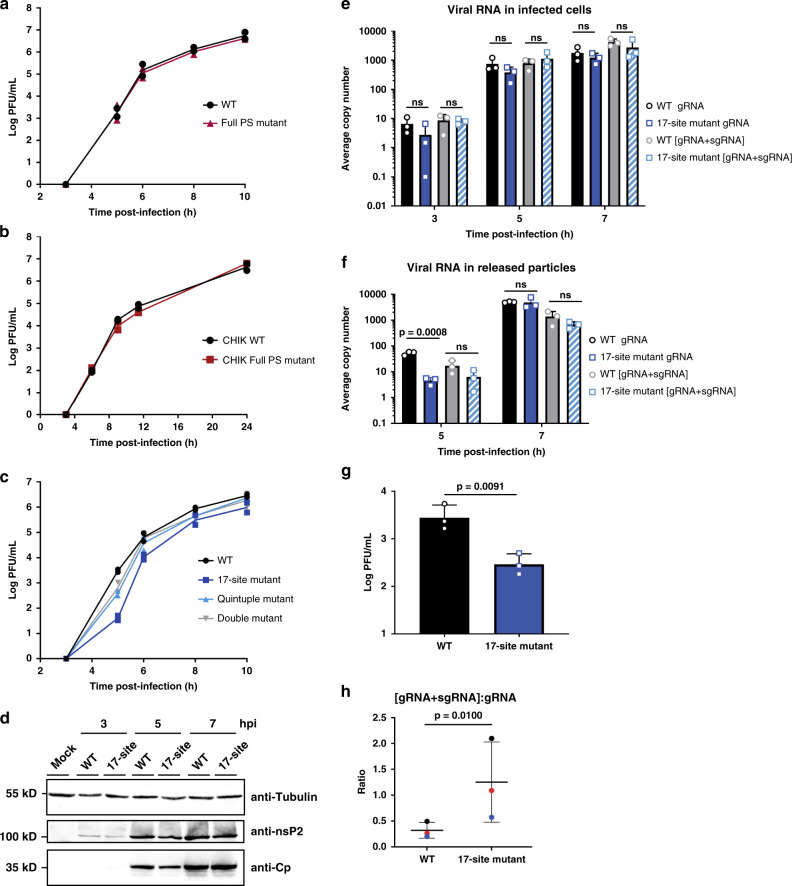
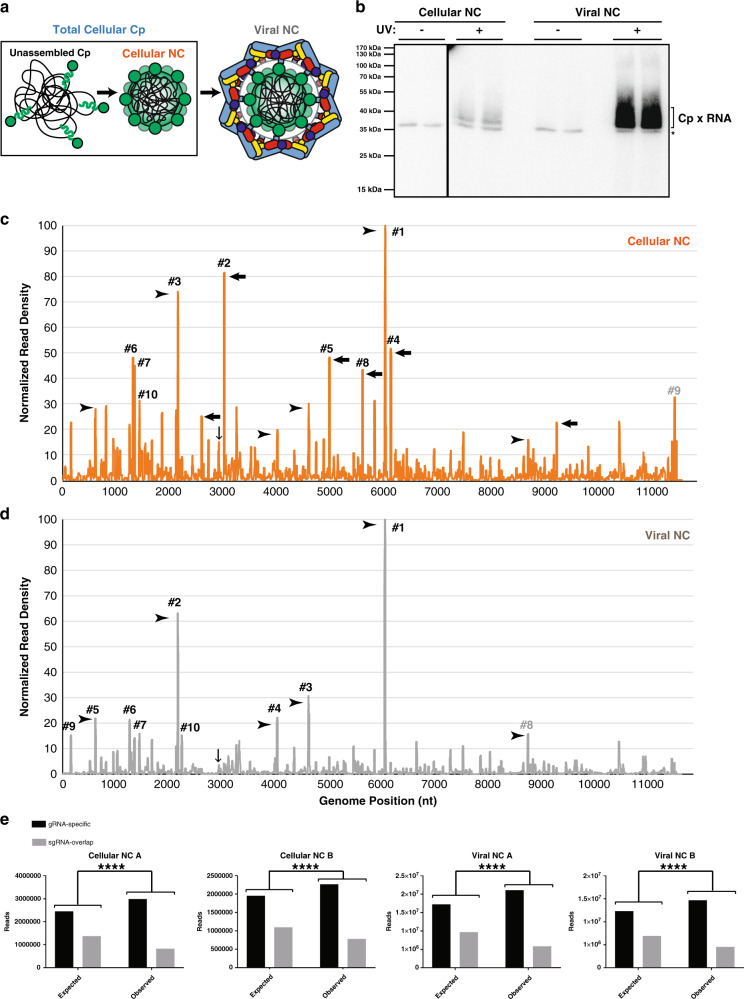
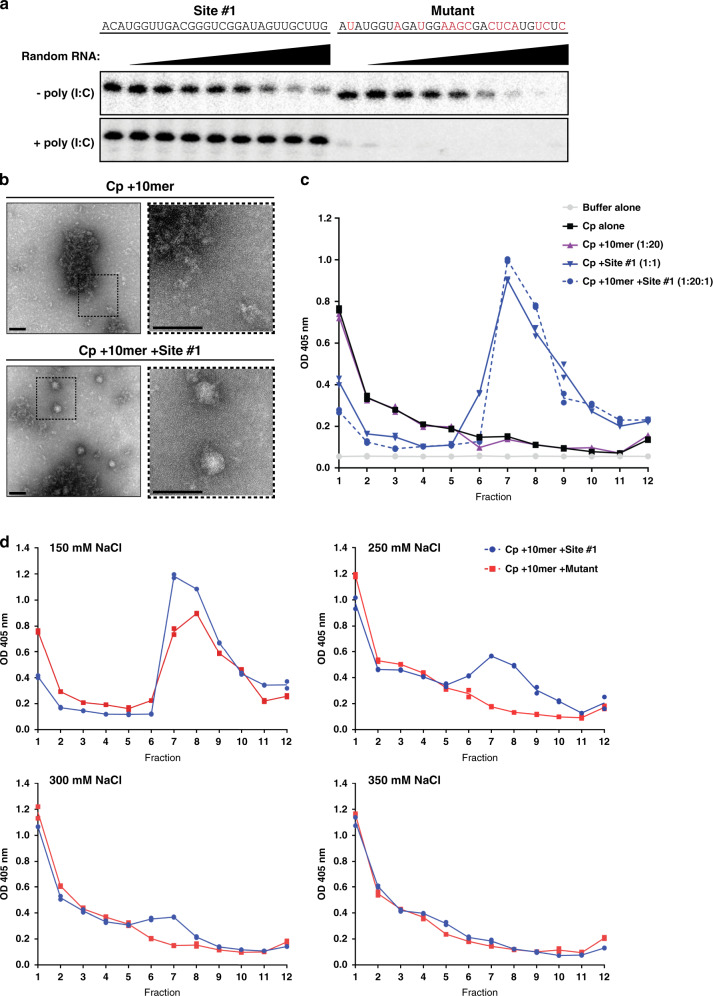
The alphavirus capsid protein (Cp) selectively packages genomic RNA (gRNA) into the viral nucleocapsid to produce infectious virus. Using photoactivatable ribonucleoside crosslinking and an innovative biotinylated Cp retrieval method, here we comprehensively define binding sites for Semliki Forest virus (SFV) Cp on the gRNA. While data in infected cells demonstrate Cp binding to the proposed genome packaging signal (PS), mutagenesis experiments show that PS is not required for production of infectious SFV or Chikungunya virus. Instead, we identify multiple Cp binding sites that are enriched on gRNA-specific regions and promote infectious SFV production and gRNA packaging. Comparisons of binding sites in cytoplasmic vs. viral nucleocapsids demonstrate that budding causes discrete changes in Cp-gRNA interactions. Notably, Cp's top binding site is maintained throughout virus assembly, and specifically binds and assembles with Cp into core-like particles in vitro. Together our data suggest a model for selective alphavirus genome recognition and assembly.
甲病毒衣壳蛋白(Cp)选择性地将基因组 RNA(gRNA)包装到病毒核衣壳中,以产生感染性病毒。利用光活化核糖核苷交联和创新的生物素化 Cp 回收方法,我们全面定义了 Semliki Forest 病毒(SFV)Cp 在 gRNA 上的结合位点。虽然感染细胞中的数据表明 Cp 与提议的基因组包装信号(PS)结合,但突变实验表明 PS 对于产生感染性 SFV 或基孔肯雅病毒不是必需的。相反,我们鉴定了多个 Cp 结合位点,这些结合位点在 gRNA 特异性区域富集,并促进感染性 SFV 的产生和 gRNA 的包装。细胞质与病毒核衣壳中结合位点的比较表明,出芽导致 Cp-gRNA 相互作用发生离散变化。值得注意的是,Cp 的最高结合位点在整个病毒组装过程中得以保留,并在体外特异性地与 Cp 结合并组装成核心样颗粒。我们的数据共同表明了一种选择性甲病毒基因组识别和组装的模型。