Hettinga Johanna, Carlisle Robert
Department of Engineering Science, Institute of Biomedical Engineering, University of Oxford, Oxford OX3 7DQ, UK.
Vaccines (Basel). 2020 Sep 16;8(3):534. doi: 10.3390/vaccines8030534.
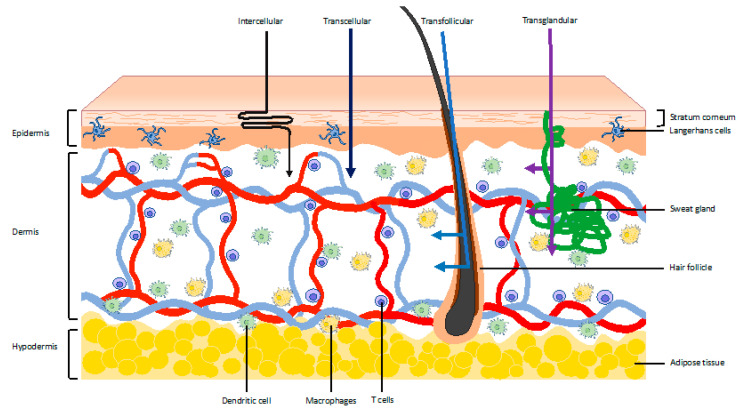
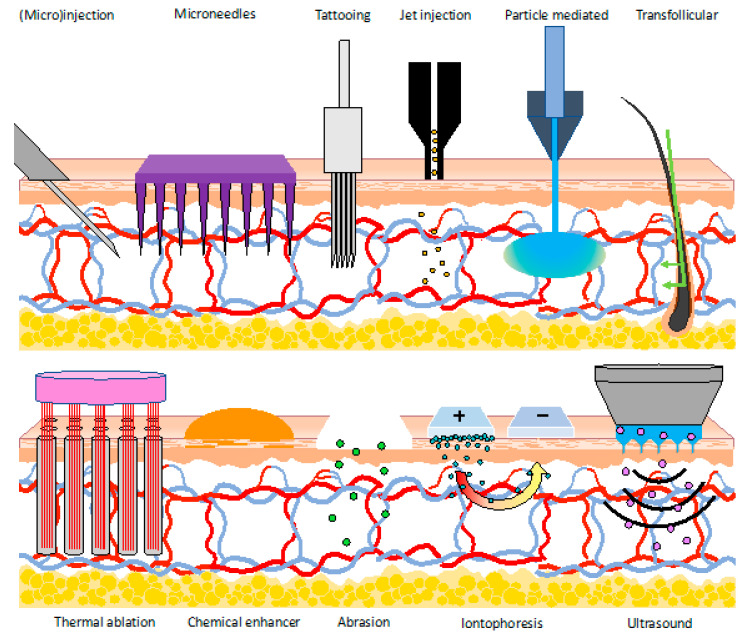
In 2019, an 'influenza pandemic' and 'vaccine hesitancy' were listed as two of the top 10 challenges to global health by the WHO. The skin is a unique vaccination site, due to its immune-rich milieu, which is evolutionarily primed to respond to challenge, and its ability to induce both humoral and cellular immunity. Vaccination into this dermal compartment offers a way of addressing both of the challenges presented by the WHO, as well as opening up avenues for novel vaccine formulation and dose-sparing strategies to enter the clinic. This review will provide an overview of the diverse range of vaccination techniques available to target the dermal compartment, as well as their current state, challenges, and prospects, and touch upon the formulations that have been developed to maximally benefit from these new techniques. These include needle and syringe techniques, microneedles, DNA tattooing, jet and ballistic delivery, and skin permeabilization techniques, including thermal ablation, chemical enhancers, ablation, electroporation, iontophoresis, and sonophoresis.
2019年,“流感大流行”和“疫苗犹豫”被世界卫生组织列为全球卫生面临的十大挑战中的两项。皮肤是一个独特的疫苗接种部位,因其富含免疫细胞的微环境,在进化上已做好应对挑战的准备,且具有诱导体液免疫和细胞免疫的能力。在此真皮层进行疫苗接种提供了一种应对世界卫生组织提出的这两项挑战的方法,同时也为新型疫苗制剂和剂量节省策略进入临床开辟了道路。本综述将概述针对真皮层的多种疫苗接种技术,以及它们的当前状态、挑战和前景,并探讨为最大程度受益于这些新技术而开发的制剂。这些技术包括针头和注射器技术、微针、DNA纹身、喷射和弹道给药,以及皮肤通透技术,包括热消融、化学增强剂、消融、电穿孔、离子电渗疗法和声电渗疗法。