
肌酸转运体缺乏症的新型转化表型和生物标志物。
Novel translational phenotypes and biomarkers for creatine transporter deficiency.
作者信息
Mazziotti Raffaele, Cacciante Francesco, Sagona Giulia, Lupori Leonardo, Gennaro Mariangela, Putignano Elena, Alessandrì Maria Grazia, Ferrari Annarita, Battini Roberta, Cioni Giovanni, Pizzorusso Tommaso, Baroncelli Laura
机构信息
Department of Neuroscience, Psychology, Drug Research and Child Health NEUROFARBA, University of Florence, Florence I-50135, Italy.
Institute of Neuroscience, National Research Council (CNR), Pisa I-56124, Italy.
出版信息
Brain Commun. 2020 Jul 3;2(2):fcaa089. doi: 10.1093/braincomms/fcaa089. eCollection 2020.
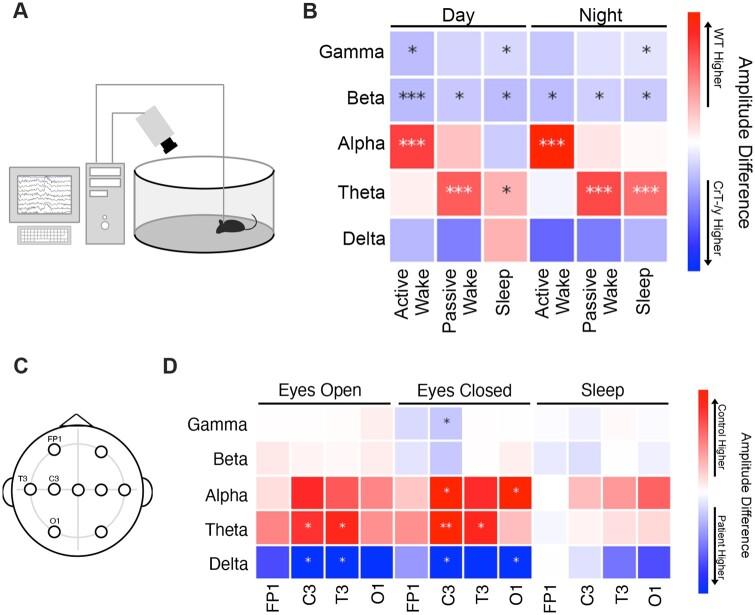
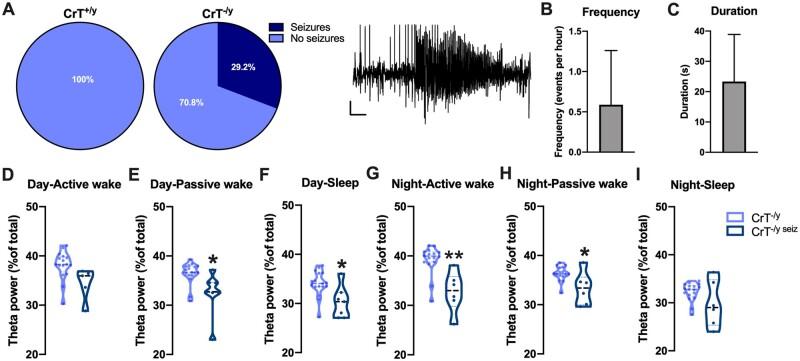
Creatine transporter deficiency is a metabolic disorder characterized by intellectual disability, autistic-like behaviour and epilepsy. There is currently no cure for creatine transporter deficiency, and reliable biomarkers of translational value for monitoring disease progression and response to therapeutics are sorely lacking. Here, we found that mice lacking functional creatine transporter display a significant alteration of neural oscillations in the EEG and a severe epileptic phenotype that are recapitulated in patients with creatine transporter deficiency. In-depth examination of knockout mice for creatine transporter also revealed that a decrease in EEG theta power is predictive of the manifestation of spontaneous seizures, a frequency that is similarly affected in patients compared to healthy controls. In addition, knockout mice have a highly specific increase in haemodynamic responses in the cerebral cortex following sensory stimuli. Principal component and Random Forest analyses highlighted that these functional variables exhibit a high performance in discriminating between pathological and healthy phenotype. Overall, our findings identify novel, translational and non-invasive biomarkers for the analysis of brain function in creatine transporter deficiency, providing a very reliable protocol to longitudinally monitor the efficacy of potential therapeutic strategies in preclinical, and possibly clinical, studies.
肌酸转运体缺乏症是一种代谢紊乱疾病,其特征为智力残疾、自闭症样行为和癫痫。目前,肌酸转运体缺乏症尚无治愈方法,而且严重缺乏具有转化价值、可用于监测疾病进展和治疗反应的可靠生物标志物。在此,我们发现缺乏功能性肌酸转运体的小鼠在脑电图中显示出神经振荡的显著改变以及严重的癫痫表型,这些在患有肌酸转运体缺乏症的患者中也有重现。对肌酸转运体基因敲除小鼠的深入研究还表明,脑电图θ波功率降低可预测自发性癫痫发作的表现,与健康对照相比,患者的这一频率也受到类似影响。此外,基因敲除小鼠在感觉刺激后大脑皮层的血流动力学反应有高度特异性的增加。主成分分析和随机森林分析强调,这些功能变量在区分病理和健康表型方面表现出高性能。总体而言,我们的研究结果确定了用于分析肌酸转运体缺乏症脑功能的新型、可转化且非侵入性的生物标志物,为在临床前及可能的临床研究中纵向监测潜在治疗策略的疗效提供了非常可靠的方案。




 Zotero 插件