Centre for Research in Neuroscience, Department of Neurology and Neurosurgery, McGill University, Montreal, Canada.
BRaIN Program, Research Institute of the McGill University Health Centre, Montreal, Canada.
Elife. 2020 Sep 21;9:e53994. doi: 10.7554/eLife.53994.
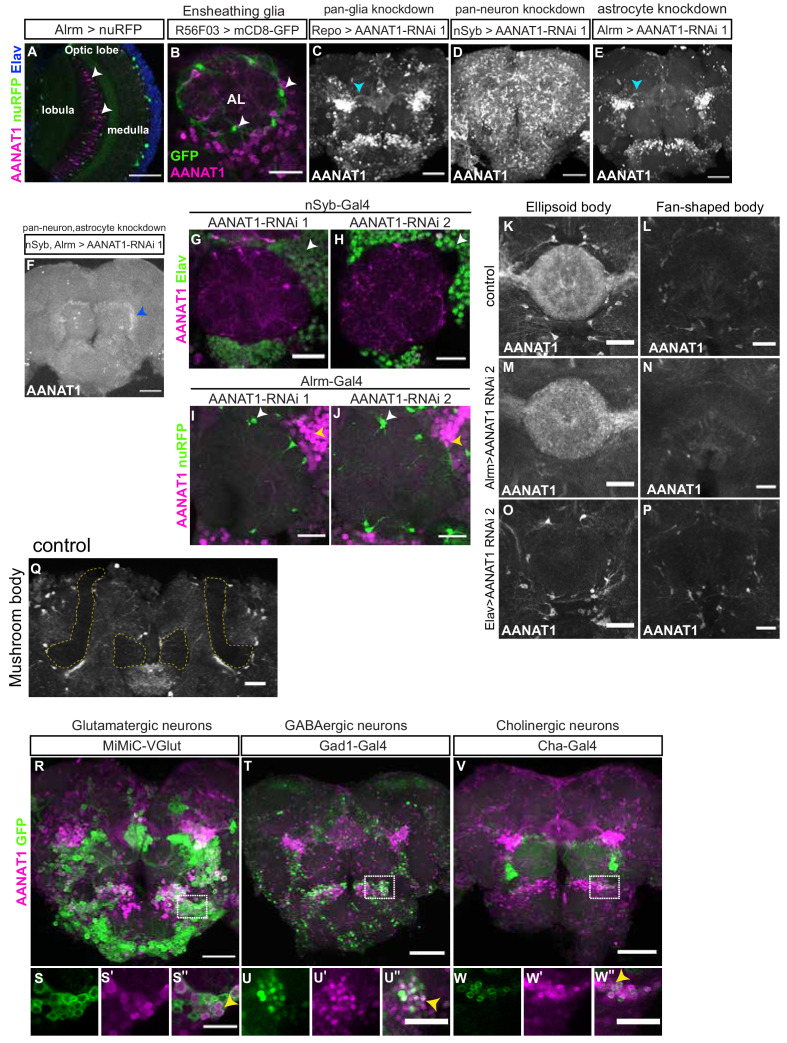
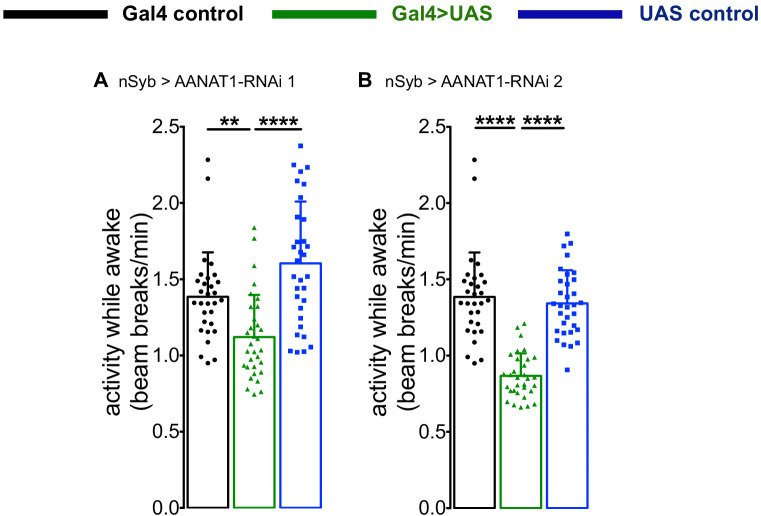
How the brain controls the need and acquisition of recovery sleep after prolonged wakefulness is an important issue in sleep research. The monoamines serotonin and dopamine are key regulators of sleep in mammals and in . We found that the enzyme arylalkylamine N-acetyltransferase 1 (AANAT1) is expressed by astrocytes and specific subsets of neurons in the adult brain. AANAT1 acetylates monoamines and inactivates them, and we found that AANAT1 limited the accumulation of serotonin and dopamine in the brain upon sleep deprivation (SD). Loss of AANAT1 from astrocytes, but not from neurons, caused flies to increase their daytime recovery sleep following overnight SD. Together, these findings demonstrate a crucial role for AANAT1 and astrocytes in the regulation of monoamine bioavailability and homeostatic sleep.
大脑如何控制在长时间清醒后对恢复性睡眠的需求和获取,是睡眠研究中的一个重要问题。单胺类神经递质血清素和多巴胺是哺乳动物睡眠的关键调节剂,在果蝇中也是如此。我们发现,芳基烷基胺 N-乙酰基转移酶 1(AANAT1)由成年大脑中的星形胶质细胞和特定神经元亚群表达。AANAT1 乙酰化单胺类物质并使其失活,我们发现 AANAT1 限制了睡眠剥夺(SD)后大脑中血清素和多巴胺的积累。星形胶质细胞而非神经元中的 AANAT1 缺失会导致果蝇在一夜 SD 后增加白天的恢复性睡眠。这些发现共同证明了 AANAT1 和星形胶质细胞在调节单胺类物质生物利用度和稳态睡眠中的关键作用。