Department of Pharmacy, Uppsala University, Husargatan 3, 751 23 Uppsala, Sweden.
The Swedish Drug Delivery Forum (SDDF), Uppsala University, Husargatan 3, 751 23 Uppsala, Sweden.
Mol Pharm. 2020 Nov 2;17(11):4226-4240. doi: 10.1021/acs.molpharmaceut.0c00668. Epub 2020 Oct 8.
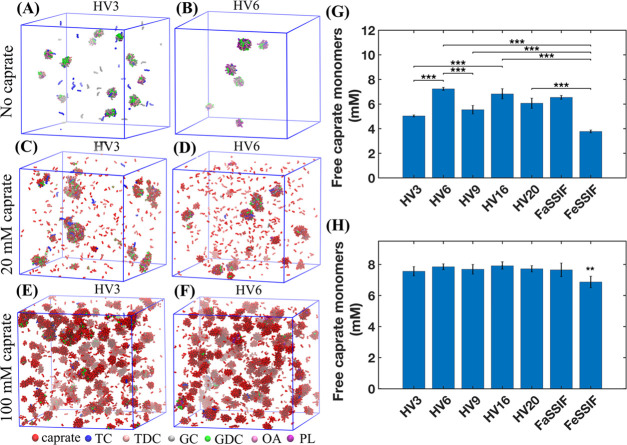
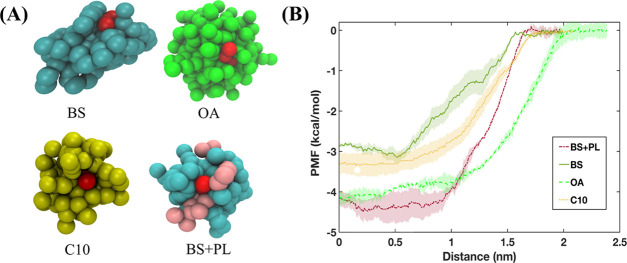
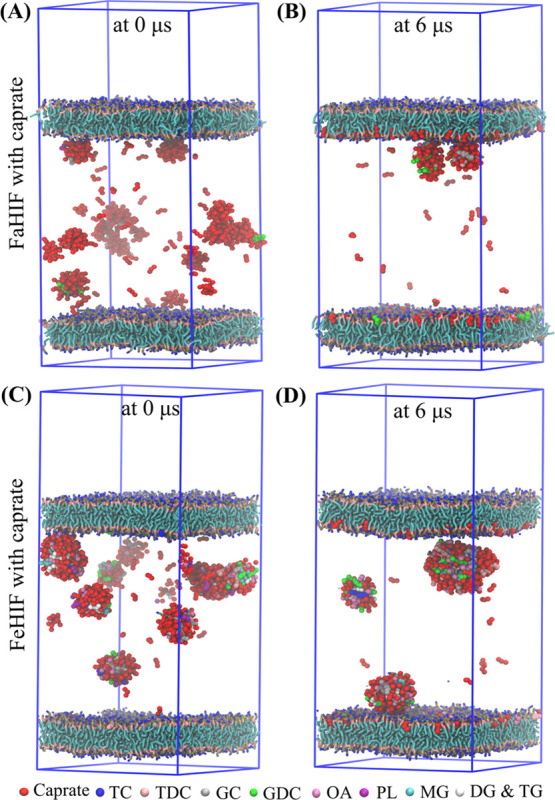
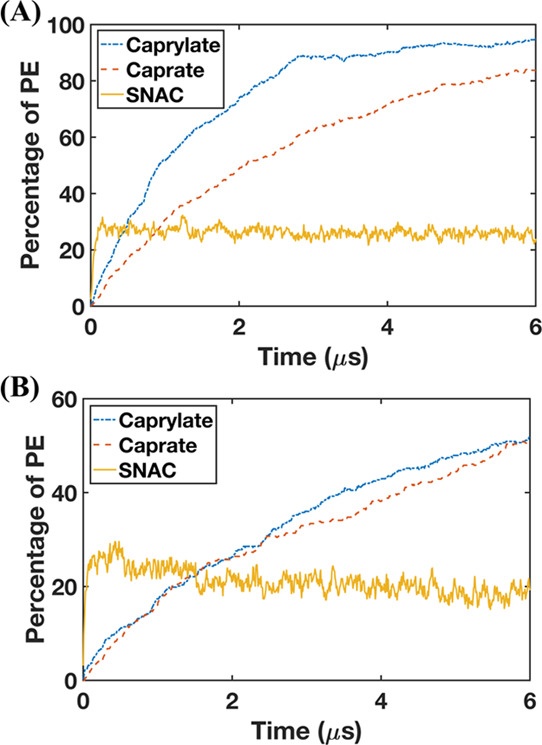
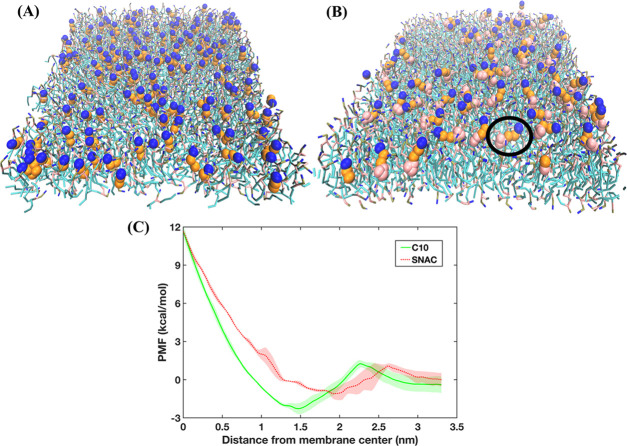
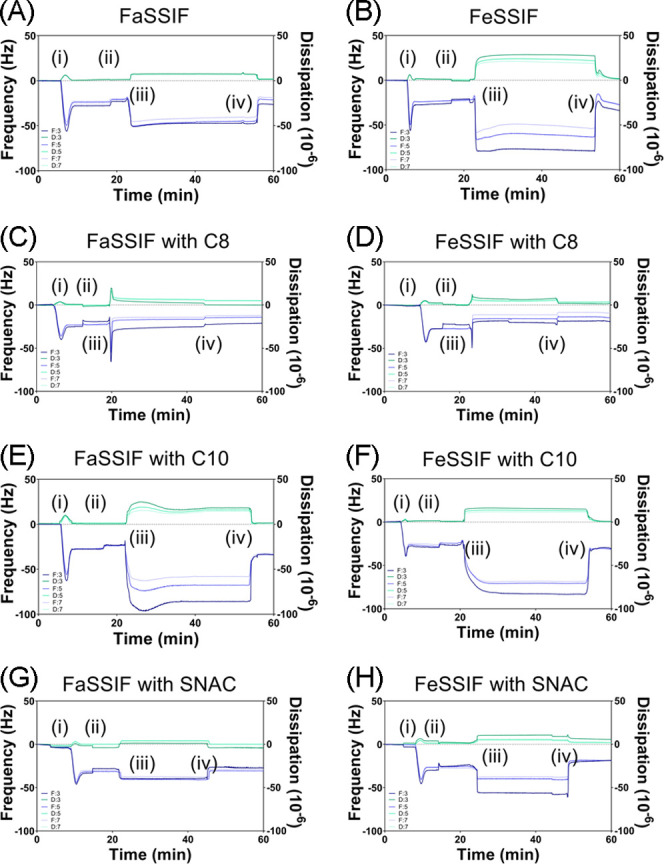
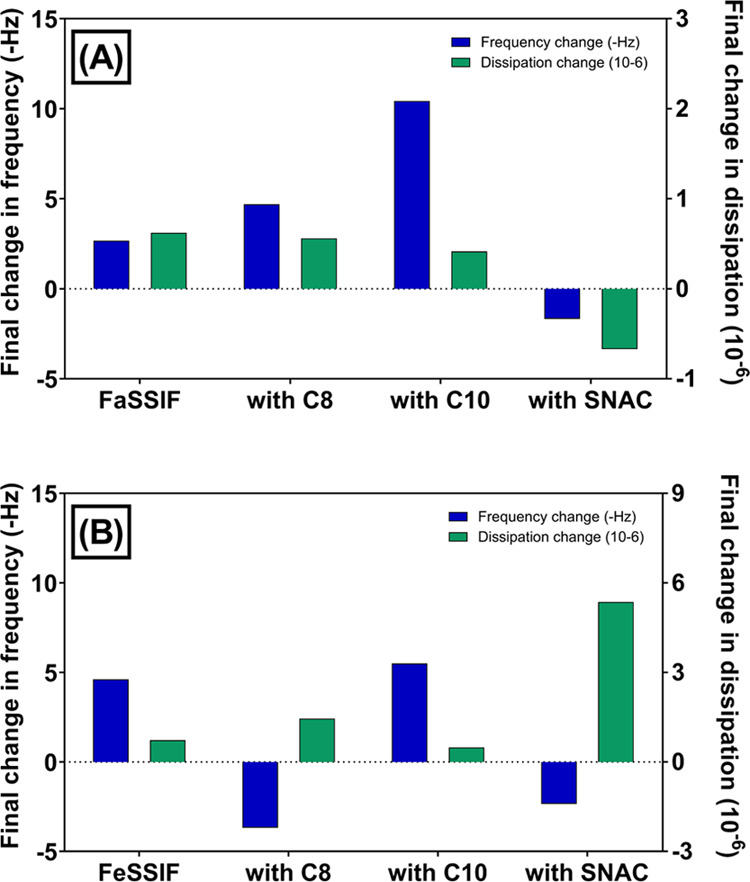
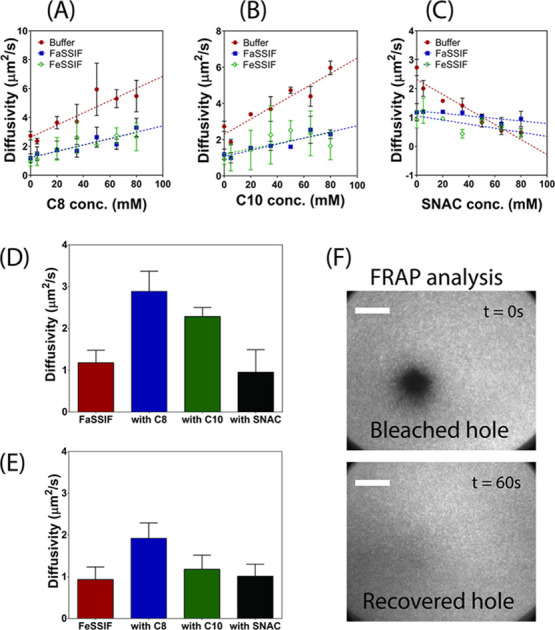
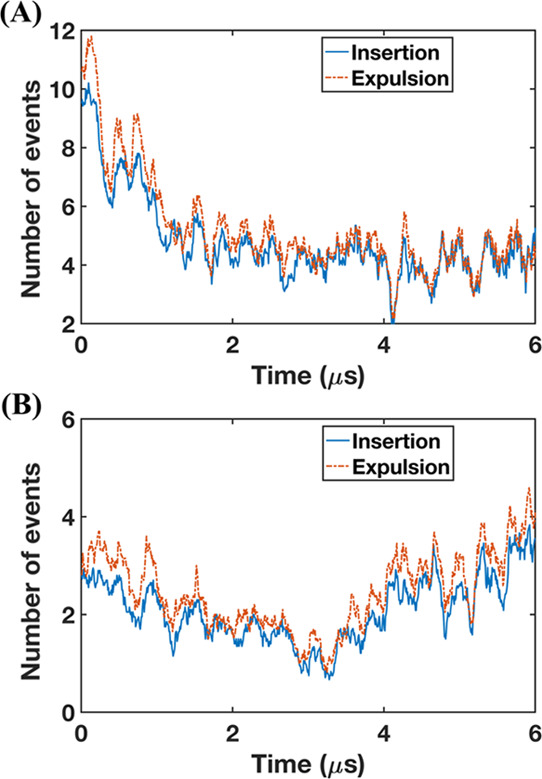
Transient permeability enhancers (PEs), such as caprylate, caprate, and salcaprozate sodium (SNAC), improve the bioavailability of poorly permeable macromolecular drugs. However, the effects are variable across individuals and classes of macromolecular drugs and biologics. Here, we examined the influence of bile compositions on the ability of membrane incorporation of three transient PEs-caprylate, caprate, and SNAC-using coarse-grained molecular dynamics (CG-MD). The availability of free PE monomers, which are important near the absorption site, to become incorporated into the membrane was higher in fasted-state fluids than that in fed-state fluids. The simulations also showed that transmembrane perturbation, ., insertion of PEs into the membrane, is a key mechanism by which caprylate and caprate increase permeability. In contrast, SNAC was mainly adsorbed onto the membrane surface, indicating a different mode of action. Membrane incorporation of caprylate and caprate was also influenced by bile composition, with more incorporation into fasted- than fed-state fluids. The simulations of transient PE interaction with membranes were further evaluated using two experimental techniques: the quartz crystal microbalance with dissipation technique and total internal reflection fluorescence microscopy. The experimental results were in good agreement with the computational simulations. Finally, the kinetics of membrane insertion was studied with CG-MD. Variation in micelle composition affected the insertion rates of caprate monomer insertion and expulsion from the micelle surface. In conclusion, this study suggests that the bile composition and the luminal composition of the intestinal fluid are important factors contributing to the interindividual variability in the absorption of macromolecular drugs administered with transient PEs.
瞬时渗透增强剂(PEs),如辛酸、癸酸和 SNAC(salcaprozate 钠),可提高生物通透性差的大分子药物的生物利用度。然而,其效果在个体和大分子药物和生物制剂之间存在差异。在这里,我们使用粗粒化分子动力学(CG-MD)研究了胆汁成分对三种瞬时 PEs(辛酸、癸酸和 SNAC)膜整合能力的影响。在空腹状态下,吸收部位附近的游离 PE 单体的可用性更高,更容易整合到膜中。模拟还表明,跨膜扰动,即 PEs 插入到膜中,是辛酸和癸酸增加通透性的关键机制。相比之下,SNAC 主要吸附在膜表面上,表明其作用模式不同。辛酸和癸酸的膜整合也受到胆汁成分的影响,在空腹状态下比在进食状态下更多地整合到膜中。使用两种实验技术:石英晶体微天平耗散技术和全内反射荧光显微镜,进一步评估了瞬时 PE 与膜相互作用的模拟。实验结果与计算模拟结果吻合良好。最后,使用 CG-MD 研究了膜插入的动力学。胶束组成的变化影响癸酸单体插入和从胶束表面排出的插入速率。总之,这项研究表明,胆汁组成和肠液腔的组成是影响瞬时 PE 给药的大分子药物吸收个体间变异性的重要因素。