Functional Neuroimaging Group, Clinic for Diagnostic and Interventional Radiology, University Hospital Bonn, 53127 Bonn, Germany.
Department of Medical Psychology and Medical Sociology, Ruhr University Bochum, 44780 Bochum, Germany.
Int J Environ Res Public Health. 2020 Sep 18;17(18):6801. doi: 10.3390/ijerph17186801.
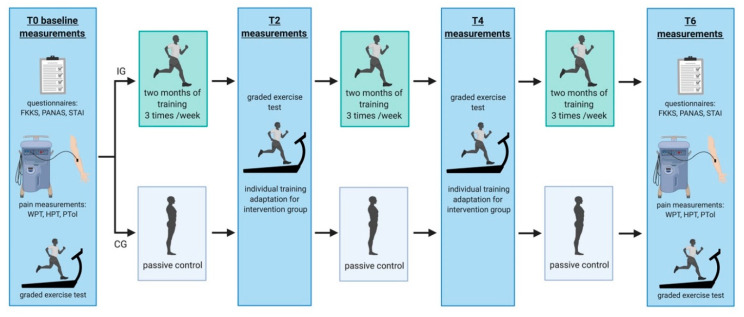
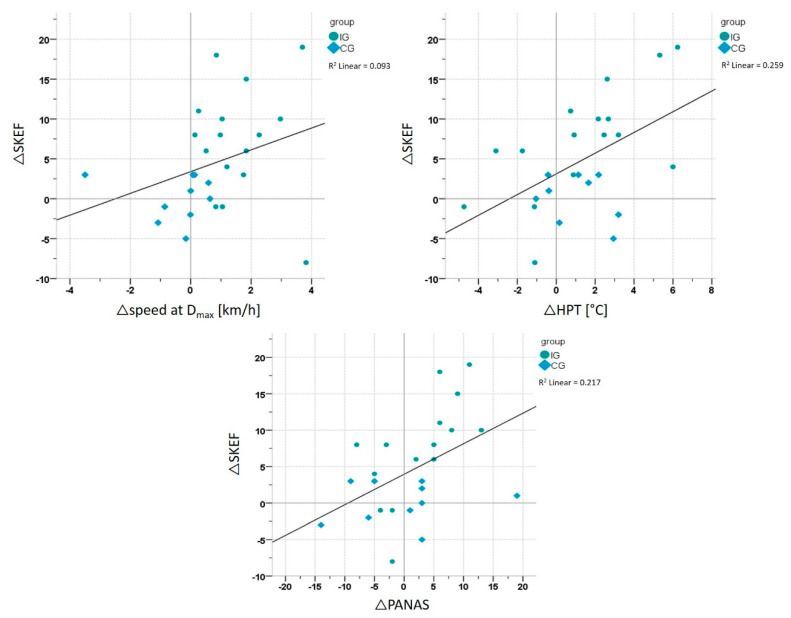
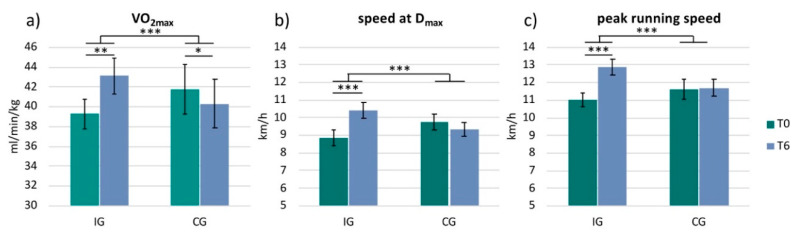
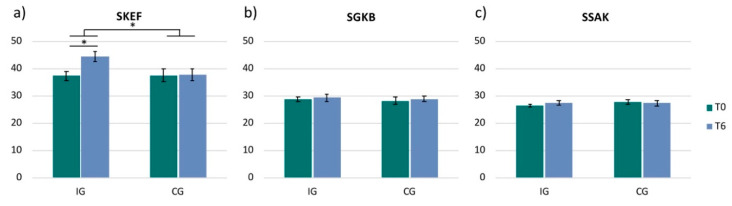
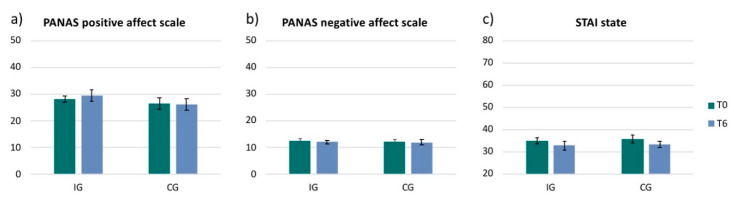
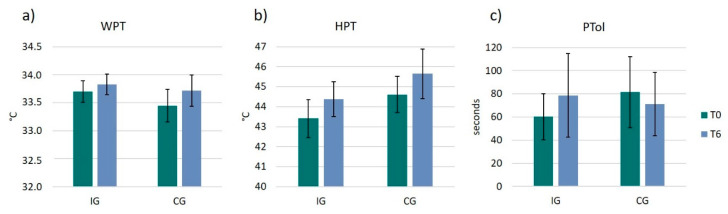
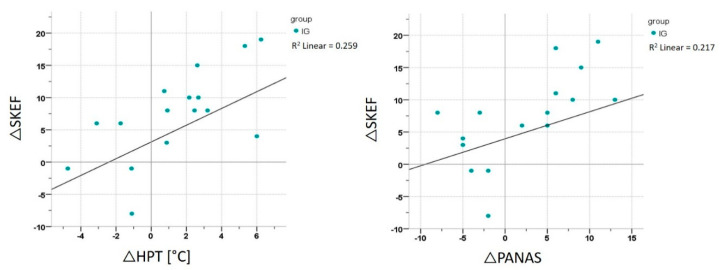
An important motivation for adolescents and young adults to engage in aerobic exercise (AE) is to improve fitness, body composition and physical appearance. These parameters have an impact on bodily perception as conceptualized by the 'body image' (BI) construct. AE is known to have positive effects on pain perception, mood, and body image (BI). However, no study has hitherto investigated their interrelationship within one study. Participants were randomly assigned to an intervention group (IG, = 16, 6 months of AE) or a passive control group (CG, = 10). Frankfurt Body-Concept Scales (FKKS), Positive and Negative Affect Scale (PANAS), State and Trait Anxiety Inventory, warmth and heat pain thresholds (WPT, HPT), pain tolerance, and graded exercise test data from baseline (T0) and the end of the intervention (T6) were analyzed using a paired -test ( < 0.05). A significant increase in the BI dimension 'physical efficacy' was identified from T0 to T6, which correlated positively with PANAS Positive Affect Scale and HPT. Data in young adults undergoing AE indicate that changes in the BI sub-category 'physical efficacy' are closely linked with changes in positive affect and antinociception. These novel findings suggest that BI plays a role in antinociception and positive affect.
对于青少年和年轻人来说,参与有氧运动(AE)的一个重要动机是改善健康、身体成分和身体外观。这些参数对身体感知有影响,身体感知是由“身体形象”(BI)概念来构想的。AE 已知对疼痛感知、情绪和身体形象(BI)有积极影响。然而,迄今为止,没有研究在一项研究中调查它们之间的相互关系。参与者被随机分配到干预组(IG,n = 16,6 个月的 AE)或被动对照组(CG,n = 10)。使用配对 t 检验(<0.05)分析了法兰克福身体概念量表(FKKS)、正负情感量表(PANAS)、状态和特质焦虑量表、温暖和热痛阈值(WPT、HPT)、疼痛耐受力以及从基线(T0)到干预结束(T6)的分级运动测试数据。从 T0 到 T6,BI 维度“身体效能”显著增加,与 PANAS 积极情感量表和 HPT 呈正相关。对接受 AE 的年轻人的数据表明,BI 亚类“身体效能”的变化与积极情感和抗伤害感受的变化密切相关。这些新发现表明,BI 在抗伤害感受和积极情感中起作用。