Department of Sport Physiology, Faculty of Physical Education and Sport Sciences, Bu-Ali Sina University, Hamedan 6517838695, Iran.
Department of Physiology, Razi Herbal Medicine Research Center, Lorestan University of Medical Sciences, Khorramabad 6813846464, Iran.
Biomed Res Int. 2020 Sep 4;2020:4104965. doi: 10.1155/2020/4104965. eCollection 2020.
It has been shown that angiogenesis is a desirable treatment for patients with ischemic heart disease. We set out to investigate the impact of high-intensity interval training (HIIT) and berberine supplementation on the gene expression of angiogenesis-related factors and caspase-3 protein in rats suffering from myocardial ischemic-reperfusion injury.
Fifty rats were divided into the following groups: (1) trained, (2) berberine supplemented, (3) combined, and (4) IR. Each cohort underwent five sessions of HIIT per week for a duration of 8 weeks followed by induction of ischemia. Seven days after completion of reperfusion, changes in the gene expression of angiogenesis-related factors and caspase-3 protein were evaluated in the heart tissue.
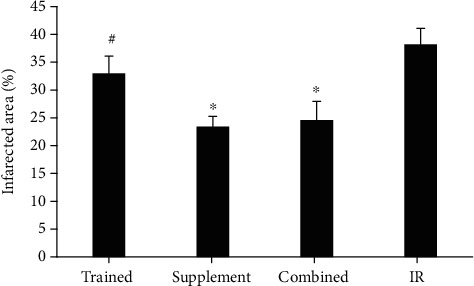
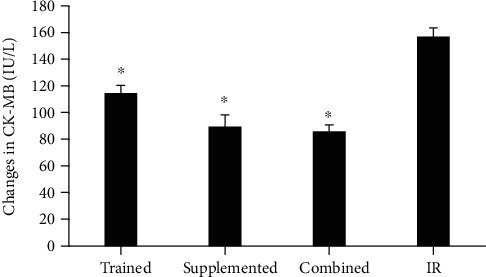
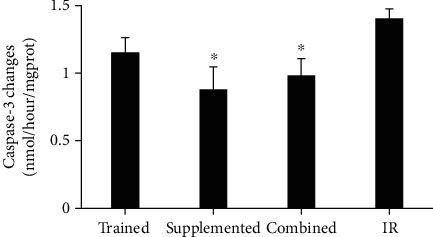
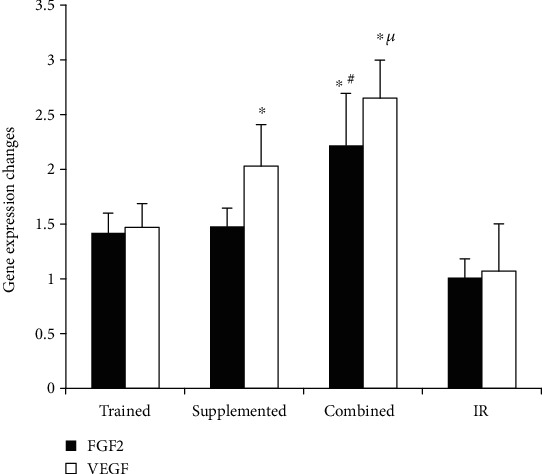
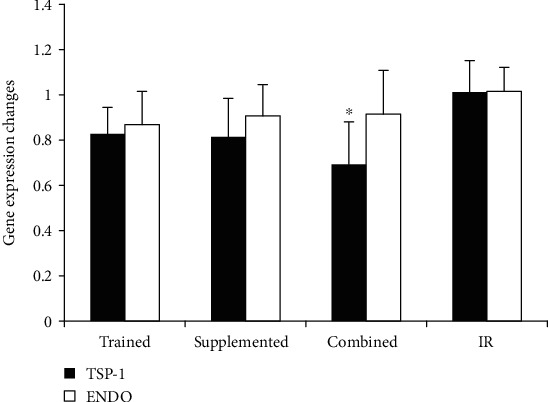
We observed a significant difference between four groups in the transcript levels of vascular endothelial cell growth factor (VEGF), fibroblast growth factor-2 (FGF2), and thrombospondin-1(TSP-1) ( ≤ 0.05). However, the difference in endostatin (ENDO) levels was not significant among the groups despite a discernible reduction ( ≥ 0.05). Moreover, caspase-3 protein and infarct size were significantly reduced in the intervention groups ( ≤ 0.05), and cardiac function increased in response to these interventions.
The treatments exert their effect, likely, by reducing caspase-3 protein and increasing the expression of angiogenesis-promoting factors, concomitant with a reduction in inhibitors of the process.
已有研究表明,血管生成是治疗缺血性心脏病患者的理想方法。本研究旨在探讨高强度间歇训练(HIIT)和黄连素补充对缺血再灌注损伤大鼠血管生成相关因子基因表达和半胱天冬酶-3 蛋白的影响。
将 50 只大鼠分为以下几组:(1)训练组,(2)黄连素补充组,(3)联合组,(4)IR 组。每个队列每周进行 5 次 HIIT,持续 8 周,然后诱导缺血。再灌注 7 天后,评估心脏组织中血管生成相关因子和半胱天冬酶-3 蛋白的基因表达变化。
我们观察到四组之间血管内皮生长因子(VEGF)、成纤维细胞生长因子-2(FGF2)和血小板反应蛋白-1(TSP-1)的转录水平有显著差异(≤0.05)。然而,各组之间内抑素(ENDO)水平的差异不显著,尽管有明显的减少(≥0.05)。此外,干预组的半胱天冬酶-3 蛋白和梗死面积显著减少(≤0.05),并且这些干预措施增加了心脏功能。
这些治疗方法可能通过降低半胱天冬酶-3 蛋白和增加促进血管生成的因子的表达,同时减少该过程的抑制剂来发挥作用。