Nugrahani Ilma, Auli Winni Nur
School of Pharmacy, Bandung Institute of Technology, Bandung, 40132, Indonesia.
Heliyon. 2020 Sep 14;6(9):e04864. doi: 10.1016/j.heliyon.2020.e04864. eCollection 2020 Sep.
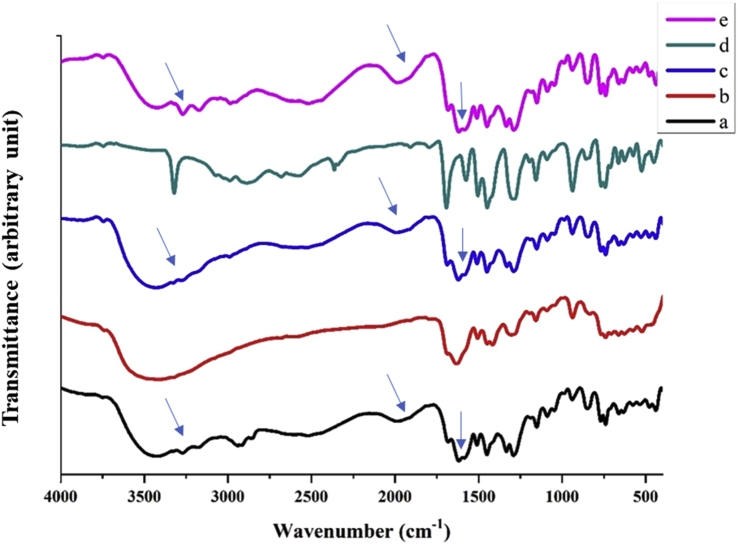
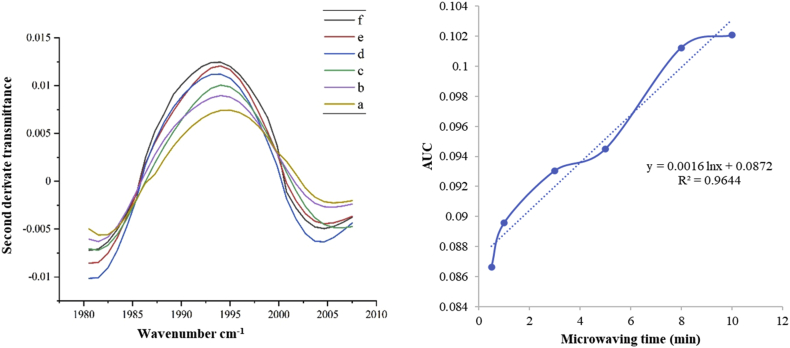
Nanotechnology has been widely developed to improve the solubility of active pharmaceutical ingredients. Co-crystal discovery has also taken much attention in drug design and development. A combination of the two techniques generates "nano-co-crystallization", a new approach to obtaining the superior character of drugs. Previously, a new diclofenac-proline co-crystal (DPC) arrangement has been reported. The present research attempted to develop a nano-diclofenac-proline-co-crystal (NDPC) and to evaluate its formation kinetics, and dissolution-diffusion improvements. Both top-down and bottom-up methods optimized nano-co-crystal production. The top-down technique was used through the wet milling procedure and neat grinding procedures, while the bottom-up technique was performed through the globule inversion phase and fast evaporation assisted microwaving. The NDPCs obtained were then characterized by dynamic light scattering, binocular microscope, scanning electron microscopy, transmission electron microscopy, differential scanning calorimetry, powder x-ray diffractometry, and Fourier transform infrared spectrophotometry. The kinetics of NDPC formation was determined based on the difference of microwaving versus the co-crystal yield, which was analyzed using Fourier transform infrared spectroscopy. Dissolution was tested by type 2 apparatus, and diffusion was tested using Franz diffusion cells. The bottom-up method by fast evaporation assisted microwaving provided the best nano-co-crystal with a mean diameter of 598.2 ± 63.2 nm and a polydispersity index of 0.278 ± 0.062. Nano-co-crystal formation kinetic, which was evaluated by FTIR, indicated to follow first order. Finally, NDPC showed the superior dissolution and diffusion profile than conventional-DPC. In this study, we demonstrate a promising alternative for improving the dissolution and diffusion of the drug by nano-co-crystallization.
纳米技术已得到广泛发展,以提高活性药物成分的溶解度。共晶发现也在药物设计和开发中备受关注。这两种技术的结合产生了“纳米共结晶”,这是一种获得药物优异特性的新方法。此前,已报道了一种新的双氯芬酸 - 脯氨酸共晶(DPC)排列方式。本研究试图开发一种纳米双氯芬酸 - 脯氨酸共晶(NDPC),并评估其形成动力学以及溶解 - 扩散改善情况。自上而下和自下而上的方法都对纳米共晶的生产进行了优化。自上而下的技术通过湿磨程序和纯研磨程序使用,而自下而上的技术则通过小球反转相和快速蒸发辅助微波处理来进行。然后通过动态光散射、双目显微镜、扫描电子显微镜、透射电子显微镜、差示扫描量热法、粉末X射线衍射法和傅里叶变换红外光谱法对获得的NDPC进行表征。基于微波处理与共晶产率的差异确定NDPC形成的动力学,使用傅里叶变换红外光谱进行分析。通过2型仪器测试溶解情况,使用Franz扩散池测试扩散情况。快速蒸发辅助微波处理的自下而上方法提供了最佳的纳米共晶,其平均直径为598.2±63.2 nm,多分散指数为0.278±0.062。通过FTIR评估的纳米共晶形成动力学表明遵循一级反应。最后,NDPC显示出比传统DPC更优异的溶解和扩散曲线。在本研究中,我们证明了通过纳米共结晶改善药物溶解和扩散的一种有前景的替代方法。