Department of Women's and Children's Health, Karolinska Institutet, Stockholm, Sweden.
Department of Pediatric Neurology, Karolinska University Hospital, Stockholm, Sweden.
Epilepsia. 2020 Nov;61(11):2486-2499. doi: 10.1111/epi.16701. Epub 2020 Sep 23.
Population-based data on epilepsy syndromes and etiologies in early onset epilepsy are scarce. The use of next-generation sequencing (NGS) has hitherto not been reported in this context. The aim of this study is to describe children with epilepsy onset before 2 years of age, and to explore to what degree whole exome and whole genome sequencing (WES/WGS) can help reveal a molecular genetic diagnosis.
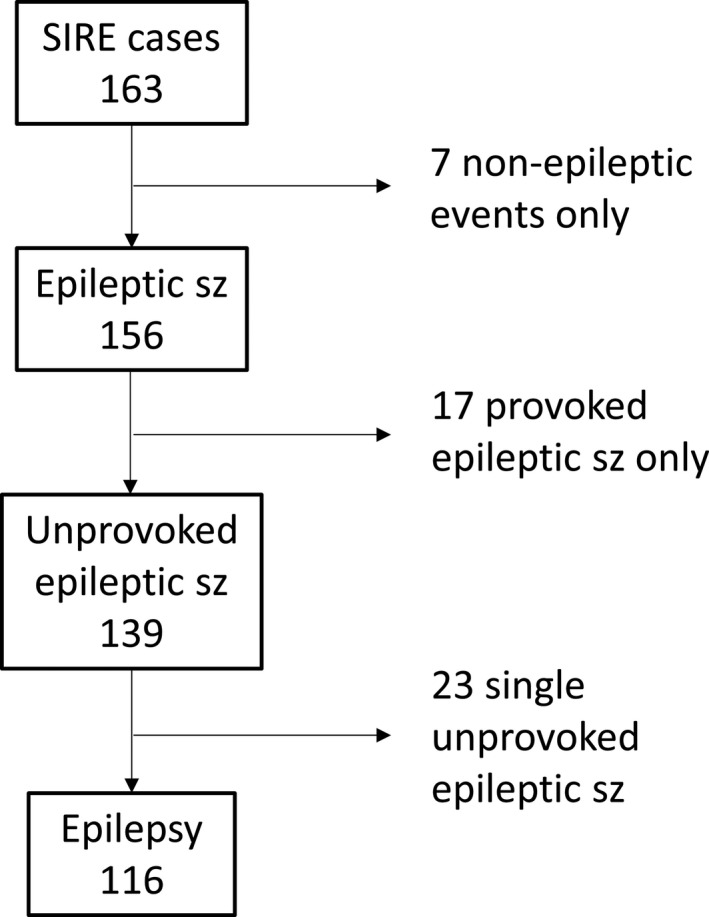
Children presenting with a first unprovoked epileptic seizure before age 2 years and registered in the Stockholm Incidence Registry of Epilepsy (SIRE) between September 1, 2001 and December 31, 2006, were retrieved and their medical records up to age 7 years reviewed. Children who met the epilepsy criteria were included in the study cohort. WES/WGS was offered in cases of suspected genetic etiology regardless of whether a structural or metabolic diagnosis had been established.
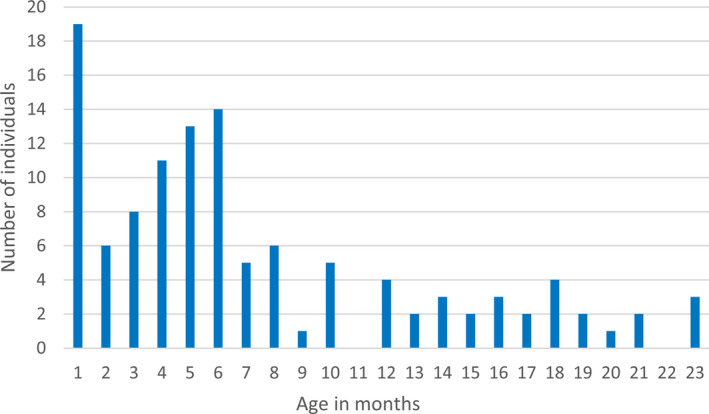
One hundred sixteen children were included, of which 88 had seizure onset during the first year of life and 28 during the second, corresponding to incidences of 139 and 42/100 000 person-years, respectively. An epilepsy syndrome could be diagnosed in 54% of cases, corresponding to a birth prevalence of 1/1100. Structural etiology was revealed in 34% of cases, a genetic cause in 20%, and altogether etiology was known in 65% of children. The highest diagnostic yield was seen in magnetic resonance imaging (MRI) with 65% revealing an etiology. WES/WGS was performed in 26/116 cases (22%), with a diagnostic yield of 58%.
Epilepsy syndromes can be diagnosed and etiologies revealed in a majority of early onset cases. NGS can identify a molecular diagnosis in a substantial number of children, and should be included in the work-up, especially in cases of epileptic encephalopathy, cerebral malformation, or metabolic disease without molecular diagnosis. A genetic diagnosis is essential to genetic counselling, prenatal diagnostics, and precision therapy.
关于早发性癫痫的癫痫综合征和病因的基于人群的数据很少。到目前为止,尚未有关于下一代测序(NGS)在这方面应用的报道。本研究的目的是描述发病年龄在 2 岁以下的癫痫患儿,并探讨全外显子组和全基因组测序(WES/WGS)在多大程度上可以帮助发现分子遗传学诊断。
检索 2001 年 9 月 1 日至 2006 年 12 月 31 日期间在斯德哥尔摩癫痫发病率登记处(SIRE)登记的发病年龄在 2 岁以下的首次无诱因癫痫发作的患儿,并对其至 7 岁的病历进行回顾。符合癫痫标准的患儿被纳入研究队列。无论是否已建立结构性或代谢性诊断,均对疑似遗传病因的患儿进行 WES/WGS。
共纳入 116 例患儿,其中 88 例发病于 1 岁以内,28 例发病于 2 岁以内,相应的发病率为 139/100000 人年和 42/100000 人年。54%的病例可诊断为癫痫综合征,对应的发病粗率为 1/1100。34%的病例揭示结构性病因,20%揭示遗传学病因,65%的患儿病因明确。MRI 的诊断率最高,达 65%。对 116 例患儿中的 26 例(22%)进行了 WES/WGS,诊断率为 58%。
在大多数早发性病例中,可以诊断癫痫综合征并明确病因。NGS 可以在相当数量的患儿中确定分子诊断,应纳入检查,特别是在癫痫性脑病、脑畸形或代谢性疾病但无分子诊断的情况下。遗传诊断对遗传咨询、产前诊断和精准治疗至关重要。