Unit of Immunotherapy of Human Tumors, Fondazione IRCCS Istituto Nazionale dei Tumori, Via Venezian 1, 20133, Milan, Italy.
Platform of Integrated Biology, Department of Applied Research and Technological Development, Fondazione IRCCS Istituto Nazionale dei Tumori AmadeoLab, Milan, Italy.
Cell Commun Signal. 2020 Sep 23;18(1):156. doi: 10.1186/s12964-020-00601-1.
Targeted therapy with BRAF and MEK inhibitors has improved the survival of patients with BRAF-mutated metastatic melanoma, but most patients relapse upon the onset of drug resistance induced by mechanisms including genetic and epigenetic events. Among the epigenetic alterations, microRNA perturbation is associated with the development of kinase inhibitor resistance. Here, we identified and studied the role of miR-146a-5p dysregulation in melanoma drug resistance.
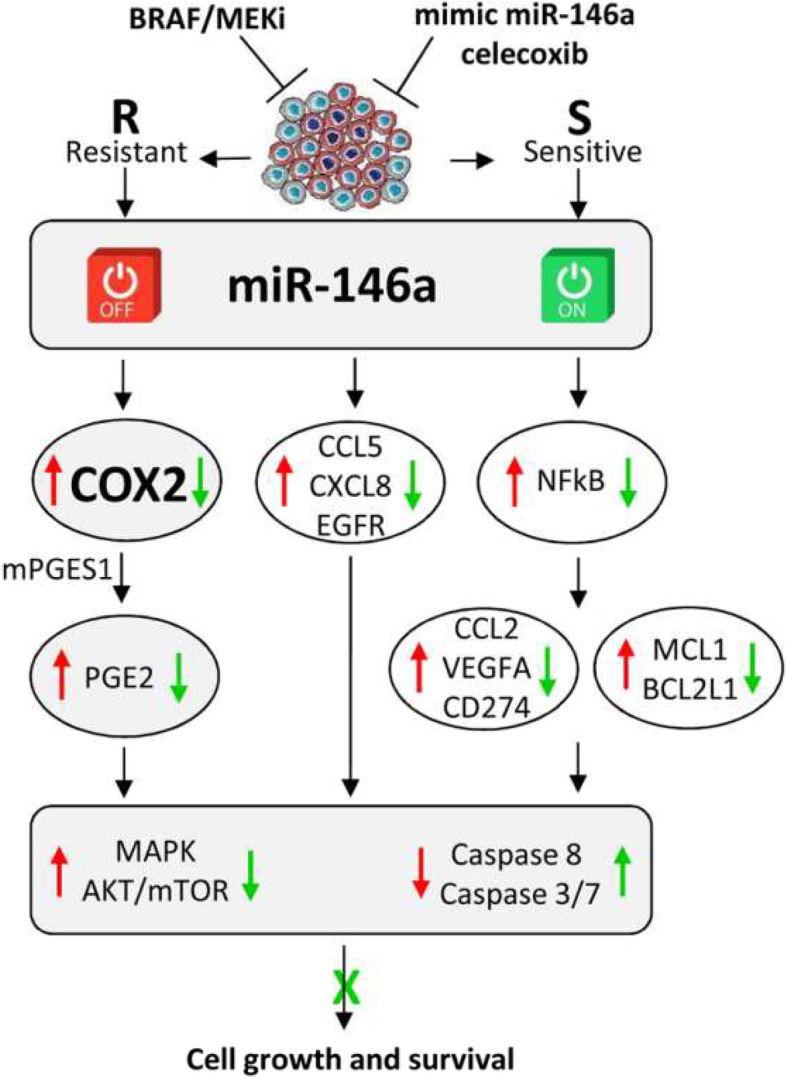
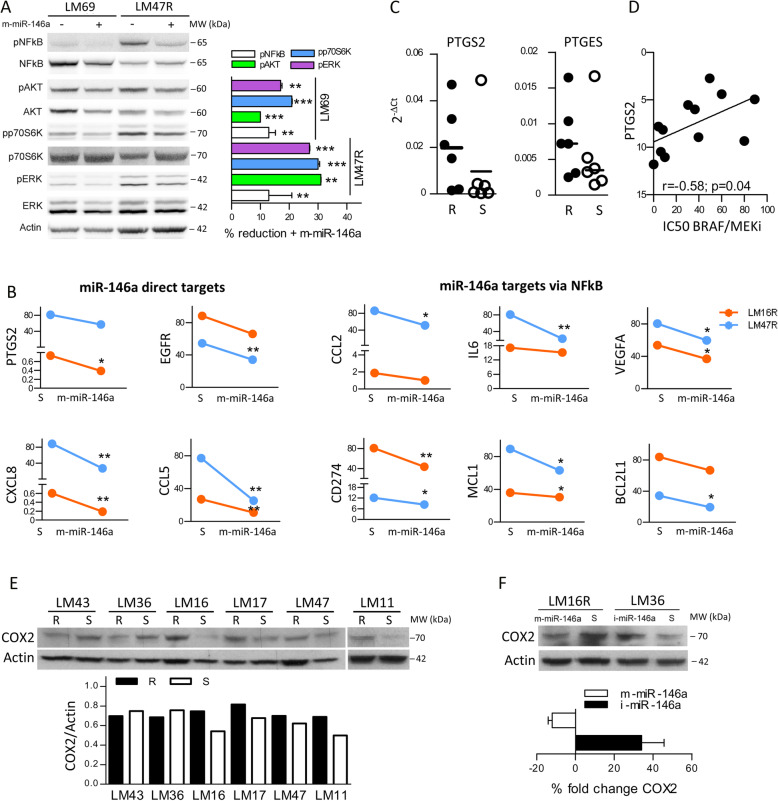
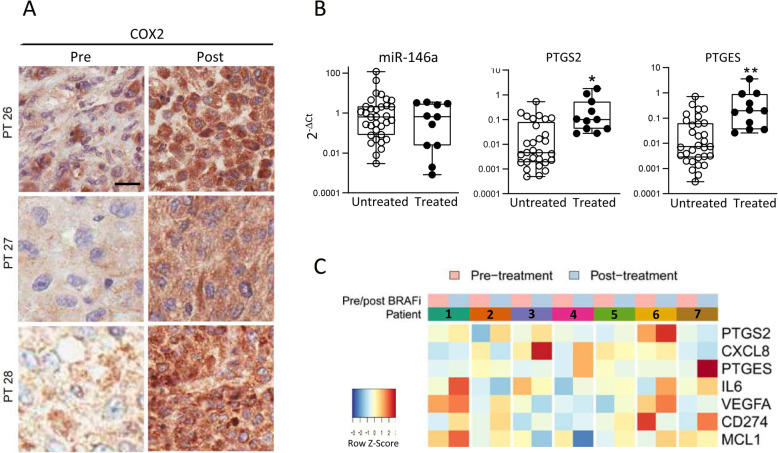
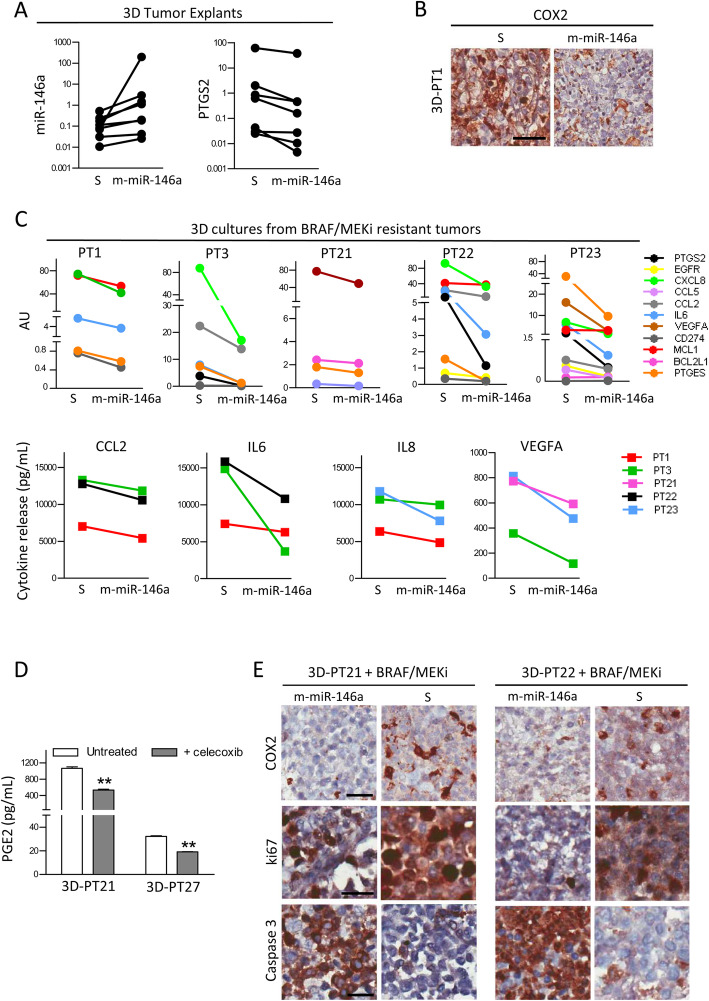
The miR-146a-5p-regulated NFkB signaling network was identified in drug-resistant cell lines and melanoma tumor samples by expression profiling and knock-in and knock-out studies. A bioinformatic data analysis identified COX2 as a central gene regulated by miR-146a-5p and NFkB. The effects of miR-146a-5p/COX2 manipulation were studied in vitro in cell lines and with 3D cultures of treatment-resistant tumor explants from patients progressing during therapy.
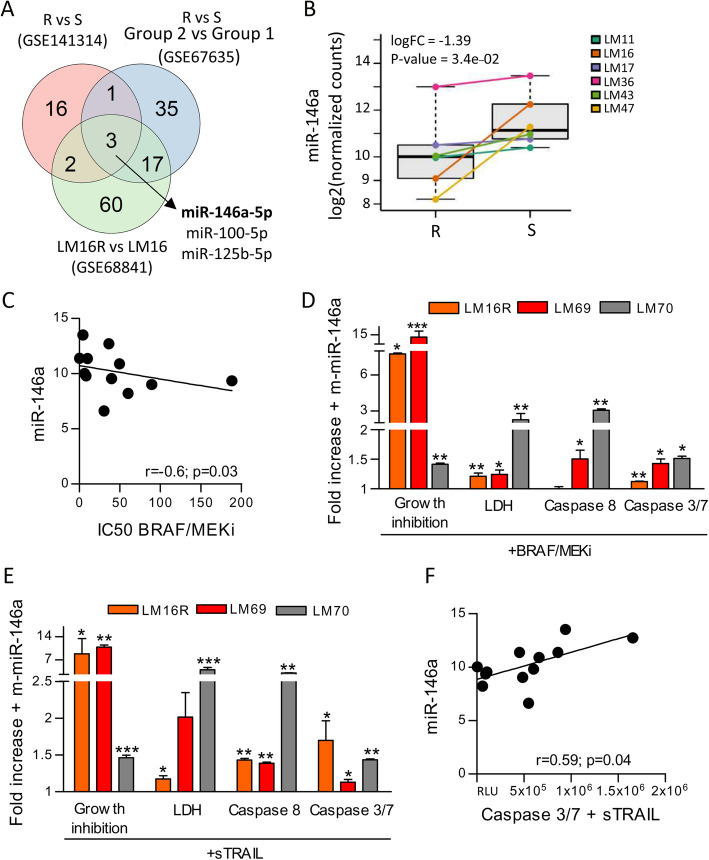
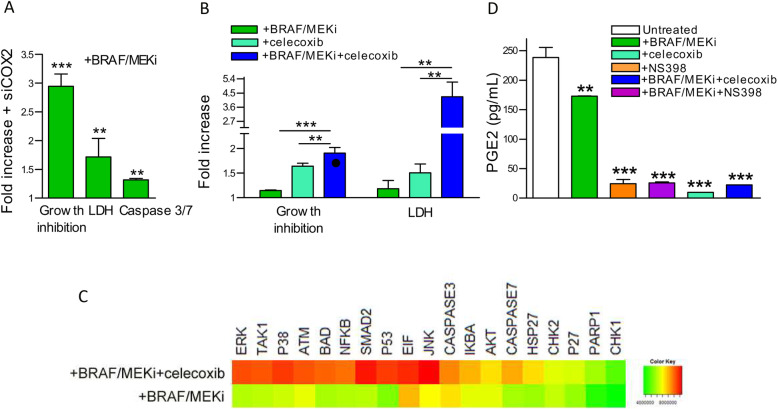
miR-146a-5p expression was inversely correlated with drug sensitivity and COX2 expression and was reduced in BRAF and MEK inhibitor-resistant melanoma cells and tissues. Forced miR-146a-5p expression reduced COX2 activity and significantly increased drug sensitivity by hampering prosurvival NFkB signaling, leading to reduced proliferation and enhanced apoptosis. Similar effects were obtained by inhibiting COX2 by celecoxib, a clinically approved COX2 inhibitor.
Deregulation of the miR-146a-5p/COX2 axis occurs in the development of melanoma resistance to targeted drugs in melanoma patients. This finding reveals novel targets for more effective combination treatment. Video Abstract.
BRAF 和 MEK 抑制剂的靶向治疗改善了 BRAF 突变转移性黑色素瘤患者的生存,但大多数患者在药物耐药性的发生后会复发,其机制包括遗传和表观遗传事件。在表观遗传改变中,microRNA 的失调与激酶抑制剂耐药的发展有关。在这里,我们鉴定并研究了 miR-146a-5p 失调在黑色素瘤药物耐药中的作用。
通过表达谱分析、敲入和敲除研究,在耐药细胞系和黑色素瘤肿瘤样本中鉴定了 miR-146a-5p 调节的 NFkB 信号网络。生物信息学数据分析确定 COX2 是受 miR-146a-5p 和 NFkB 调节的中心基因。在体外细胞系中以及对正在治疗中进展的患者的耐药性肿瘤标本的 3D 培养物中,研究了 miR-146a-5p/COX2 操作的效果。
miR-146a-5p 的表达与药物敏感性和 COX2 的表达呈负相关,并且在 BRAF 和 MEK 抑制剂耐药的黑色素瘤细胞和组织中减少。强制表达 miR-146a-5p 可通过抑制促生存 NFkB 信号来降低 COX2 活性,从而显著提高药物敏感性,导致增殖减少和凋亡增强。通过使用临床上批准的 COX2 抑制剂塞来昔布抑制 COX2 也可获得类似的效果。
miR-146a-5p/COX2 轴的失调发生在黑色素瘤患者对靶向药物耐药性的发展中。这一发现揭示了更有效的联合治疗的新靶点。视频摘要。