Department of Medical Oncology, Erasmus MC Cancer Institute, Erasmus University Medical Center, 3015 CN Rotterdam, The Netherlands.
Int J Mol Sci. 2020 Sep 22;21(18):6975. doi: 10.3390/ijms21186975.
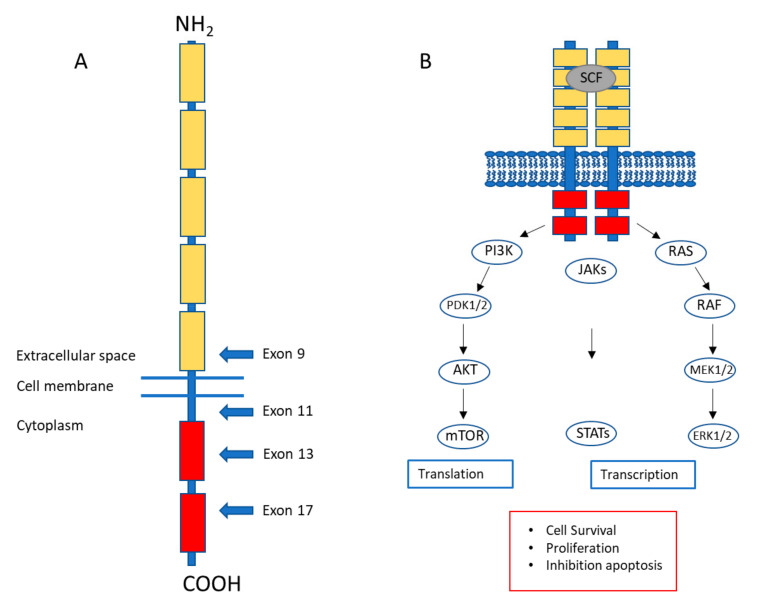
Gastrointestinal stromal tumors (GISTs) are the most common mesenchymal malignancies found in the gastrointestinal tract. At a molecular level, most GISTs are characterized by gain-of-function mutations in V-Kit Hardy-Zuckerman 4 Feline Sarcoma Viral Oncogene Homolog () and Platelet Derived Growth Factor Receptor Alpha (), leading to constitutive activated signaling through these receptor tyrosine kinases, which drive GIST pathogenesis. In addition to surgery, treatment with the tyrosine kinase inhibitor imatinib forms the mainstay of GIST treatment, particularly in the advanced setting. Nevertheless, the majority of GISTs develop imatinib resistance. Biomarkers that indicate metastasis, drug resistance and disease progression early on could be of great clinical value. Likewise, novel treatment strategies that overcome resistance mechanisms are equally needed. Non-coding RNAs, particularly microRNAs, can be employed as diagnostic, prognostic or predictive biomarkers and have therapeutic potential. Here we review which non-coding RNAs are deregulated in GISTs, whether they can be linked to specific clinicopathological features and discuss how they can be used to improve the clinical management of GISTs.
胃肠道间质瘤(GISTs)是胃肠道中最常见的间叶性恶性肿瘤。在分子水平上,大多数 GISTs 表现为 V-Kit Hardy-Zuckerman 4 猫肉瘤病毒致癌基因同源物()和血小板衍生生长因子受体α()获得性功能突变,导致这些受体酪氨酸激酶的组成性激活信号,从而驱动 GIST 的发病机制。除手术外,酪氨酸激酶抑制剂伊马替尼的治疗已成为 GIST 治疗的主要方法,尤其是在晚期。然而,大多数 GIST 会产生伊马替尼耐药性。能够早期提示转移、耐药和疾病进展的生物标志物具有重要的临床价值。同样,也需要克服耐药机制的新型治疗策略。非编码 RNA,特别是 microRNAs,可以作为诊断、预后或预测生物标志物,并具有治疗潜力。在这里,我们综述了 GISTs 中哪些非编码 RNA 失调,它们是否可以与特定的临床病理特征相关,并讨论如何将其用于改善 GISTs 的临床管理。