
基于纳米颗粒的药物递送在癌症治疗中的应用及其在克服耐药性方面的作用。
Nanoparticle-Based Drug Delivery in Cancer Therapy and Its Role in Overcoming Drug Resistance.
作者信息
Yao Yihan, Zhou Yunxiang, Liu Lihong, Xu Yanyan, Chen Qiang, Wang Yali, Wu Shijie, Deng Yongchuan, Zhang Jianmin, Shao Anwen
机构信息
Department of Surgical Oncology, The Second Affiliated Hospital, School of Medicine, Zhejiang University, Hangzhou, China.
Department of Radiation Oncology, The Second Affiliated Hospital, School of Medicine, Zhejiang University, Hangzhou, China.
出版信息
Front Mol Biosci. 2020 Aug 20;7:193. doi: 10.3389/fmolb.2020.00193. eCollection 2020.
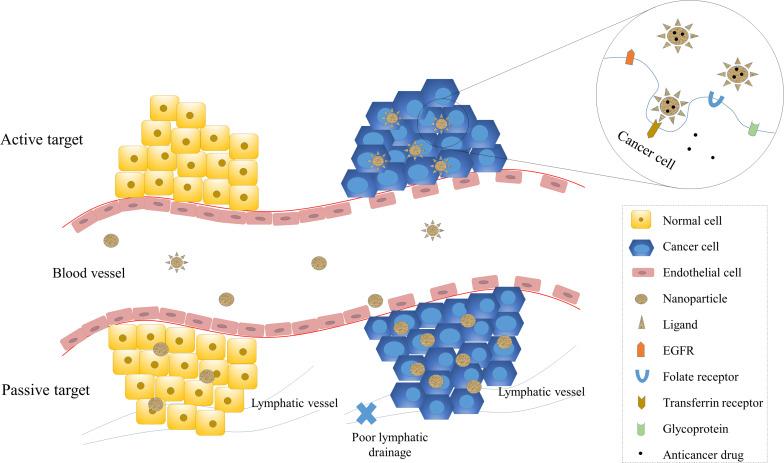
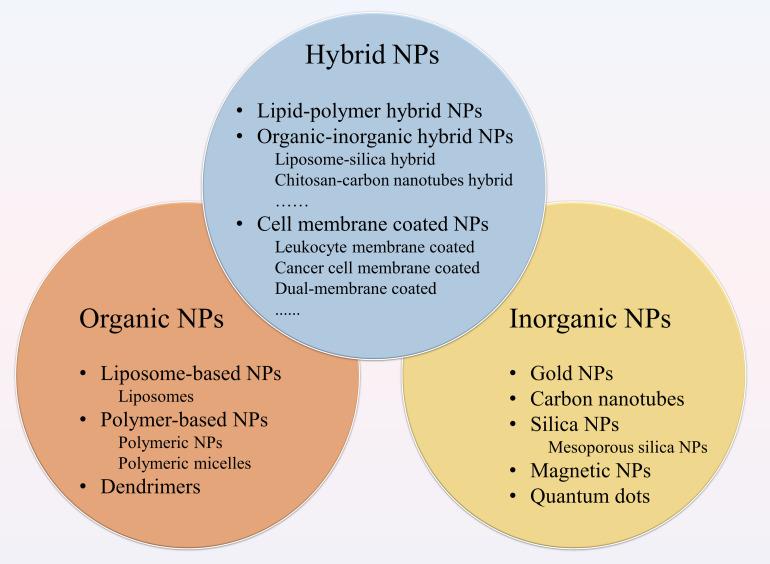
Nanotechnology has been extensively studied and exploited for cancer treatment as nanoparticles can play a significant role as a drug delivery system. Compared to conventional drugs, nanoparticle-based drug delivery has specific advantages, such as improved stability and biocompatibility, enhanced permeability and retention effect, and precise targeting. The application and development of hybrid nanoparticles, which incorporates the combined properties of different nanoparticles, has led this type of drug-carrier system to the next level. In addition, nanoparticle-based drug delivery systems have been shown to play a role in overcoming cancer-related drug resistance. The mechanisms of cancer drug resistance include overexpression of drug efflux transporters, defective apoptotic pathways, and hypoxic environment. Nanoparticles targeting these mechanisms can lead to an improvement in the reversal of multidrug resistance. Furthermore, as more tumor drug resistance mechanisms are revealed, nanoparticles are increasingly being developed to target these mechanisms. Moreover, scientists have recently started to investigate the role of nanoparticles in immunotherapy, which plays a more important role in cancer treatment. In this review, we discuss the roles of nanoparticles and hybrid nanoparticles for drug delivery in chemotherapy, targeted therapy, and immunotherapy and describe the targeting mechanism of nanoparticle-based drug delivery as well as its function on reversing drug resistance.
由于纳米颗粒作为药物递送系统可发挥重要作用,纳米技术已被广泛研究并应用于癌症治疗。与传统药物相比,基于纳米颗粒的药物递送具有特定优势,如提高稳定性和生物相容性、增强渗透和滞留效应以及精确靶向。结合不同纳米颗粒综合特性的杂化纳米颗粒的应用与发展,使这类药物载体系统更上一层楼。此外,基于纳米颗粒的药物递送系统已被证明在克服癌症相关耐药性方面发挥作用。癌症耐药机制包括药物外排转运体的过度表达、缺陷的凋亡途径以及缺氧环境。针对这些机制的纳米颗粒可改善多药耐药的逆转。此外,随着更多肿瘤耐药机制被揭示,越来越多的纳米颗粒被开发用于靶向这些机制。而且,科学家们最近开始研究纳米颗粒在免疫治疗中的作用,免疫治疗在癌症治疗中发挥着更重要的作用。在本综述中,我们讨论了纳米颗粒和杂化纳米颗粒在化疗、靶向治疗和免疫治疗中用于药物递送的作用,并描述了基于纳米颗粒的药物递送的靶向机制及其在逆转耐药性方面的功能。
 Zotero 插件