Schuller Adam, Montrose Luke
Department of Community and Environmental Health, Boise State University, Boise, Idaho, USA.
Epigenet Insights. 2020 Sep 14;13:2516865720954873. doi: 10.1177/2516865720954873. eCollection 2020.
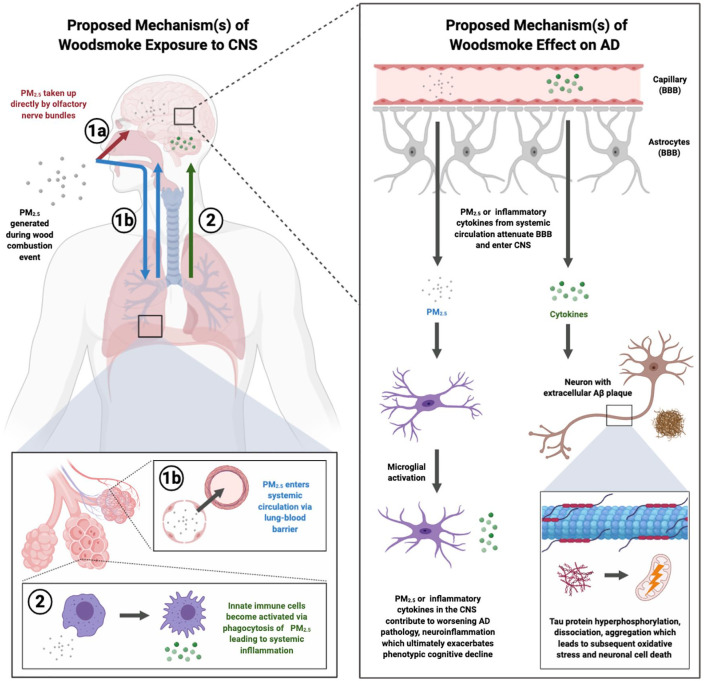
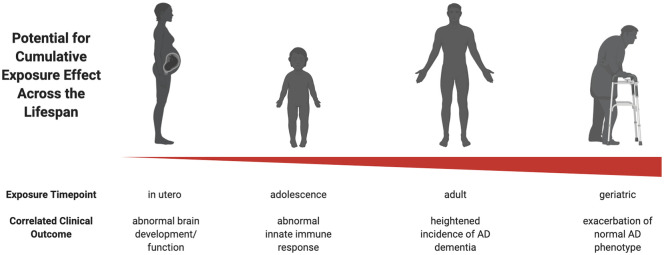
Woodsmoke poses a significant health risk as a growing component of ambient air pollution in the United States. While there is a long history of association between woodsmoke exposure and diseases of the respiratory, circulatory, and cardiovascular systems, recent evidence has linked woodsmoke exposure to cognitive dysfunction, including Alzheimer's disease dementia. Alzheimer's disease is a progressive neurodegenerative disorder with largely idiopathic origins and no known cure. Here, we explore the growing body of literature which relates woodsmoke-generated and ambient air pollution particulate matter exposure to Alzheimer's disease (AD) onset or exacerbation, in the context of an inflammation-centric view of AD. Epigenetic modifications, specifically changes in DNA methylation patterns, are well documented following woodsmoke exposure and have been shown to influence disease-favoring inflammatory cascades, induce oxidative stress, and modulate the immune response in vitro, in vivo, and in humans following exposure to air pollution. Though the current status of the literature does not allow us to draw definitive conclusions linking these events, this review highlights the need for additional work to fill gaps in our understanding of the directionality, causality, and susceptibility throughout the life course.
在美国,作为环境空气污染中日益增加的一个组成部分,木烟对健康构成重大风险。虽然长期以来,接触木烟与呼吸道、循环系统和心血管系统疾病之间存在关联,但最近的证据表明,接触木烟与认知功能障碍有关,包括阿尔茨海默病性痴呆。阿尔茨海默病是一种进行性神经退行性疾病,病因大多不明,也没有已知的治愈方法。在此,我们以对阿尔茨海默病以炎症为中心的观点为背景,探讨越来越多的文献,这些文献将木烟产生的以及环境空气污染中的颗粒物接触与阿尔茨海默病(AD)的发病或病情加重联系起来。在接触木烟后,表观遗传修饰,特别是DNA甲基化模式的变化,已有充分记录,并且已显示在体外、体内以及人类接触空气污染后,这些变化会影响有利于疾病发展的炎症级联反应、诱导氧化应激并调节免疫反应。尽管目前的文献状况不允许我们得出将这些事件联系起来的明确结论,但本综述强调需要开展更多工作,以填补我们在整个生命过程中对方向性、因果关系和易感性理解方面的空白。