Department of Microbiology, Oregon State University, 226 Nash Hall, Corvallis, OR, 97331, USA.
Mote Marine Laboratory, 1600 Ken Thompson Pkwy, Sarasota, FL, 34236, USA.
Environ Microbiol. 2020 Dec;22(12):5341-5355. doi: 10.1111/1462-2920.15245. Epub 2020 Oct 5.
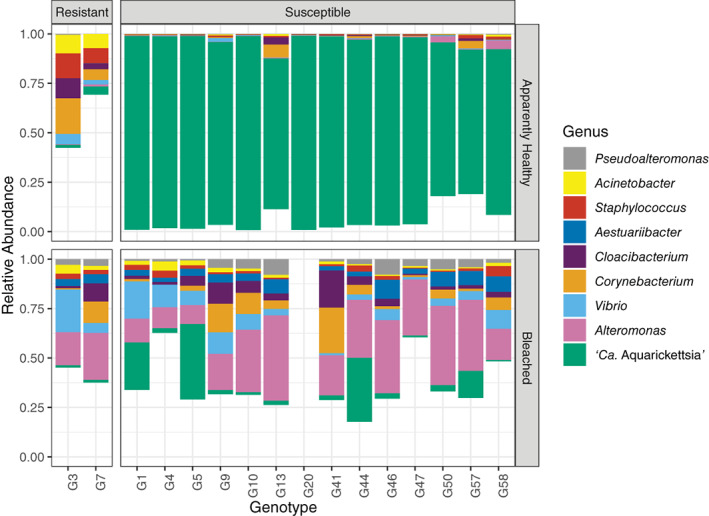
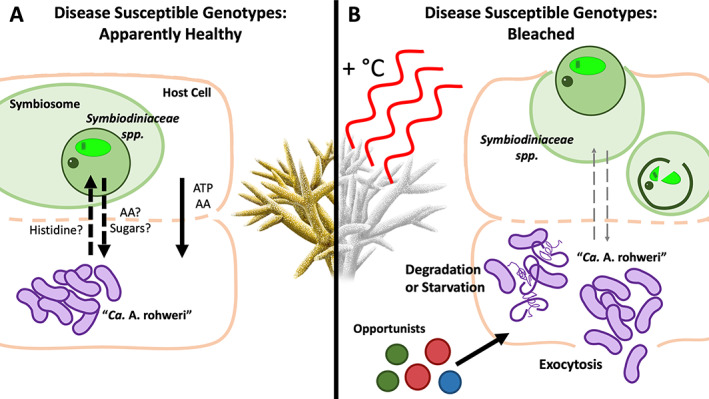
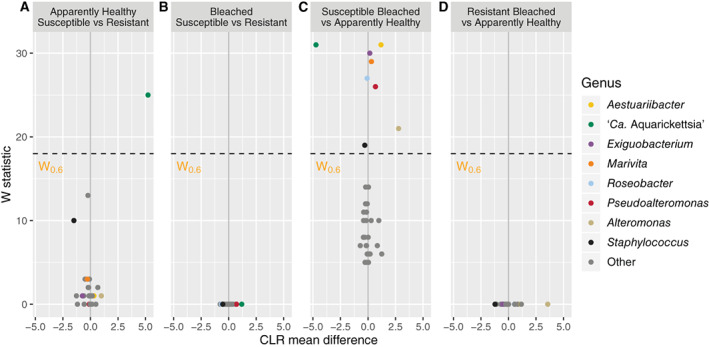
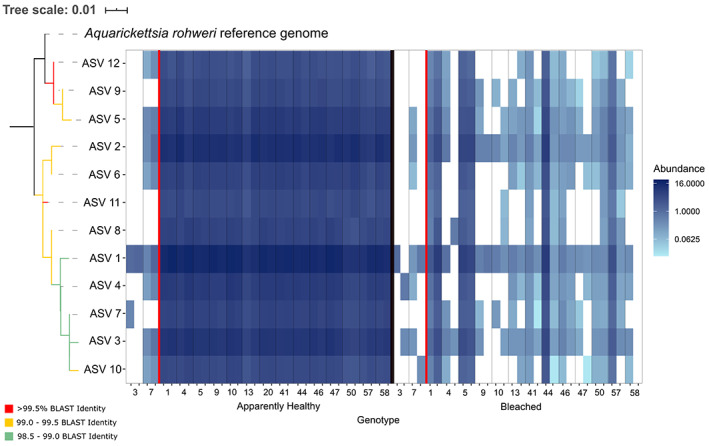
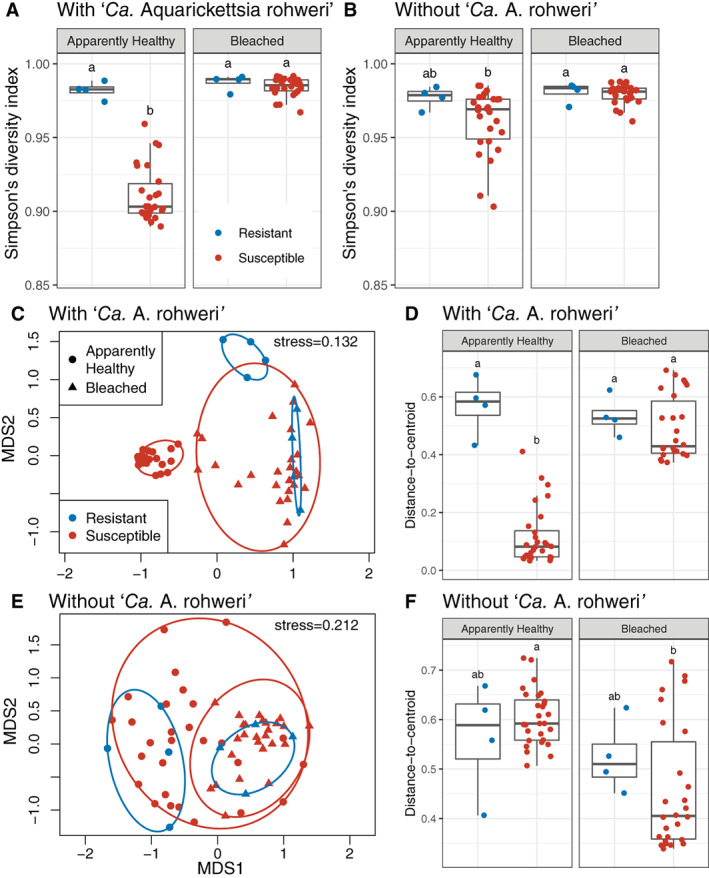
Holobiont phenotype results from a combination of host and symbiont genotypes as well as from prevailing environmental conditions that alter the relationships among symbiotic members. Corals exemplify this concept, where shifts in the algal symbiont community can lead to some corals becoming more or less thermally tolerant. Despite linkage between coral bleaching and disease, the roles of symbiotic bacteria in holobiont resistance and susceptibility to disease remains less well understood. This study thus characterizes the microbiome of disease-resistant and -susceptible Acropora cervicornis coral genotypes (hereafter referred to simply as 'genotypes') before and after high temperature-mediated bleaching. We found that the intracellular bacterial parasite 'Ca. Aquarickettsia rohweri' was strikingly abundant in disease-susceptible genotypes. Disease-resistant genotypes, however, had notably more diverse and even communities, with correspondingly low abundances of 'Ca. Aquarickettsia'. Bleaching caused a dramatic reduction of 'Ca. Aquarickettsia' within disease-susceptible corals and led to an increase in bacterial community dispersion, as well as the proliferation of opportunists. Our data support the hypothesis that 'Ca. Aquarickettsia' species increase coral disease risk through two mechanisms: (i) the creation of host nutritional deficiencies leading to a compromised host-symbiont state and (ii) the opening of niche space for potential pathogens during thermal stress.
后生动物表型是由宿主和共生体基因型以及改变共生成员之间关系的环境条件共同作用的结果。珊瑚就是一个很好的例子,共生藻类群落的变化会导致一些珊瑚变得对温度更耐受或更不耐受。尽管珊瑚白化和疾病之间存在联系,但共生细菌在后生动物对疾病的抵抗和易感性中的作用仍不太清楚。因此,本研究在高温介导的白化前后,对具有抗白化和易感白化的鹿角珊瑚基因型(以下简称“基因型”)的微生物组进行了特征描述。我们发现,细胞内细菌寄生虫“Ca. Aquarickettsia rohweri”在易感基因型中惊人地丰富。然而,抗白化基因型的细菌群落则明显更加多样,甚至更加均匀,“Ca. Aquarickettsia”的丰度也相应较低。白化会导致易感珊瑚中“Ca. Aquarickettsia”数量的急剧减少,并导致细菌群落分散度增加,机会主义者的增殖。我们的数据支持这样一种假设,即“Ca. Aquarickettsia”物种通过两种机制增加珊瑚疾病风险:(i)造成宿主营养缺乏,从而导致宿主-共生体状态受损;(ii)在热胁迫期间为潜在病原体开辟生态位空间。