Martins Conceição S, Costa Deiziane V S, Lima Bruno B, Leitäo Renata F C, Freire Gildênio E, Silva Guilherme F M, Pacífico Dvison M, Abreu José G, Brito Gerly A C
Postgraduate Program in Morphofunctional Sciences, Department of Morphology, School of Medicine, Federal University of Ceará, Fortaleza, Brazil.
Department of Physiology and Pharmacology, School of Medicine, Federal University of Ceará, Fortaleza, Brazil.
Front Microbiol. 2020 Aug 28;11:1998. doi: 10.3389/fmicb.2020.01998. eCollection 2020.
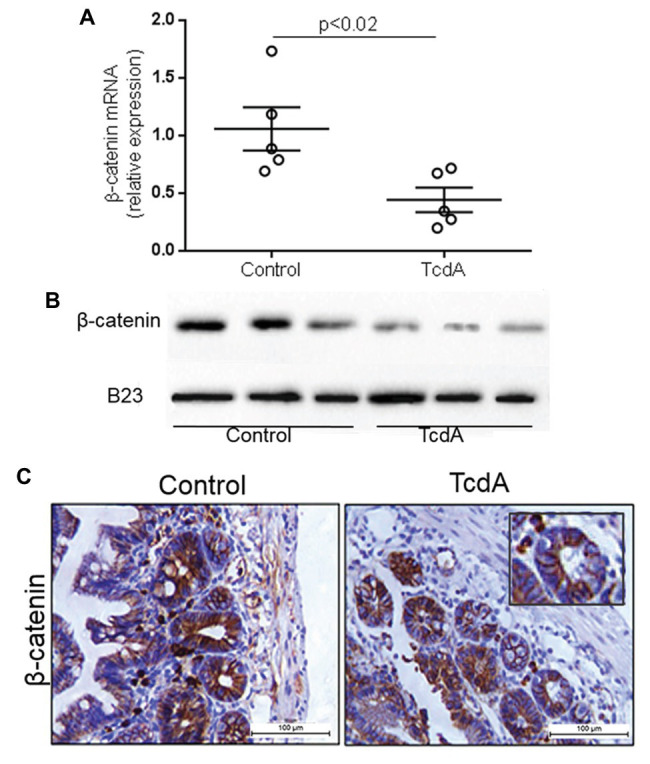
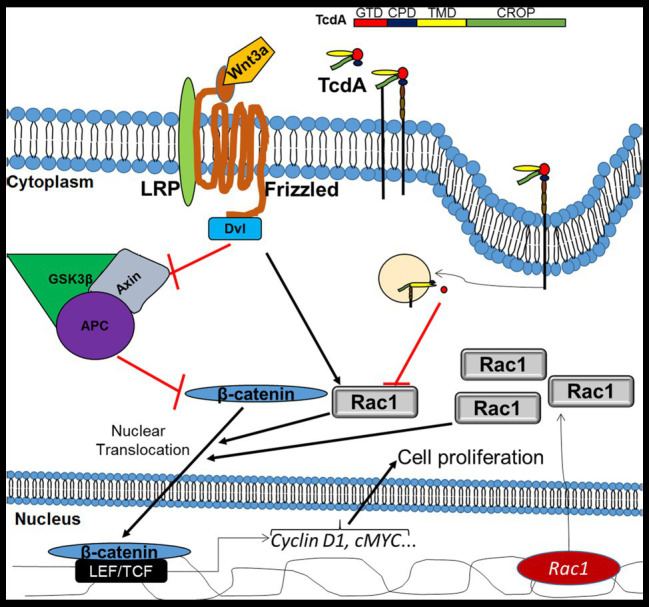
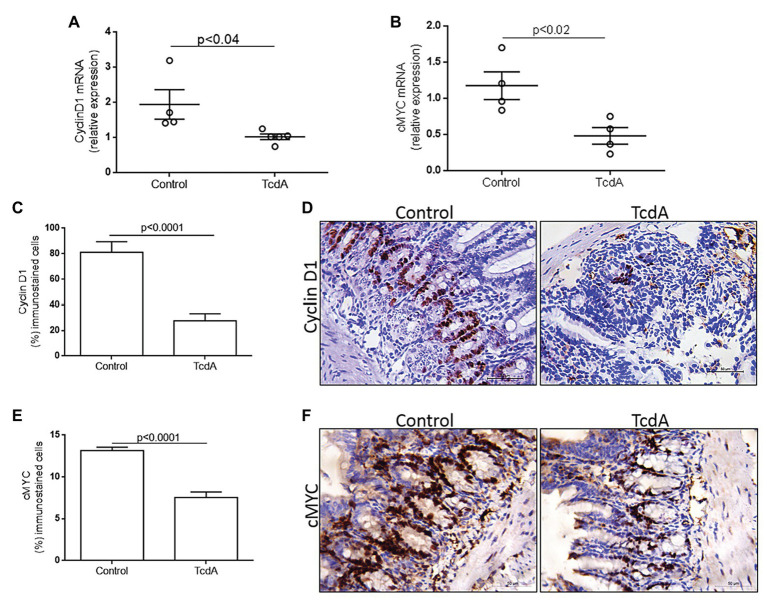
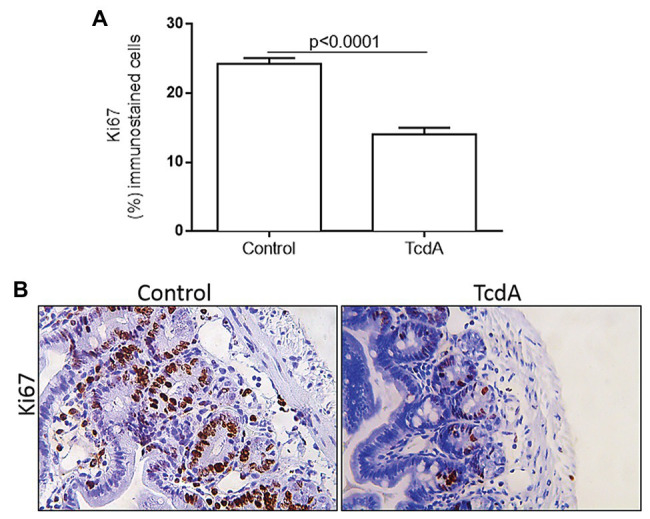
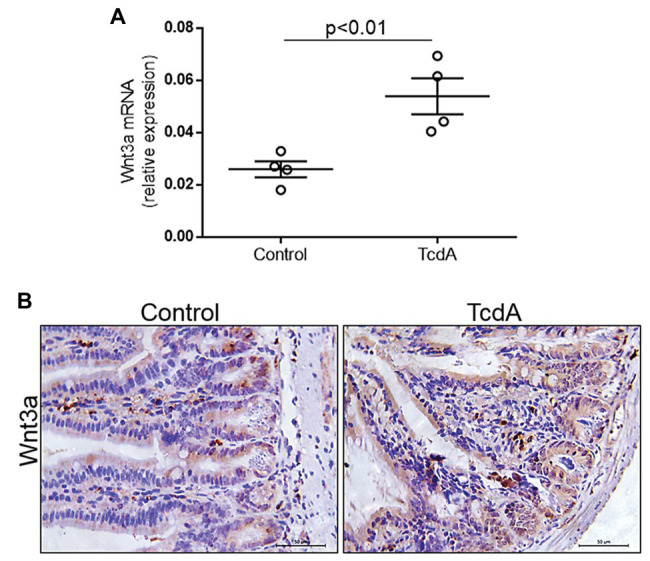
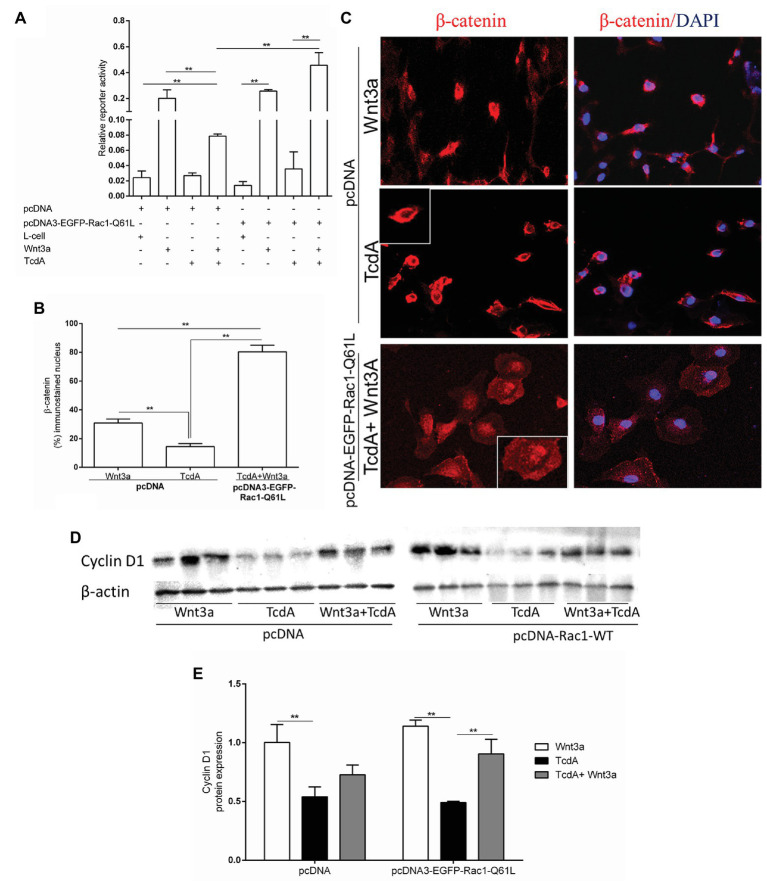
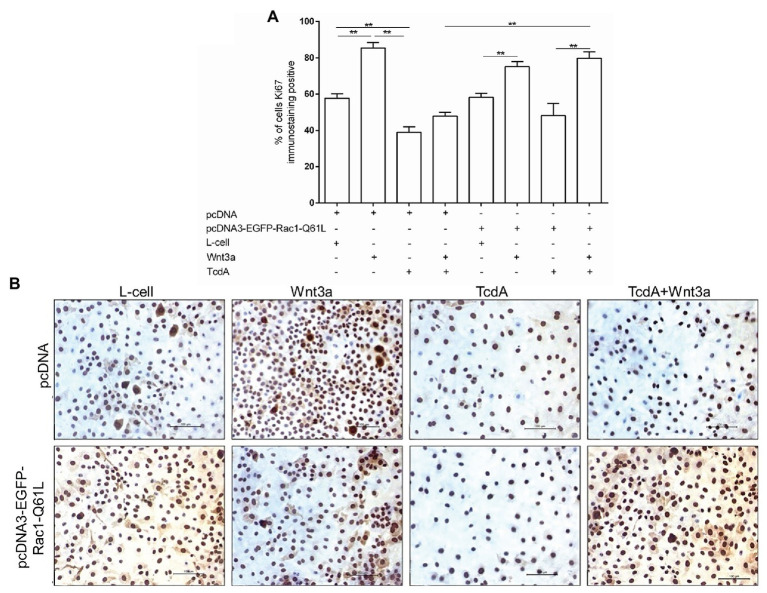
toxin A (TcdA) has been shown to inhibit cellular Wnt signaling, the major driving force behind the proliferation of epithelial cells in colonic crypts, likely through the inhibition of β-catenin nuclear translocation. Herein, we aimed to advance the understanding of this mechanism by replicating the findings and by investigating the specific role of Rac1, a member of the Rho GTPase family, on the inhibition of the Wnt-induced β-catenin nuclear translocation triggered by TcdA. To investigate the effects of TcdA on the Wnt/β-catenin pathway , we injected the ileal loops of C57BL/6 mice with TcdA [phosphate-buffered saline (PBS) as the control] to induce disease-like ileitis. After 4 h post-injection, we obtained ileum tissue samples to assess Wnt signaling activation and cell proliferation through Western blotting, immunohistochemistry, and qPCR. To assess the role of Rac1 on Wnt signaling inhibition by TcdA, we transfected rat intestinal epithelial cells (IEC-6) with either a constitutively active Rac1 plasmid (pcDNA3-EGFP-Rac1-Q61L) or an empty vector, which served as the control. We incubated these cells with Wnt3a-conditioned medium (Wnt3a-CM) to induce Wnt/β-catenin pathway activation, and then challenged the cells with TcdA. We assessed Wnt signaling activation with TOP/FOPflash luciferase assays, determined nuclear β-catenin translocation by immunofluorescence, measured cyclin D1 protein expression by Western blotting, and quantified cell proliferation by Ki67 immunostaining. , TcdA decreased β-catenin, cyclin D1, and cMYC expression and inhibited the translocation of β-catenin into the nucleus in the ileum epithelial cells. In addition, TcdA suppressed cell proliferation and increased Wnt3a expression, but did not alter Rac1 gene expression in the ileum tissue. , constitutively active Rac1 prevented Wnt signaling inhibition by enabling the β-catenin nuclear translocation that had been blocked by TcdA. Our results show that TcdA inhibits Wnt/β-catenin pathway and demonstrate that this inhibition is likely caused by a Rac1-mediated mechanism.
毒素A(TcdA)已被证明可抑制细胞Wnt信号通路,而Wnt信号通路是结肠隐窝上皮细胞增殖的主要驱动力,这可能是通过抑制β-连环蛋白的核转位实现的。在此,我们旨在通过重复这些发现以及研究Rho GTPase家族成员Rac1在抑制由TcdA触发的Wnt诱导的β-连环蛋白核转位中的具体作用,来加深对这一机制的理解。为了研究TcdA对Wnt/β-连环蛋白通路的影响,我们向C57BL/6小鼠的回肠肠袢注射TcdA(以磷酸盐缓冲盐水(PBS)作为对照)以诱导类似疾病的回肠炎。注射后4小时,我们获取回肠组织样本,通过蛋白质免疫印迹、免疫组织化学和定量聚合酶链反应来评估Wnt信号激活和细胞增殖。为了评估Rac1在TcdA抑制Wnt信号中的作用,我们用组成型活性Rac1质粒(pcDNA3-EGFP-Rac1-Q61L)或空载体转染大鼠肠上皮细胞(IEC-6),空载体作为对照。我们用Wnt3a条件培养基(Wnt3a-CM)孵育这些细胞以诱导Wnt/β-连环蛋白通路激活,然后用TcdA刺激这些细胞。我们通过TOP/FOPflash荧光素酶测定评估Wnt信号激活,通过免疫荧光确定核β-连环蛋白转位,通过蛋白质免疫印迹测量细胞周期蛋白D1蛋白表达,并通过Ki67免疫染色定量细胞增殖。结果显示,TcdA降低了回肠上皮细胞中β-连环蛋白、细胞周期蛋白D1和cMYC的表达,并抑制了β-连环蛋白向细胞核的转位。此外,TcdA抑制细胞增殖并增加Wnt3a表达,但未改变回肠组织中Rac1基因的表达。组成型活性Rac1通过使被TcdA阻断的β-连环蛋白核转位得以恢复,从而阻止了Wnt信号的抑制。我们的结果表明,TcdA抑制Wnt/β-连环蛋白通路,并证明这种抑制可能是由Rac1介导的机制引起的。