Department of Medical Microbiology and Infectious Diseases, University of Manitoba, Winnipeg, MB, Canada.
Center for Research in Molecular Medicine and Chronic Diseases (CIMUS), Campus Vida, Universidade de Santiago de Compostela, Santiago de Compostela, Spain.
Front Immunol. 2020 Aug 25;11:1935. doi: 10.3389/fimmu.2020.01935. eCollection 2020.
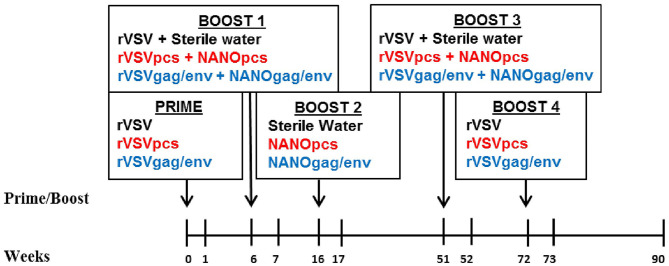
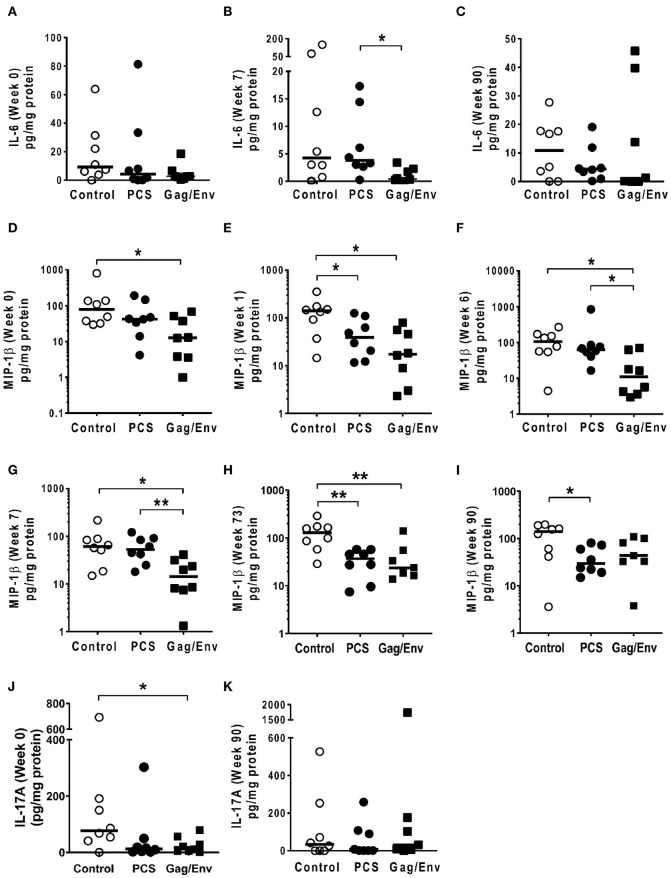
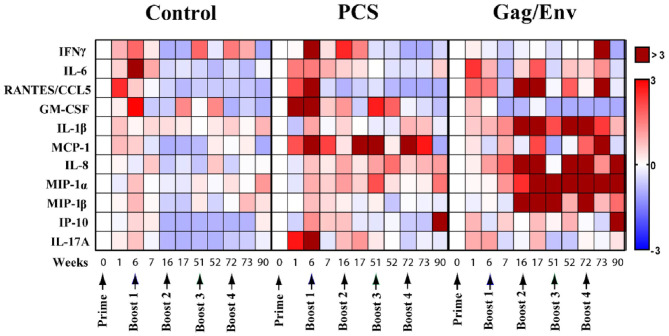
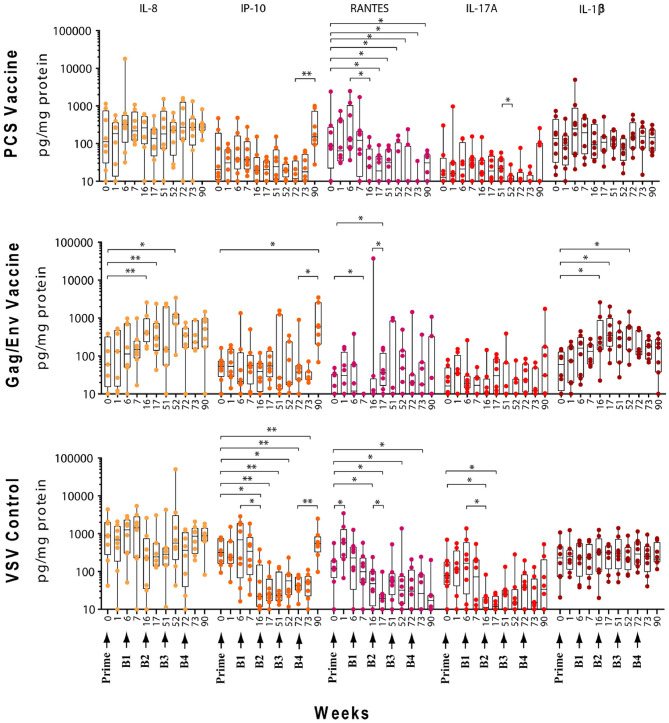
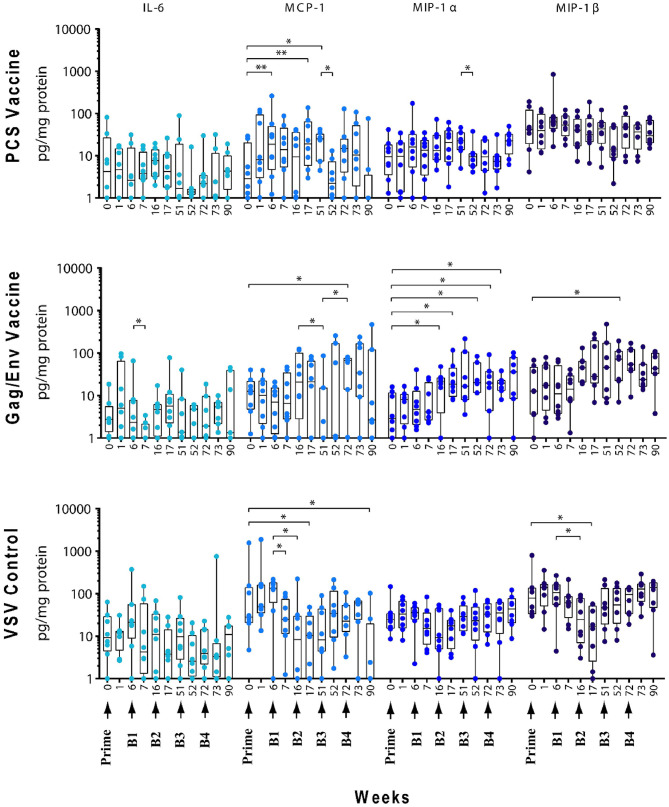
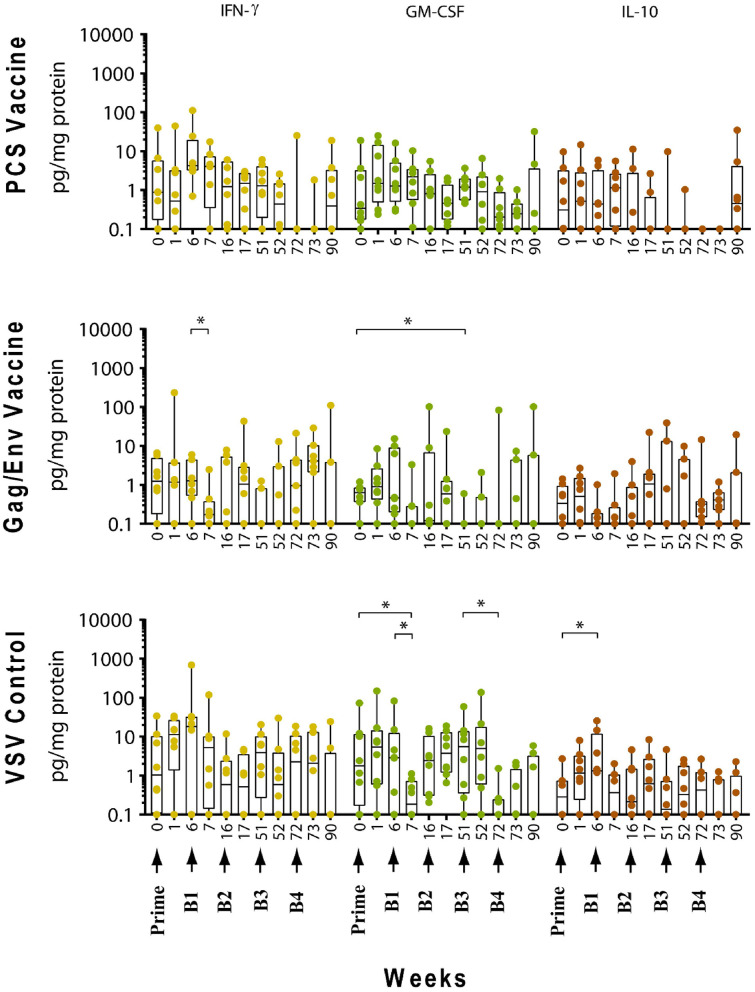
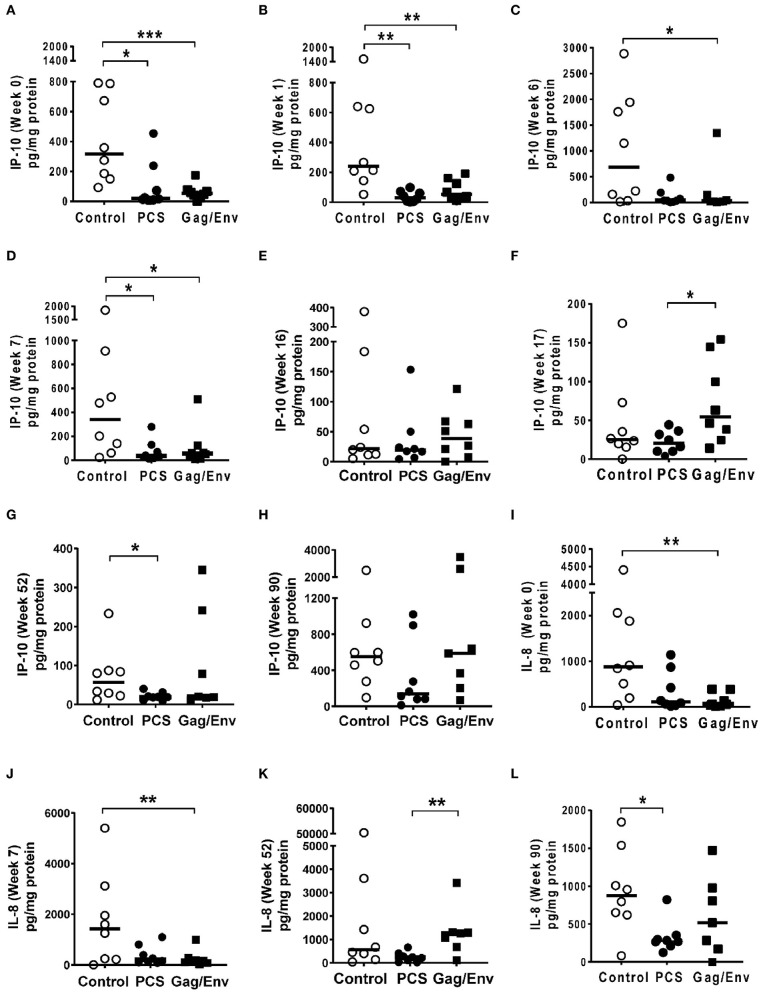
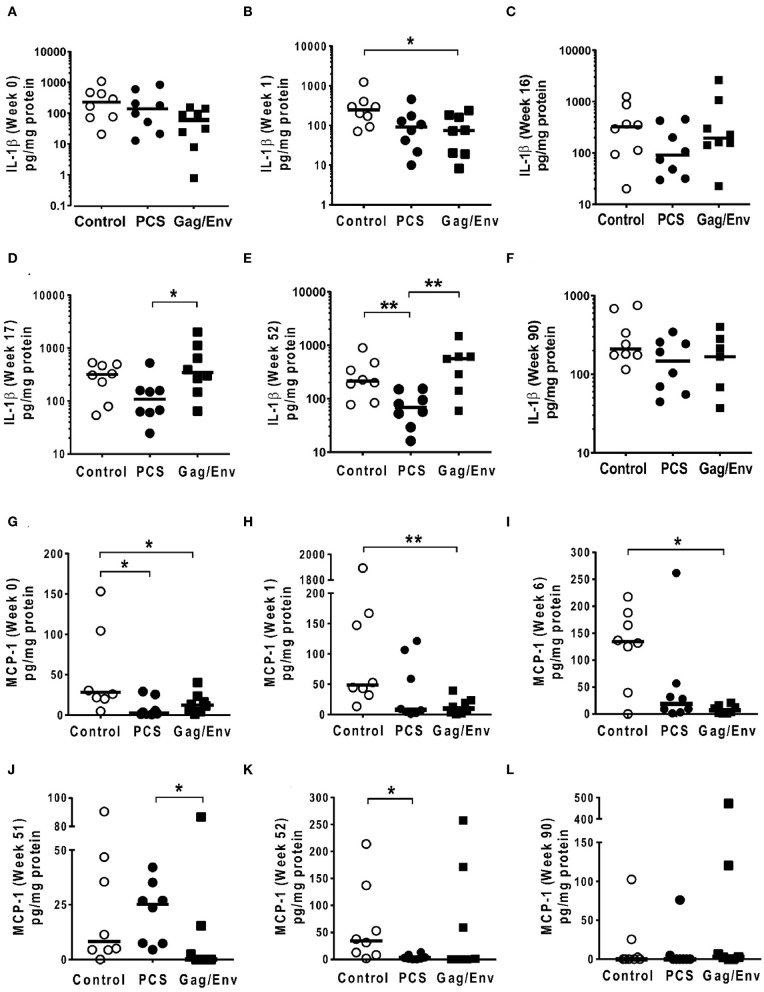
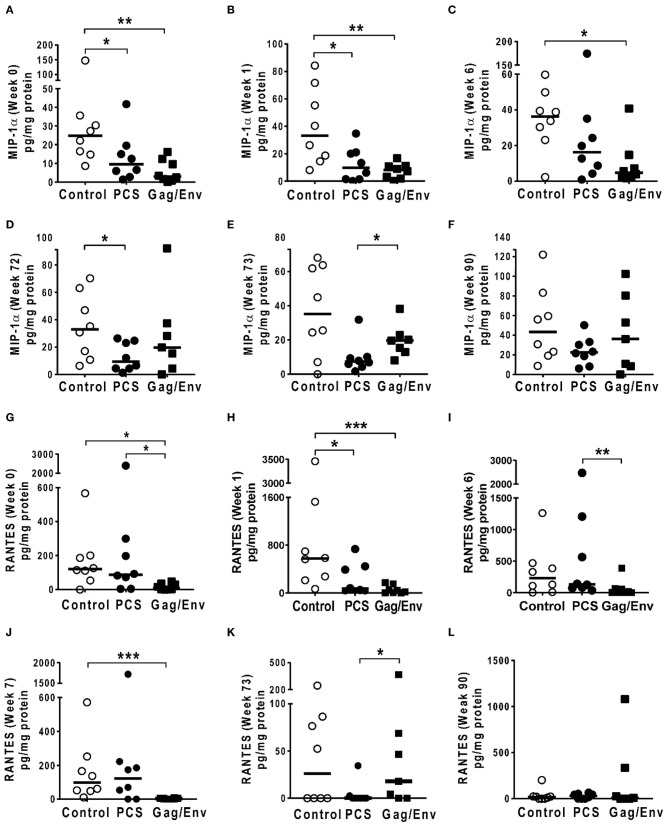
Studies have shown that vaccine vectors and route of immunization can differentially activate different arms of the immune system. However, the effects of different HIV vaccine immunogens on mucosal inflammation have not yet been studied. Because mucosal sites are the primary route of HIV infection, we evaluated the cervico-vaginal inflammatory cytokine and chemokine levels of Mauritian cynomolgus macaques following immunization and boost using two different SIV vaccine immunogens. The PCS vaccine delivers 12 20-amino acid peptides overlapping the 12 protease cleavage sites, and the Gag/Env vaccine delivers the full Gag and full Env proteins of simian immunodeficiency virus. We showed that the PCS vaccine prime and boosts induced short-lived, lower level increases of a few pro-inflammatory/chemotactic cytokines. In the PCS-vaccine group only the levels of MCP-1 were significantly increased above the baseline ( = 0.0078, Week 6; = 0.0078, Week 17; = 0.0234; Week 51) following multiple boosts. In contrast, immunizations with the Gag/Env vaccine persistently increased the levels of multiple cytokines/chemokines. In the Gag/Env group, higher than baseline levels were consistently observed for IL-8 ( = 0.0078, Week 16; = 0.0078, Week 17; = 0.0156, Week 52), IL-1β ( = 0.0234, Week 16; = 0.0156, Week 17; = 0.0156, Week 52), and MIP-1α ( = 0.0313, Week 16; = 0.0156, Week 17; = 0.0313, Week 52). Over time, repeated boosts altered the relative levels of these cytokines between the Gag/Env and PCS vaccine group. 18 weeks after final boost with a higher dosage, IP-10 levels ( = 0.0313) in the Gag/Env group remained higher than baseline. Thus, the influence of vaccine immunogens on mucosal inflammation needs to be considered when developing and evaluating candidate HIV vaccines.
研究表明,疫苗载体和免疫途径可以不同程度地激活免疫系统的不同分支。然而,不同的 HIV 疫苗免疫原对黏膜炎症的影响尚未得到研究。由于黏膜部位是 HIV 感染的主要途径,我们评估了两种不同的 SIV 疫苗免疫原免疫和加强免疫后毛里求斯食蟹猴的宫颈阴道炎症细胞因子和趋化因子水平。PCS 疫苗递呈 12 个由 20 个氨基酸组成的重叠 12 个蛋白酶切割位点的肽,Gag/Env 疫苗递呈猿猴免疫缺陷病毒的全长 Gag 和全长 Env 蛋白。我们发现,PCS 疫苗初免和加强诱导了短暂的、低水平的少数促炎/趋化细胞因子的增加。在 PCS 疫苗组中,只有 MCP-1 的水平在多次加强后显著高于基线(=0.0078,第 6 周;=0.0078,第 17 周;=0.0234,第 51 周)。相比之下,用 Gag/Env 疫苗免疫持续增加多种细胞因子/趋化因子的水平。在 Gag/Env 组中,IL-8(=0.0078,第 16 周;=0.0078,第 17 周;=0.0156,第 52 周)、IL-1β(=0.0234,第 16 周;=0.0156,第 17 周;=0.0156,第 52 周)和 MIP-1α(=0.0313,第 16 周;=0.0156,第 17 周;=0.0313,第 52 周)的水平持续高于基线。随着时间的推移,重复加强改变了 Gag/Env 和 PCS 疫苗组之间这些细胞因子的相对水平。最后一剂高剂量加强免疫后 18 周,Gag/Env 组 IP-10 水平(=0.0313)仍高于基线。因此,在开发和评估候选 HIV 疫苗时,需要考虑疫苗免疫原对黏膜炎症的影响。