Bóna Áron, Bakonyi Péter, Galambos Ildikó, Bélafi-Bakó Katalin, Nemestóthy Nándor
Research Institute on Bioengineering, Membrane Technology and Energetics, University of Pannonia, 8200 Veszprém, Hungary.
Soós Ernő Research and Development Center, University of Pannonia, 8200 Nagykanizsa, Hungary.
Membranes (Basel). 2020 Sep 24;10(10):252. doi: 10.3390/membranes10100252.
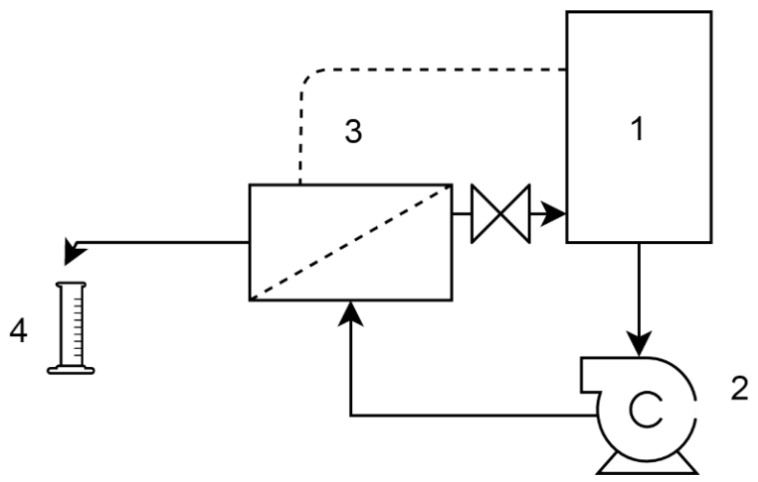
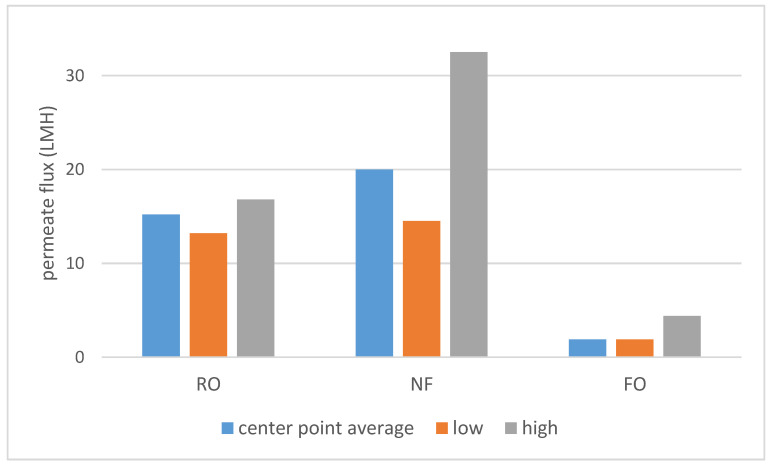
Effluents of anaerobic processes still contain valuable components, among which volatile fatty acids (VFAs) can be regarded and should be recovered and/or used further in applications such as microbial electrochemical technology to generate energy/energy carriers. To accomplish the separation of VFAs from waste liquors, various membrane-based solutions applying different transport mechanisms and traits are available, including pressure-driven nanofiltration (NF) and reverse osmosis (RO) which are capable to clarify, fractionate and concentrate salts and organics. Besides, emerging techniques using a membrane such as forward osmosis (FO) and supported liquid membrane (SILM) technology can be taken into consideration for VFA separation. In this work, we evaluate these four various downstream methods (NF, RO, FO and SILM) to determine the best one, comparatively, for enriching VFAs from pH-varied model solutions composed of acetic, butyric and propionic acids in different concentrations. The assessment of the separation experiments was supported by statistical examination to draw more solid conclusions. Accordingly, it turned out that all methods can separate VFAs from the model solution. The highest average retention was achieved by RO (84% at the applied transmembrane pressure of 6 bar), while NF provided the highest permeance (6.5 L/mhbar) and a high selectivity between different VFAs.
厌氧工艺的流出物仍含有有价值的成分,其中挥发性脂肪酸(VFAs)值得关注,并且应该回收和/或在诸如微生物电化学技术等应用中进一步利用,以产生能量/能量载体。为了从废液中分离出挥发性脂肪酸,有各种基于不同传输机制和特性的膜基解决方案,包括压力驱动的纳滤(NF)和反渗透(RO),它们能够对盐和有机物进行澄清、分级和浓缩。此外,对于挥发性脂肪酸的分离,可以考虑使用诸如正向渗透(FO)和支撑液膜(SILM)技术等新兴的膜技术。在这项工作中,我们评估了这四种不同的下游方法(纳滤、反渗透、正向渗透和支撑液膜),以比较确定从由不同浓度的乙酸、丁酸和丙酸组成的pH值变化的模型溶液中富集挥发性脂肪酸的最佳方法。分离实验的评估得到了统计检验的支持,以得出更可靠的结论。因此,结果表明所有方法都能从模型溶液中分离出挥发性脂肪酸。反渗透实现了最高的平均截留率(在6巴的跨膜压力下为84%),而纳滤提供了最高的通量(6.5 L/mhbar)以及不同挥发性脂肪酸之间的高选择性。