Department of Natural Sciences, Hawaii Pacific University, Honolulu, Hawaii, United States of America.
Department of Natural Sciences, Windward Community College, Kaneohe, Hawaii, United States of America.
PLoS One. 2020 Sep 29;15(9):e0239870. doi: 10.1371/journal.pone.0239870. eCollection 2020.
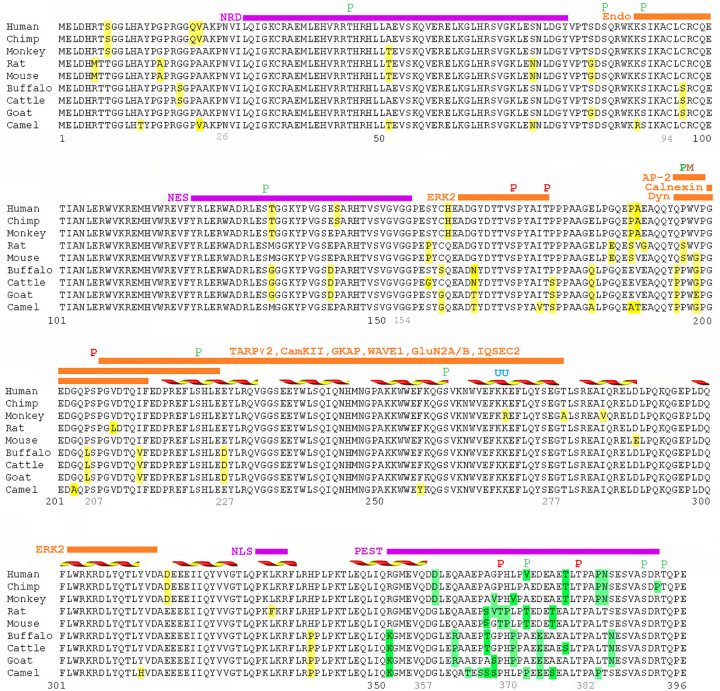
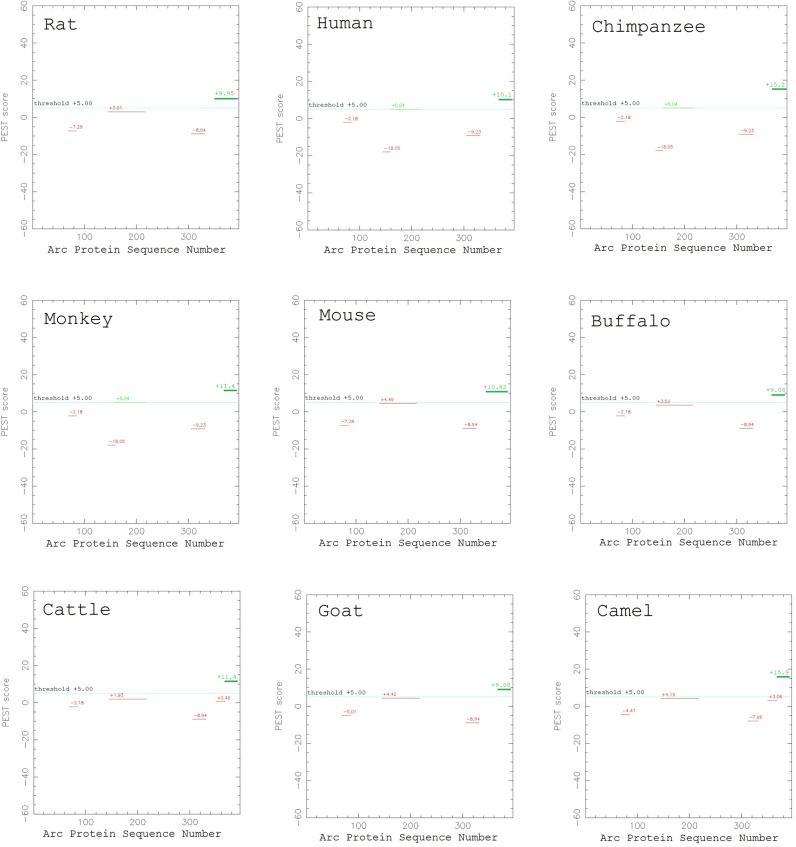
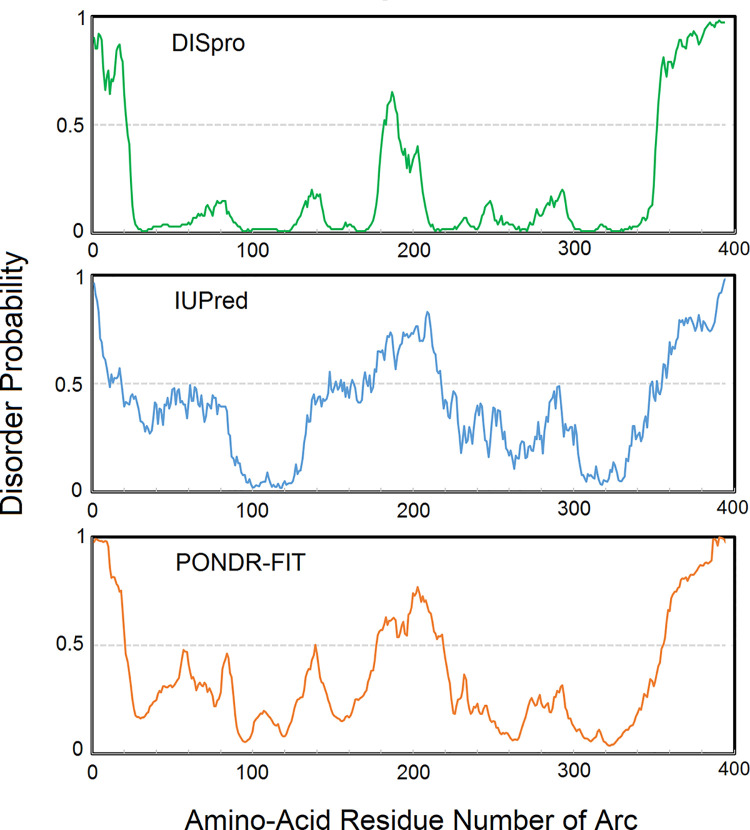
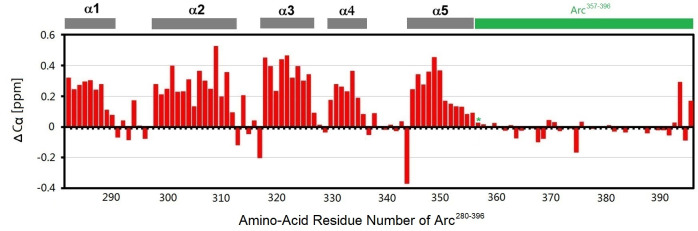
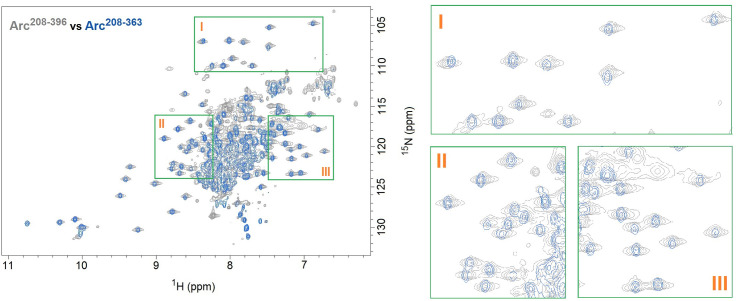
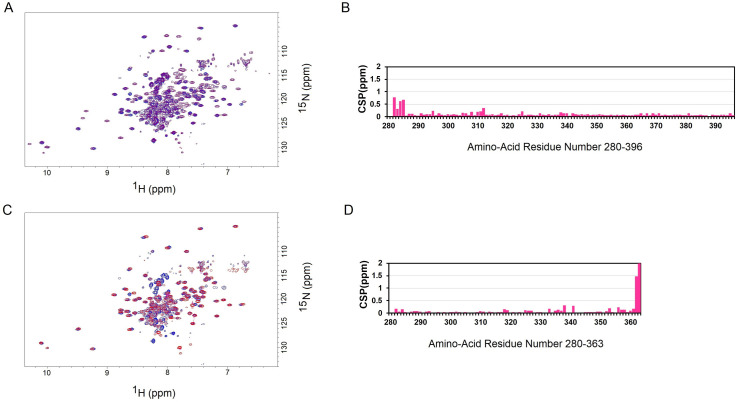
The activity-regulated cytoskeleton-associate protein Arc (or Arg3.1) is specifically linked to memory formation and a number of cognitive disorders, including Alzheimer's disease and schizophrenia. Since the discovery of Arc in 1995, extensive research has been conducted on the protein to identify its function and mechanisms of action, with solving the structure of Arc as a major goal. However, the Arc protein tends to self-oligomerize in vitro, and is difficult to crystallize. These properties have hindered efforts to obtain the structure of the full-length, whole protein Arc. As an alternative approach, we and others, have sought to solve the structures of various subdomain proteins of Arc, including the N-lobe, C-lobe, and capsid domain (N-lobe + C-lobe). In this study, we characterized the C-terminal tail of Arc using integrated bioinformatic and structural biology techniques. We compared the sequences of Arc proteins in different mammal species and found that the amino-acid composition in the C-terminal tail region has a significantly higher degree of variation rate than the rest of the protein. Structural prediction programs suggested that the C-terminal tail is structurally disordered. Chemical shift analysis based on solution NMR spectra confirmed that the C-terminal tail has a random coil (disordered) structure, and the tail starts from the residue D357. Furthermore, the NMR spectra showed that the C-terminal tail has minimum (if any) interaction with its neighboring capsid domain in Arc. This study fills gaps in our specific understanding of the structural nature and functional contributions of the Arc C-terminus.
活性调节细胞骨架相关蛋白 Arc(或 Arg3.1)与记忆形成和许多认知障碍有关,包括阿尔茨海默病和精神分裂症。自 1995 年发现 Arc 以来,人们对该蛋白进行了广泛的研究,以确定其功能和作用机制,解决 Arc 的结构是主要目标。然而,Arc 蛋白在体外容易自寡聚化,并且难以结晶。这些特性阻碍了获得全长全蛋白 Arc 结构的努力。作为一种替代方法,我们和其他人寻求解决 Arc 的各种亚结构域蛋白的结构,包括 N 结构域、C 结构域和衣壳结构域(N 结构域+C 结构域)。在这项研究中,我们使用整合的生物信息学和结构生物学技术来描述 Arc 的 C 末端尾部。我们比较了不同哺乳动物物种中 Arc 蛋白的序列,发现 C 末端尾部区域的氨基酸组成具有显著更高的变异率,而其余部分的变异率较低。结构预测程序表明 C 末端尾部结构无序。基于溶液 NMR 谱的化学位移分析证实了 C 末端尾部具有无规卷曲(无序)结构,尾部从残基 D357 开始。此外,NMR 谱表明 C 末端尾部与 Arc 中的相邻衣壳结构域之间的相互作用最小(如果有的话)。这项研究填补了我们对 Arc C 末端结构性质和功能贡献的具体理解的空白。