Doctor Alina, Seifert Verena, Ullrich Martin, Hauser Sandra, Pietzsch Jens
Department of Radiopharmaceutical and Chemical Biology, Institute of Radiopharmaceutical Cancer Research, Helmholtz-Zentrum Dresden-Rossendorf, 01328 Dresden, Germany.
School of Science, Faculty of Chemistry and Food Chemistry, Technische Universität Dresden, 01069 Dresden, Germany.
Cancers (Basel). 2020 Sep 25;12(10):2765. doi: 10.3390/cancers12102765.
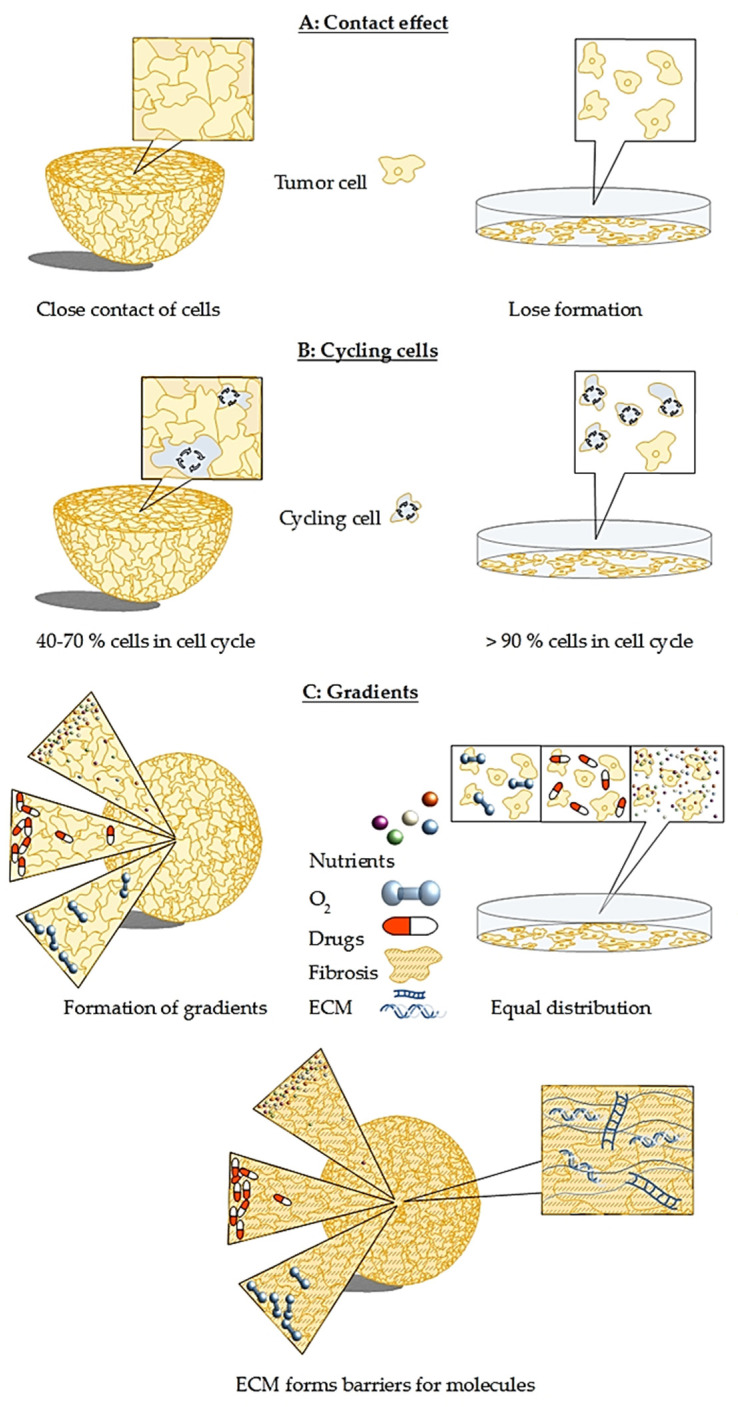
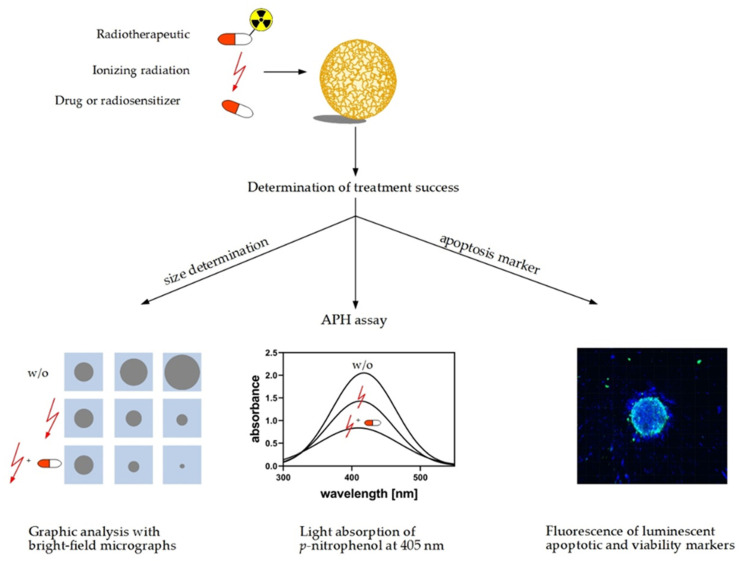
In preclinical cancer research, three-dimensional (3D) cell culture systems such as multicellular spheroids and organoids are becoming increasingly important. They provide valuable information before studies on animal models begin and, in some cases, are even suitable for reducing or replacing animal experiments. Furthermore, they recapitulate microtumors, metastases, and the tumor microenvironment much better than monolayer culture systems could. Three-dimensional models show higher structural complexity and diverse cell interactions while reflecting (patho)physiological phenomena such as oxygen and nutrient gradients in the course of their growth or development. These interactions and properties are of great importance for understanding the pathophysiological importance of stromal cells and the extracellular matrix for tumor progression, treatment response, or resistance mechanisms of solid tumors. Special emphasis is placed on co-cultivation with tumor-associated cells, which further increases the predictive value of 3D models, e.g., for drug development. The aim of this overview is to shed light on selected 3D models and their advantages and disadvantages, especially from the radiopharmacist's point of view with focus on the suitability of 3D models for the radiopharmacological characterization of novel radiotracers and radiotherapeutics. Special attention is paid to pancreatic ductal adenocarcinoma (PDAC) as a predestined target for the development of new radionuclide-based theranostics.
在临床前癌症研究中,三维(3D)细胞培养系统,如多细胞球体和类器官,正变得越来越重要。它们在动物模型研究开始之前提供有价值的信息,并且在某些情况下,甚至适合减少或替代动物实验。此外,它们比单层培养系统能更好地模拟微肿瘤、转移灶和肿瘤微环境。三维模型显示出更高的结构复杂性和多样的细胞相互作用,同时在其生长或发育过程中反映诸如氧气和营养物质梯度等(病理)生理现象。这些相互作用和特性对于理解基质细胞和细胞外基质对实体瘤进展、治疗反应或耐药机制的病理生理重要性至关重要。特别强调与肿瘤相关细胞的共培养,这进一步提高了三维模型的预测价值,例如在药物开发方面。本综述的目的是阐明选定的三维模型及其优缺点,特别是从放射药剂师的角度,重点关注三维模型对新型放射性示踪剂和放射治疗药物进行放射性药理学表征的适用性。特别关注胰腺导管腺癌(PDAC)作为基于新放射性核素的诊疗方法开发的理想靶点。