• 文献检索
  • 文档翻译
  • 深度研究
  • 学术资讯
  • Suppr Zotero 插件Zotero 插件
  • 邀请有礼
  • 套餐&价格
  • 历史记录
应用&插件
Suppr Zotero 插件Zotero 插件浏览器插件Mac 客户端Windows 客户端微信小程序
定价
高级版会员购买积分包购买API积分包
服务
文献检索文档翻译深度研究API 文档MCP 服务
关于我们
关于 Suppr公司介绍联系我们用户协议隐私条款
关注我们

Suppr 超能文献

核心技术专利:CN118964589B侵权必究
粤ICP备2023148730 号-1Suppr @ 2026

文献检索

告别复杂PubMed语法,用中文像聊天一样搜索,搜遍4000万医学文献。AI智能推荐,让科研检索更轻松。

立即免费搜索

文件翻译

保留排版,准确专业,支持PDF/Word/PPT等文件格式,支持 12+语言互译。

免费翻译文档

深度研究

AI帮你快速写综述,25分钟生成高质量综述,智能提取关键信息,辅助科研写作。

立即免费体验

基于深度学习的面部照片判断需要正颌手术的软组织轮廓。

Deep learning based discrimination of soft tissue profiles requiring orthognathic surgery by facial photographs.

机构信息

Safety System Research Group, Korea Institute of Industrial Technology (KITECH), Gyeongsan, Korea.

Department of Oral and Maxillofacial Radiology, Daejeon Dental Hospital, Wonkwang University College of Dentistry, Daejeon, Korea.

出版信息

Sci Rep. 2020 Oct 1;10(1):16235. doi: 10.1038/s41598-020-73287-7.

DOI:10.1038/s41598-020-73287-7
PMID:33004872
原文链接:https://pmc.ncbi.nlm.nih.gov/articles/PMC7529761/
Abstract

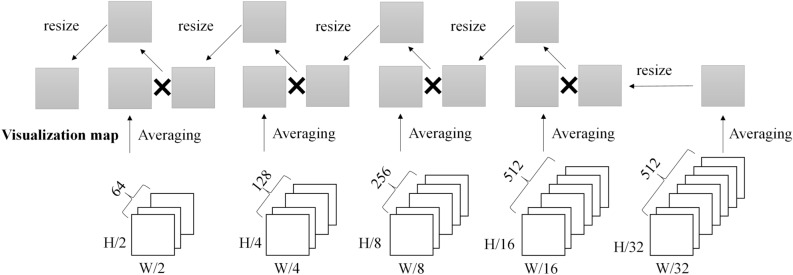
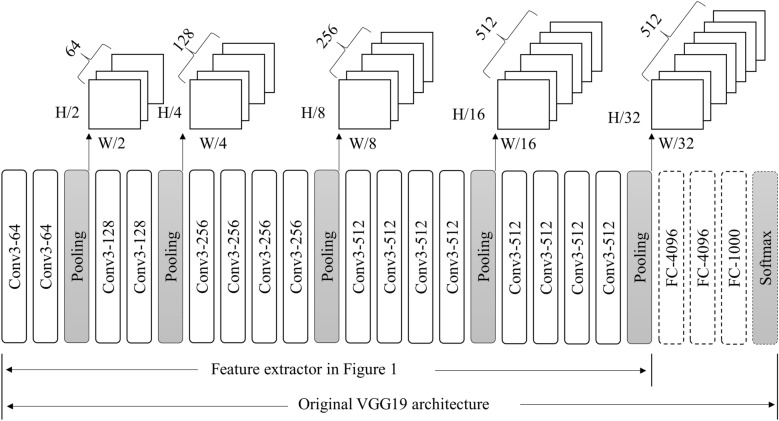
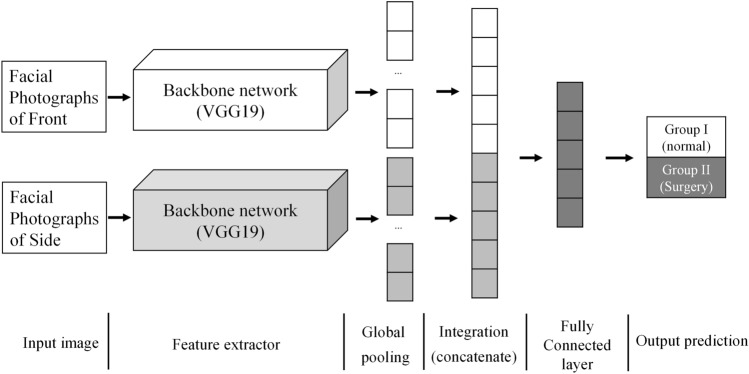
Facial photographs of the subjects are often used in the diagnosis process of orthognathic surgery. The aim of this study was to determine whether convolutional neural networks (CNNs) can judge soft tissue profiles requiring orthognathic surgery using facial photographs alone. 822 subjects with dentofacial dysmorphosis and / or malocclusion were included. Facial photographs of front and right side were taken from all patients. Subjects who did not need orthognathic surgery were classified as Group I (411 subjects). Group II (411 subjects) was set up for cases requiring surgery. CNNs of VGG19 was used for machine learning. 366 of the total 410 data were correctly classified, yielding 89.3% accuracy. The values of accuracy, precision, recall, and F1 scores were 0.893, 0.912, 0.867, and 0.889, respectively. As a result of this study, it was found that CNNs can judge soft tissue profiles requiring orthognathic surgery relatively accurately with the photographs alone.

摘要

面部照片通常用于正颌手术的诊断过程。本研究旨在确定卷积神经网络(CNN)是否可以仅通过面部照片判断需要正颌手术的软组织轮廓。共纳入 822 名牙颌面畸形和/或错颌患者。对所有患者拍摄正面和右侧面的面部照片。不需要正颌手术的患者被归类为 I 组(411 例)。II 组(411 例)为需要手术的病例。使用 VGG19 的 CNN 进行机器学习。在总共 410 个数据中,有 366 个被正确分类,准确率为 89.3%。准确率、精确度、召回率和 F1 分数分别为 0.893、0.912、0.867 和 0.889。本研究结果表明,CNN 仅通过照片即可相对准确地判断需要正颌手术的软组织轮廓。
https://cdn.ncbi.nlm.nih.gov/pmc/blobs/3893/7529761/3d818c65e278/41598_2020_73287_Fig4_HTML.jpg
https://cdn.ncbi.nlm.nih.gov/pmc/blobs/3893/7529761/625e109dc27f/41598_2020_73287_Fig1_HTML.jpg
https://cdn.ncbi.nlm.nih.gov/pmc/blobs/3893/7529761/aac6a6409278/41598_2020_73287_Fig2_HTML.jpg
https://cdn.ncbi.nlm.nih.gov/pmc/blobs/3893/7529761/7897e9e1651f/41598_2020_73287_Fig3_HTML.jpg
https://cdn.ncbi.nlm.nih.gov/pmc/blobs/3893/7529761/3d818c65e278/41598_2020_73287_Fig4_HTML.jpg
https://cdn.ncbi.nlm.nih.gov/pmc/blobs/3893/7529761/625e109dc27f/41598_2020_73287_Fig1_HTML.jpg
https://cdn.ncbi.nlm.nih.gov/pmc/blobs/3893/7529761/aac6a6409278/41598_2020_73287_Fig2_HTML.jpg
https://cdn.ncbi.nlm.nih.gov/pmc/blobs/3893/7529761/7897e9e1651f/41598_2020_73287_Fig3_HTML.jpg
https://cdn.ncbi.nlm.nih.gov/pmc/blobs/3893/7529761/3d818c65e278/41598_2020_73287_Fig4_HTML.jpg

相似文献

1
Deep learning based discrimination of soft tissue profiles requiring orthognathic surgery by facial photographs.基于深度学习的面部照片判断需要正颌手术的软组织轮廓。
Sci Rep. 2020 Oct 1;10(1):16235. doi: 10.1038/s41598-020-73287-7.
2
Deep learning based prediction of necessity for orthognathic surgery of skeletal malocclusion using cephalogram in Korean individuals.基于深度学习的韩国人用头颅侧位片预测颌骨畸形正颌手术必要性。
BMC Oral Health. 2021 Mar 18;21(1):130. doi: 10.1186/s12903-021-01513-3.
3
Primary Mandibular Deficiency Dentofacial Deformities: Occlusion and Facial Aesthetic Surgical Outcomes.原发性下颌骨发育不全牙颌面畸形:咬合与面部美学手术效果。
J Oral Maxillofac Surg. 2018 Oct;76(10):2209.e1-2209.e15. doi: 10.1016/j.joms.2018.06.009. Epub 2018 Jun 12.
4
Functional needs of subjects with dentofacial deformities: A study using the index of orthognathic functional treatment need (IOFTN).牙颌面畸形患者的功能需求:一项使用正颌功能治疗需求指数(IOFTN)的研究。
J Plast Reconstr Aesthet Surg. 2016 Jun;69(6):796-801. doi: 10.1016/j.bjps.2016.03.008. Epub 2016 Mar 25.
5
Combined Use of Facial Osteoplasty and Orthognathic Surgery for Treatment of Dentofacial Deformities.面部整复手术与正颌外科联合应用治疗牙颌面畸形
J Oral Maxillofac Surg. 2016 Dec;74(12):2505.e1-2505.e12. doi: 10.1016/j.joms.2016.08.032. Epub 2016 Aug 31.
6
Deep Learning-Based Facial and Skeletal Transformations for Surgical Planning.基于深度学习的手术规划用面部和骨骼变换。
J Dent Res. 2024 Jul;103(8):809-819. doi: 10.1177/00220345241253186. Epub 2024 May 29.
7
Masticatory function and temporomandibular disorders in patients with dentofacial deformities.牙颌面畸形患者的咀嚼功能与颞下颌关节紊乱病
Swed Dent J Suppl. 2013(231):9-85.
8
Soft tissue response and facial symmetry after orthognathic surgery.正颌外科手术后的软组织反应与面部对称性
J Craniomaxillofac Surg. 2014 Sep;42(6):e339-45. doi: 10.1016/j.jcms.2014.01.032. Epub 2014 Jan 15.
9
Long-Face Dentofacial Deformities: Occlusion and Facial Esthetic Surgical Outcomes.长面牙颌面畸形:咬合与面部美学手术效果
J Oral Maxillofac Surg. 2018 Jun;76(6):1291-1308. doi: 10.1016/j.joms.2017.11.006. Epub 2017 Dec 6.
10
Comparative study of 2 software programs for predicting profile changes in Class III patients having double-jaw orthognathic surgery.两种软件程序预测双颌正颌手术治疗 III 类错[牙合]患者侧貌变化的对比研究。
Am J Orthod Dentofacial Orthop. 2010 Apr;137(4):452.e1-5; discussion 452-3. doi: 10.1016/j.ajodo.2009.02.027.

引用本文的文献

1
Application of Artificial Intelligence in Orthognathic Surgery: A Scoping Review.人工智能在正颌外科中的应用:一项范围综述
Biomed Res Int. 2025 Jun 12;2025:8284581. doi: 10.1155/bmri/8284581. eCollection 2025.
2
Artificial Intelligence Applications in Pediatric Craniofacial Surgery.人工智能在小儿颅颌面外科的应用
Diagnostics (Basel). 2025 Mar 25;15(7):829. doi: 10.3390/diagnostics15070829.
3
Deep learning-based prediction of possibility for immediate implant placement using panoramic radiography.基于深度学习利用全景X线摄影术预测即刻种植植入可能性
Sci Rep. 2025 Feb 12;15(1):5202. doi: 10.1038/s41598-025-89219-2.
4
The current landscape of artificial intelligence in oral and maxillofacial surgery- a narrative review.口腔颌面外科人工智能的现状——一篇叙述性综述
Oral Maxillofac Surg. 2025 Jan 17;29(1):37. doi: 10.1007/s10006-025-01334-6.
5
Artificial Intelligence in Dentistry: A Descriptive Review.牙科中的人工智能:描述性综述。
Bioengineering (Basel). 2024 Dec 13;11(12):1267. doi: 10.3390/bioengineering11121267.
6
Mapping the Use of Artificial Intelligence-Based Image Analysis for Clinical Decision-Making in Dentistry: A Scoping Review.基于人工智能的图像分析在牙科临床决策中的应用研究:范围综述。
Clin Exp Dent Res. 2024 Dec;10(6):e70035. doi: 10.1002/cre2.70035.
7
Deep learning-based prediction of indication for cracked tooth extraction using panoramic radiography.基于深度学习的曲面体层片预测牙隐裂拔牙适应证。
BMC Oral Health. 2024 Aug 16;24(1):952. doi: 10.1186/s12903-024-04721-9.
8
Large Language Models Diagnose Facial Deformity.大语言模型诊断面部畸形。
medRxiv. 2024 Jul 11:2024.07.11.24310274. doi: 10.1101/2024.07.11.24310274.
9
The Future of Orthodontics: Deep Learning Technologies.正畸学的未来:深度学习技术
Cureus. 2024 Jun 10;16(6):e62045. doi: 10.7759/cureus.62045. eCollection 2024 Jun.
10
Empowering Modern Dentistry: The Impact of Artificial Intelligence on Patient Care and Clinical Decision Making.赋能现代牙科:人工智能对患者护理和临床决策的影响。
Diagnostics (Basel). 2024 Jun 14;14(12):1260. doi: 10.3390/diagnostics14121260.