Gera Charu, Malik Manoj, Kaur Jaspreet, Saini Minaxi
Department of Physiotherapy, Guru Jambheshwar University of Science and Technology, Hisar, Haryana, India.
Mother Teresa Saket College of Physiotherapy, Saket, Panchkula, Haryana, India.
Hong Kong Physiother J. 2020 Dec;40(2):75-87. doi: 10.1142/S1013702520500122. Epub 2020 Aug 6.
Spinal pain or misalignment is a very common disorder affecting a significant number of populations resulting in substantial disability and economic burden. Various manual therapeutic techniques such as spinal manipulations and mobilizations can be used to treat and manage pain and movement dysfunctions such as spinal mal-alignments and associated complications. These manual therapeutic techniques can affect the cardiovascular parameters.
The objective of this systematic review and meta-analysis is to assess the effect of spinal manipulation and mobilization on cardiovascular parameters.
We conducted a systematic review and meta-analysis to assess the effects of spinal mobilization and manipulation on cardiovascular responses. Mean changes in Systolic Blood Pressure (SBP), Diastolic Blood Pressure (DBP) and Heart Rate (HR) were primary outcome measures. RevMan 5.3 software was used for the meta-analyses. Quality of the included studies was assessed by PEDro Rating scale. Risk of bias was assessed by Cochrane collaboration tool of risk of bias.
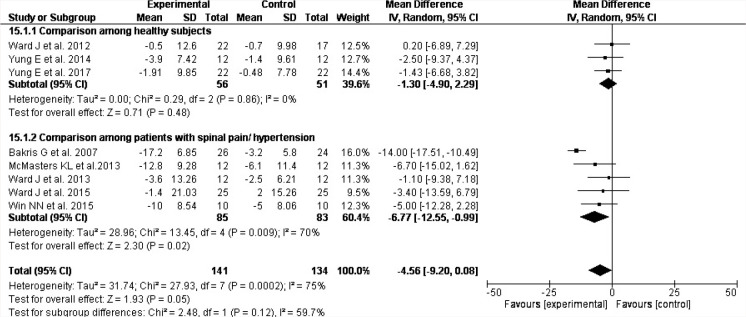
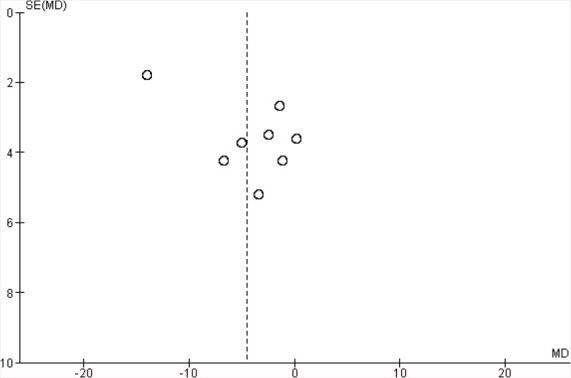
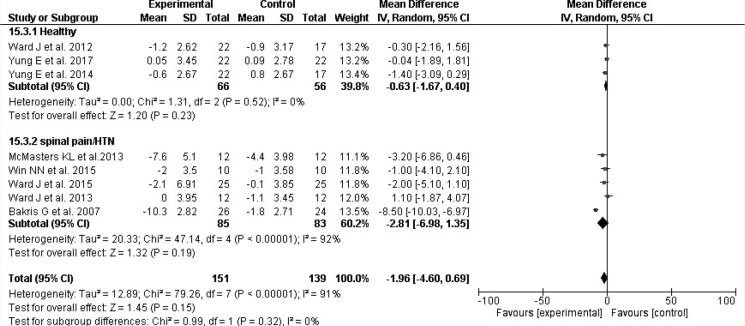
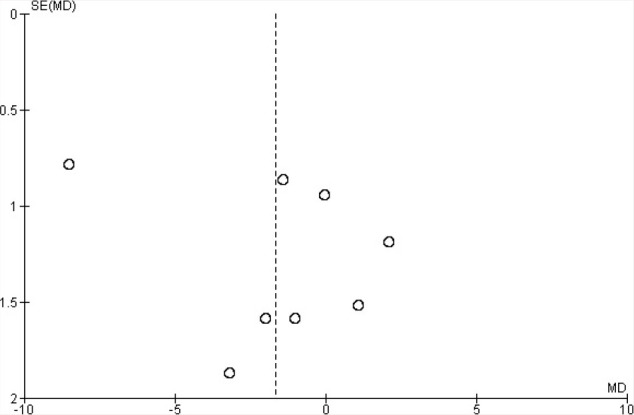
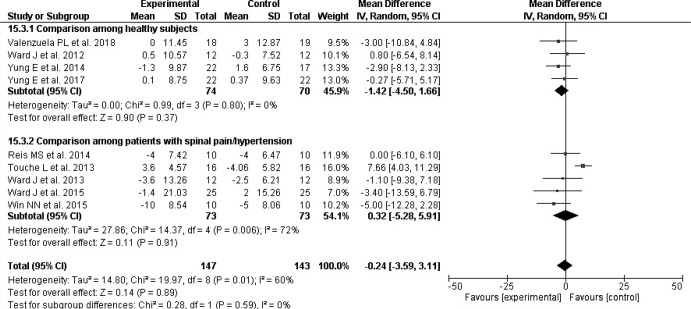
Results of meta-analysis showed that there was statistically significant decrease in SBP ( , 95% , 0.08; ) with moderate heterogeneity ( , ) in experimental group as compared to control group. There was statistically non-significant decrease in DBP ( , 95% , 0.69; ) with high heterogeneity ( , ), Change HR was statistically non-significant ( , 95% , 3.11; ) with moderate heterogeneity ( , ). Exclusion of short duration studies in sensitivity analysis revealed a statistically significant change in DBP ( , 95% , ; ). However, the result was statistically non-significant for HR after sensitivity analysis.
Spinal manipulations and mobilizations may result in significant decrease of systolic as well as diastolic Blood Pressure.
脊柱疼痛或排列不齐是一种非常常见的疾病,影响着大量人群,导致严重的残疾和经济负担。各种手法治疗技术,如脊柱推拿和松动术,可用于治疗和管理疼痛及运动功能障碍,如脊柱排列不齐和相关并发症。这些手法治疗技术会影响心血管参数。
本系统评价和荟萃分析的目的是评估脊柱推拿和松动术对心血管参数的影响。
我们进行了一项系统评价和荟萃分析,以评估脊柱松动术和推拿对心血管反应的影响。收缩压(SBP)、舒张压(DBP)和心率(HR)的平均变化是主要结局指标。使用RevMan 5.3软件进行荟萃分析。纳入研究的质量通过PEDro评分量表进行评估。偏倚风险通过Cochrane协作偏倚风险工具进行评估。
荟萃分析结果显示,与对照组相比,实验组的SBP有统计学显著下降( ,95% ,0.08; ),具有中度异质性( , )。DBP有统计学非显著下降( ,95% ,0.69; ),具有高度异质性( , ),HR变化有统计学非显著( ,95% ,3.11; ),具有中度异质性( , )。在敏感性分析中排除短期研究后,DBP有统计学显著变化( ,95% , ; )。然而,敏感性分析后HR的结果无统计学意义。
脊柱推拿和松动术可能导致收缩压和舒张压显著下降。