George Jan-Peter, Theroux-Rancourt Guillaume, Rungwattana Kanin, Scheffknecht Susanne, Momirovic Nevena, Neuhauser Lea, Weißenbacher Lambert, Watzinger Andrea, Hietz Peter
Department of Forest Genetics Federal Research and Training Centre for Forests Natural Hazards and Landscape (BFW) Vienna Austria.
Present address: Tartu Observatory University of Tartu Tõravere Estonia.
Evol Appl. 2020 Jun 18;13(9):2422-2438. doi: 10.1111/eva.13034. eCollection 2020 Oct.
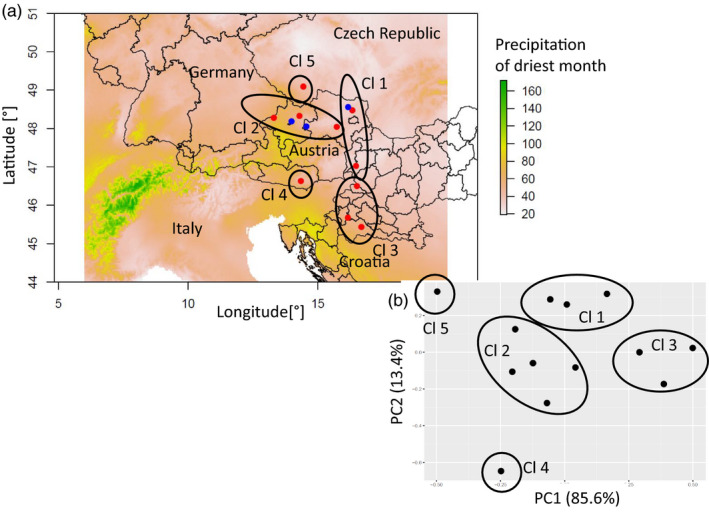
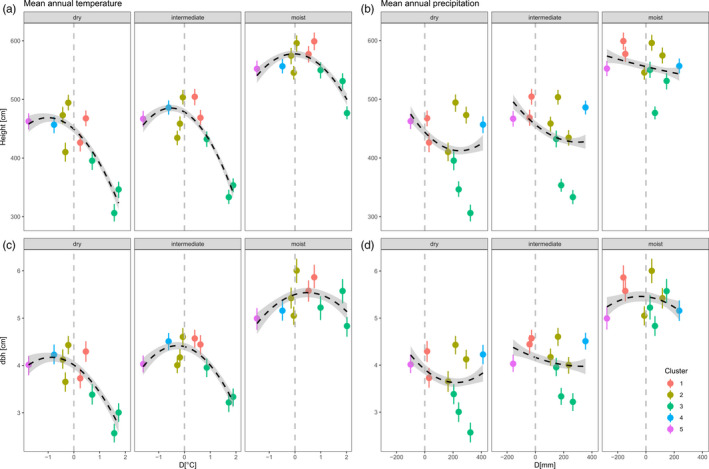
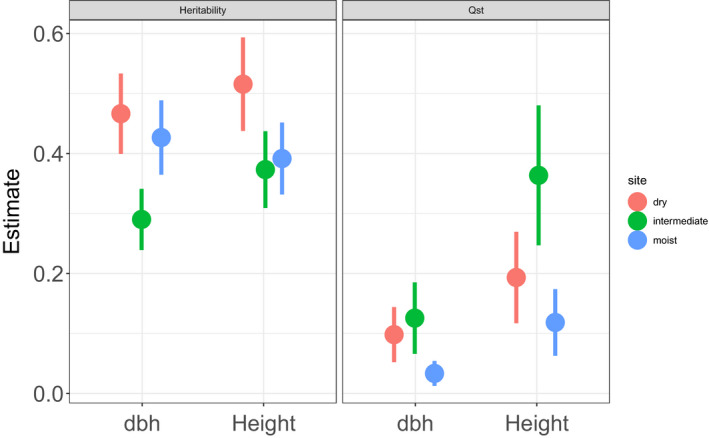
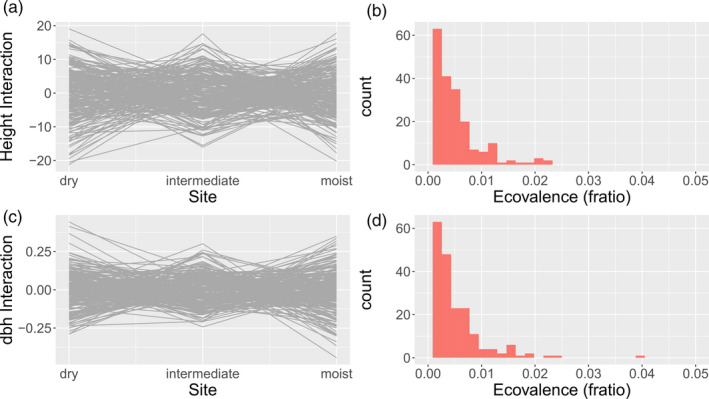
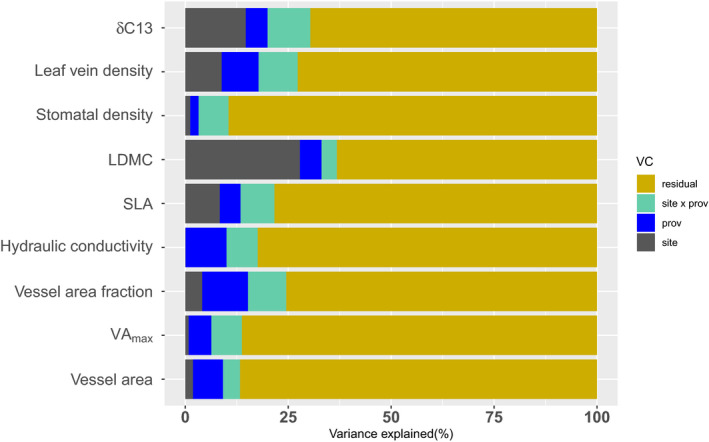
Understanding how tree species will respond to a future climate requires reliable and quantitative estimates of intra-specific variation under current climate conditions. We studied three 10-year-old common garden experiments established across a rainfall and drought gradient planted with nearly 10,000 pedunculate oak ( L.) trees from ten provenances with known family structure. We aimed at disentangling adaptive and plastic responses for growth (height and diameter at breast height) as well as for leaf and wood functional traits related to adaptation to dry environments. We used restricted maximum likelihood approaches to assess additive genetic variation expressed as narrow-sense heritability (h), quantitative trait differentiation among provenances (Q), and genotype-by-environment interactions (GxE). We found strong and significant patterns of local adaptation in growth in all three common gardens, suggesting that transfer of seed material should not exceed a climatic distance of approximately 1°C under current climatic conditions, while transfer along precipitation gradients seems to be less stringent. Moreover, heritability reached 0.64 for tree height and 0.67 for dbh at the dry margin of the testing spectrum, suggesting significant additive genetic variation of potential use for future selection and tree breeding. GxE interactions in growth were significant and explained less phenotypic variation than origin of seed source (4% versus 10%). Functional trait variation among provenances was partly related to drought regimes at provenances origins but had moderate explanatory power for growth. We conclude that directional selection, either naturally or through breeding, is the most likely and feasible outcome for pedunculate oak to adapt to warmer and drier climate conditions in the future.
了解树种如何应对未来气候需要在当前气候条件下对种内变异进行可靠且定量的估计。我们研究了三个10年生的共同园试验,这些试验沿着降雨和干旱梯度设置,种植了来自10个种源、近10000株已知家系结构的欧洲栓皮栎(Quercus robur L.)树。我们旨在区分生长(树高和胸径)以及与适应干旱环境相关的叶片和木材功能性状的适应性和可塑性反应。我们使用限制最大似然法来评估以狭义遗传力(h)表示的加性遗传变异、种源间的数量性状分化(Q)以及基因型与环境的相互作用(GxE)。我们在所有三个共同园中都发现了生长方面强烈且显著的局部适应模式,这表明在当前气候条件下,种子材料的转移不应超过约1°C的气候距离,而沿降水梯度的转移似乎限制较小。此外,在测试范围的干旱边缘,树高的遗传力达到0.64,胸径的遗传力达到0.67,这表明存在显著的加性遗传变异,可用于未来的选择和树木育种。生长方面的GxE相互作用显著,但对表型变异的解释程度低于种子来源(分别为4%和10%)。种源间的功能性状变异部分与种源地的干旱状况有关,但对生长的解释力适中。我们得出结论,无论是自然选择还是通过育种进行的定向选择,都是欧洲栓皮栎未来适应更温暖干燥气候条件最有可能且可行的结果。