Matsumoto Kenki, Ganz Reinhold, Khanduja Vikas
School of Clinical Medicine, Cambridge University, Cambridge, UK.
Faculty of Medicine, University of Bern, Bern, Switzerland.
Bone Joint Res. 2020 Sep 20;9(9):572-577. doi: 10.1302/2046-3758.99.BJR-2020-0003. eCollection 2020 Sep.
Femoroacetabular impingement (FAI) describes abnormal bony contact of the proximal femur against the acetabulum. The term was first coined in 1999; however what is often overlooked is that descriptions of the morphology have existed in the literature for centuries. The aim of this paper is to delineate its origins and provide further clarity on FAI to shape future research.
A non-systematic search on PubMed was performed using keywords such as "impingement" or "tilt deformity" to find early anatomical descriptions of FAI. Relevant references from these primary studies were then followed up.
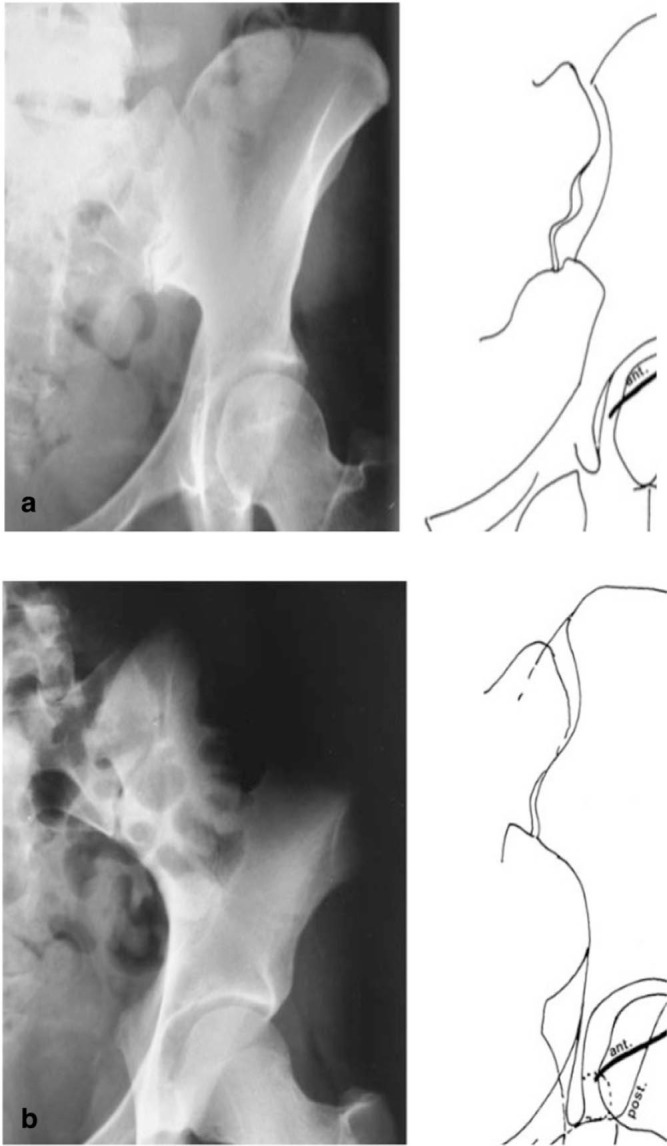
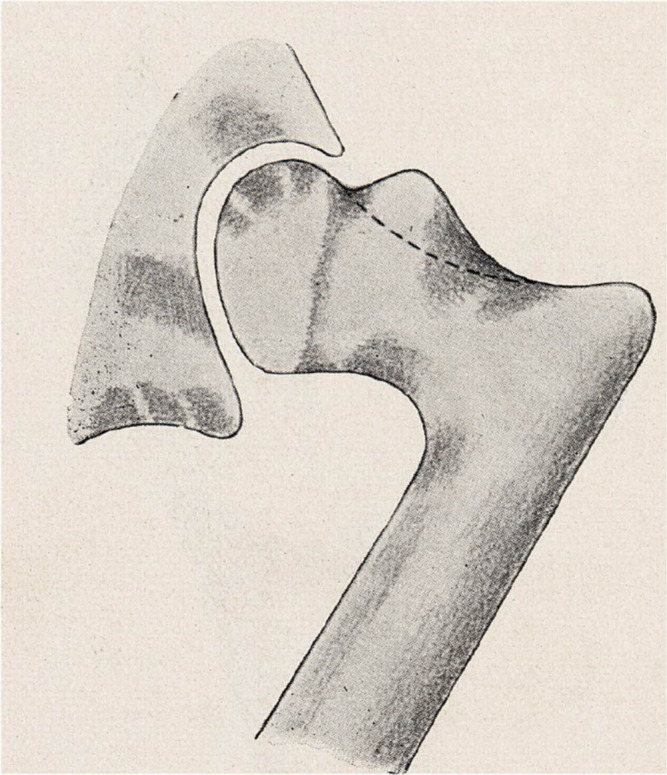
Although FAI has existed for almost 5,000 years, the anatomical study by Henle in 1855 was the first to describe it in the literature. The relevance of the deformity was not appreciated at the time but this triggered the development of further anatomical studies. Parallel to this, Poland performed the first surgical correction of FAI in 1898 and subsequently, descriptions of similar procedures followed. In 1965, Murray outlined radiological evidence of idiopathic cam-type deformities and highlighted its significance. This led to a renewed focus on FAI and eventually, Ganz et al released their seminal paper that has become the foundation of our current understanding of FAI. Since then, there has been an exponential rise in published literature but finding a consensus, especially in the diagnosis of FAI, has proven to be difficult.
Current research on FAI heavily focuses on new data, but old evidence does exist and studying it could be equally as important in clarifying the aetiology and classification of FAI.Cite this article: 2020;9(9):572-577.
股骨髋臼撞击症(FAI)是指股骨近端与髋臼之间出现异常的骨质接触。该术语于1999年首次提出;然而,常常被忽视的是,文献中对其形态的描述已经存在了几个世纪。本文旨在阐述其起源,并进一步明确FAI,以指导未来的研究。
在PubMed上进行非系统性检索,使用“撞击”或“倾斜畸形”等关键词,以查找FAI的早期解剖学描述。然后对这些主要研究的相关参考文献进行追踪。
尽管FAI已经存在了近5000年,但1855年亨利的解剖学研究是首次在文献中对其进行描述。当时人们并未认识到这种畸形的相关性,但这引发了进一步解剖学研究的开展。与此同时,波兰在1898年首次对FAI进行了手术矫正,随后出现了类似手术的描述。1965年,默里概述了特发性凸轮型畸形的放射学证据,并强调了其重要性。这导致人们对FAI重新关注,最终,甘茨等人发表了具有开创性的论文,成为我们目前对FAI理解的基础。从那时起,已发表的文献呈指数级增长,但要达成共识,尤其是在FAI的诊断方面,已证明是困难的。
目前关于FAI的研究主要集中在新数据上,但旧证据确实存在,研究这些旧证据对于阐明FAI的病因和分类可能同样重要。引用本文:2020;9(9):572 - 577。