Chen Yen-Yu, Chen Yin-Chia, Wu Chia-Chen, Yen Hsu-Ting, Huang Kwan-Ru, Sheu Jiunn-Jye, Lee Fan-Yen
Division of Thoracic and Cardiovascular Surgery, Department of Surgery, Kaohsiung Chang Gung Memorial Hospital and Chang Gung University College of Medicine, 123, Ta-Pei Road, NiaoSung, Kaohsiung City, 83301, Taiwan.
J Cardiothorac Surg. 2020 Oct 2;15(1):295. doi: 10.1186/s13019-020-01347-0.
Veno-arterial extracorporeal membrane oxygenation (ECMO) is increasingly being utilized in patients with massive pulmonary embolism (PE). However, the efficacy and the safety remain uncertain. This study aimed to investigate clinical courses and outcomes in ECMO-treated patients with acute PE.
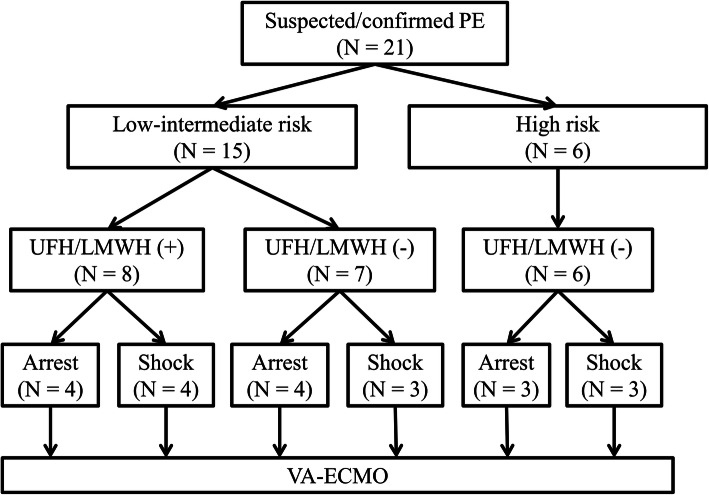
Twenty-one patients with acute PE rescued by ECMO from January 2012 to December 2019 were retrospectively analysed. Clinical features, laboratory biomarkers, and imaging findings of these patients were reviewed, and the relationship with immediate outcome and clinical course was investigated.
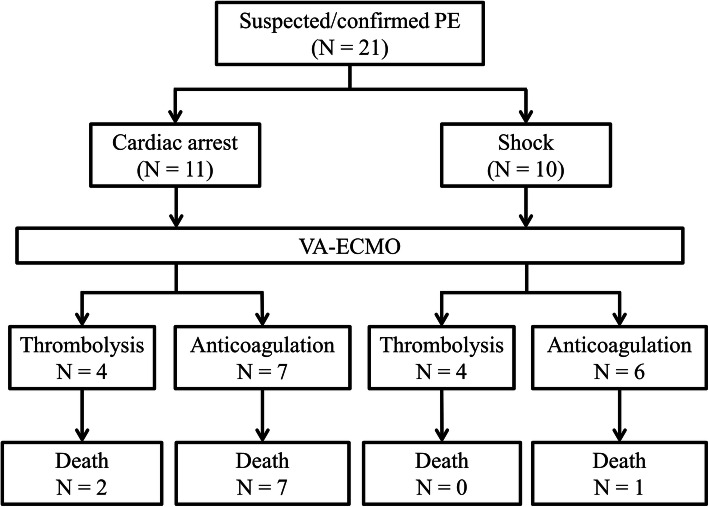
Sixteen patients (76.2%) experienced refractory circulatory collapse requiring cardiopulmonary resuscitation (CPR) or ECMO support within 2 h after the onset of cardiogenic shock, and none could receive definitive reperfusion therapy before ECMO initiation. Before or during ECMO support, more than 90% of patients had imaging signs of right ventricular (RV) dysfunction. In normotension patients, the computed tomography (CT) value was a valuable predictor of rapid disease progression compared with cardiac troponin I level. Ultimately, in-hospital death occurred in ten patients (47.6%) and 90% of them died of prolonged CPR-related brain death. Cardiac arrest was a significant predictor of poor prognosis (p = 0.001).
ECMO appears to be a safe and effective circulatory support in patients with massive PE. Close monitoring in intensive care unit is recommended in patients with RV dysfunction and aggressive use of ECMO may reduce the risk of sudden cardiac arrest and improve clinical outcome.
静脉-动脉体外膜肺氧合(ECMO)越来越多地应用于大面积肺栓塞(PE)患者。然而,其疗效和安全性仍不确定。本研究旨在调查接受ECMO治疗的急性PE患者的临床病程和结局。
回顾性分析2012年1月至2019年12月期间21例接受ECMO救治的急性PE患者。对这些患者的临床特征、实验室生物标志物和影像学检查结果进行回顾,并研究其与即刻结局和临床病程的关系。
16例患者(76.2%)在心源休克发作后2小时内出现难治性循环衰竭,需要进行心肺复苏(CPR)或ECMO支持,且在启动ECMO之前均未接受确定性再灌注治疗。在ECMO支持前或支持期间,超过90%的患者有右心室(RV)功能障碍的影像学表现。在血压正常的患者中,与心肌肌钙蛋白I水平相比,计算机断层扫描(CT)值是疾病快速进展的有价值预测指标。最终,10例患者(47.6%)在医院死亡,其中90%死于长时间CPR相关脑死亡。心脏骤停是预后不良的重要预测指标(p = 0.001)。
ECMO似乎是大面积PE患者安全有效的循环支持手段。建议对RV功能障碍患者在重症监护病房进行密切监测,积极使用ECMO可能会降低心脏骤停风险并改善临床结局。