From the Department of Health Services Research and Administration, College of Public Health, University of Nebraska Medical Center and Jones Health Services Consulting.
Department of Biostatistics, College of Public Health, University of Nebraska Medical Center, 984350 Nebraska Medical Center, Omaha.
J Patient Saf. 2021 Dec 1;17(8):e716-e726. doi: 10.1097/PTS.0000000000000789.
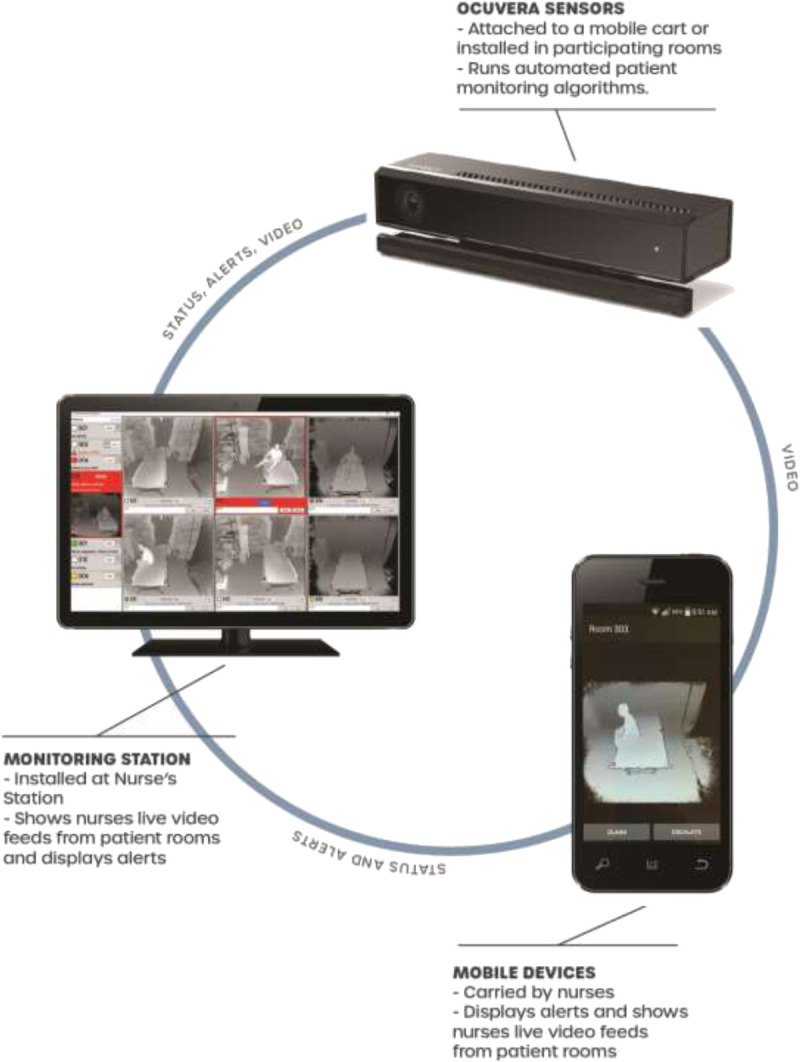
This study aimed to evaluate the effectiveness of using 1 to 4 mobile or fixed automated video monitoring systems (AVMSs) to decrease the risk of unattended bed exits (UBEs) as antecedents to unassisted falls among patients at high risk for falls and fall-related injuries in 15 small rural hospitals.
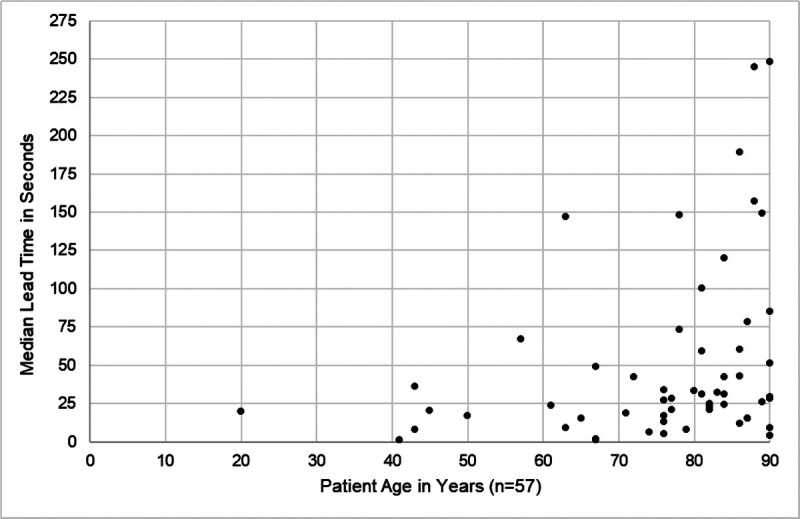
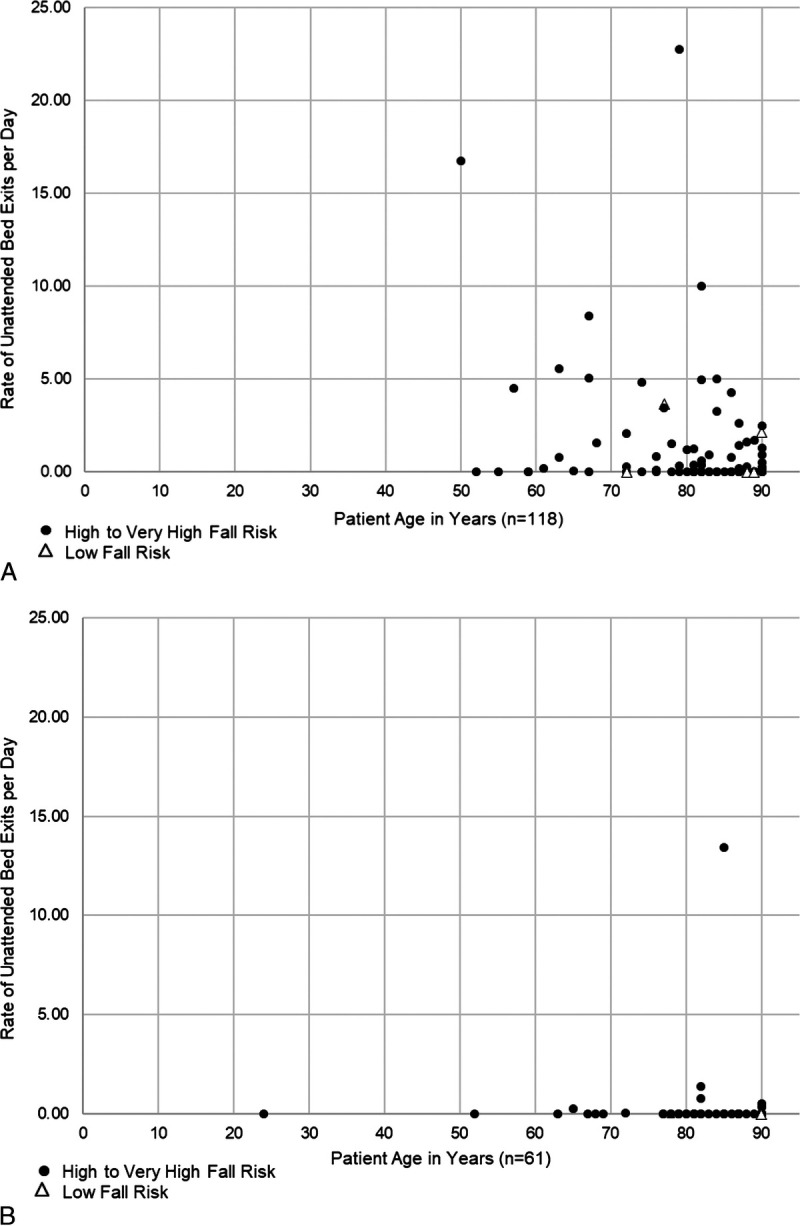
We compared UBE rates and fall rates during baseline (5 months in which patient movement was recorded but nurses did not receive alerts) and intervention phases (2 months in which nurses received alerts). We determined lead time (seconds elapsed from the first alert because of patient movement until 3 seconds after an UBE) during baseline and positive predictive value and sensitivity during intervention.
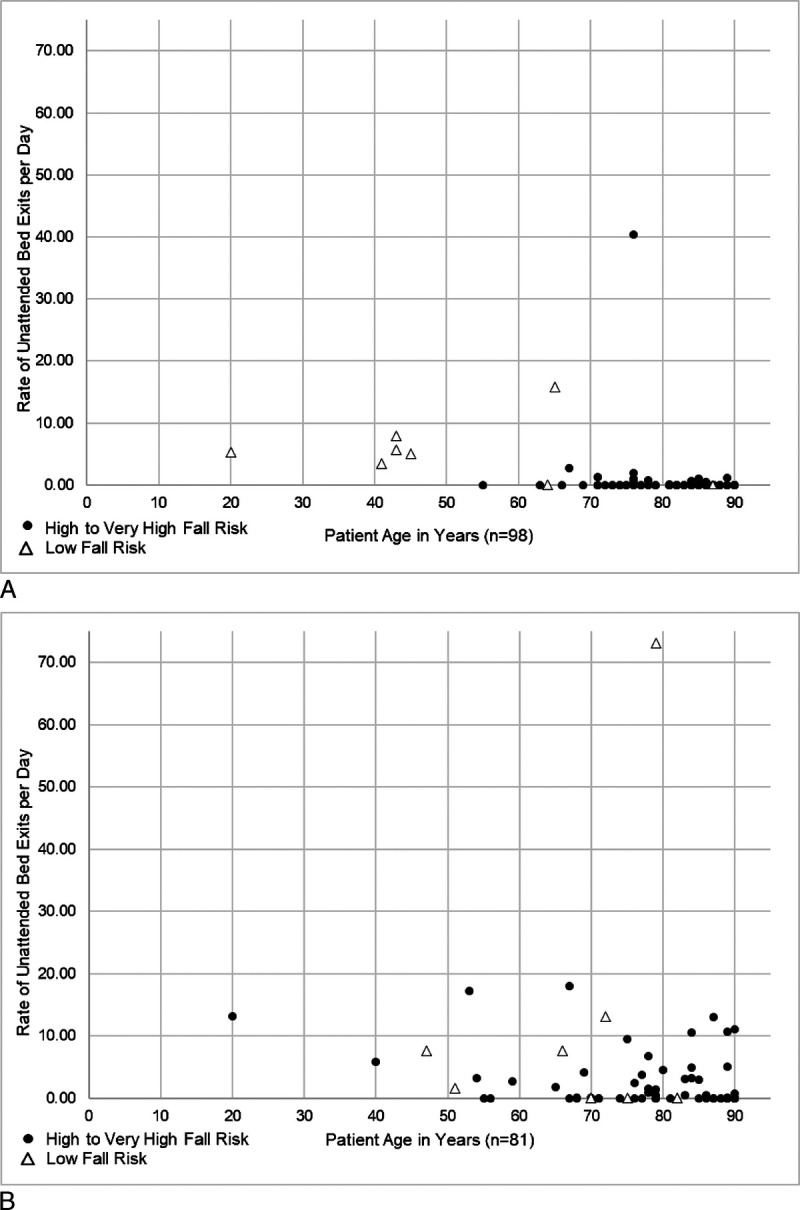
Age and fall risk were negatively associated with the baseline patient rate of UBEs/day. From baseline to intervention: in 9 hospitals primarily using mobile systems, UBEs/day decreased from 0.84 to 0.09 (89%); in 5 hospitals primarily using fixed systems, UBEs/day increased from 0.43 to 3.18 (649%) as patients at low risk for falls were observed safely exiting the bed; and among 13 hospitals with complete data, total falls/1000 admissions decreased from 8.83 to 5.53 (37%), and injurious falls/1000 admissions decreased from 2.52 to 0.55 (78%). The median lead time of the AVMS was 28.5 seconds, positive predictive value was nearly 60%, and sensitivity was 97.4%.
Use of relatively few AVMSs may allow nurses to adaptively manage UBEs as antecedents to unassisted falls and fall-related injuries in small rural hospitals. Additional research is needed in larger hospitals to better understand the effectiveness of AVMSs.
本研究旨在评估使用 1 到 4 个移动或固定自动视频监测系统(AVMS)来降低无人监护床旁离床(UBEs)风险的效果,UBEs 是小农村医院高跌倒风险和跌倒相关伤害患者发生无人协助跌倒的前兆。
我们比较了基线期(记录患者移动但护士未收到警报的 5 个月)和干预期(护士收到警报的 2 个月)期间的 UBE 发生率和跌倒率。我们确定了基线期的提前时间(从患者移动首次发出警报到 UBE 发生后 3 秒的时间)以及干预期的阳性预测值和灵敏度。
年龄和跌倒风险与基线期 UBE 发生率呈负相关。从基线期到干预期:在主要使用移动系统的 9 家医院中,UBE 发生率从 0.84 降至 0.09(89%);在主要使用固定系统的 5 家医院中,UBE 发生率从 0.43 升至 3.18(649%),因为低跌倒风险的患者安全地离开病床;在 13 家拥有完整数据的医院中,每 1000 例入院患者的总跌倒率从 8.83 降至 5.53(37%),每 1000 例入院患者的伤害性跌倒率从 2.52 降至 0.55(78%)。AVMS 的中位数提前时间为 28.5 秒,阳性预测值接近 60%,灵敏度为 97.4%。
在小农村医院中,使用相对较少的 AVMS 可能使护士能够适应管理 UBE 作为无人协助跌倒和跌倒相关伤害的前兆。需要在更大的医院中进行更多研究,以更好地了解 AVMS 的效果。