Section of Neuromedical Science, Division of Bioscience, Institute of Natural Medicine, University of Toyama, 2630 Sugitani, Toyama, 930-0194, Japan.
Pharmaceutical and Drug Industry Division, Department of Phytochemistry and Plant Systematics, National Research Centre, Giza, Egypt.
Sci Rep. 2020 Oct 2;10(1):16424. doi: 10.1038/s41598-020-73514-1.
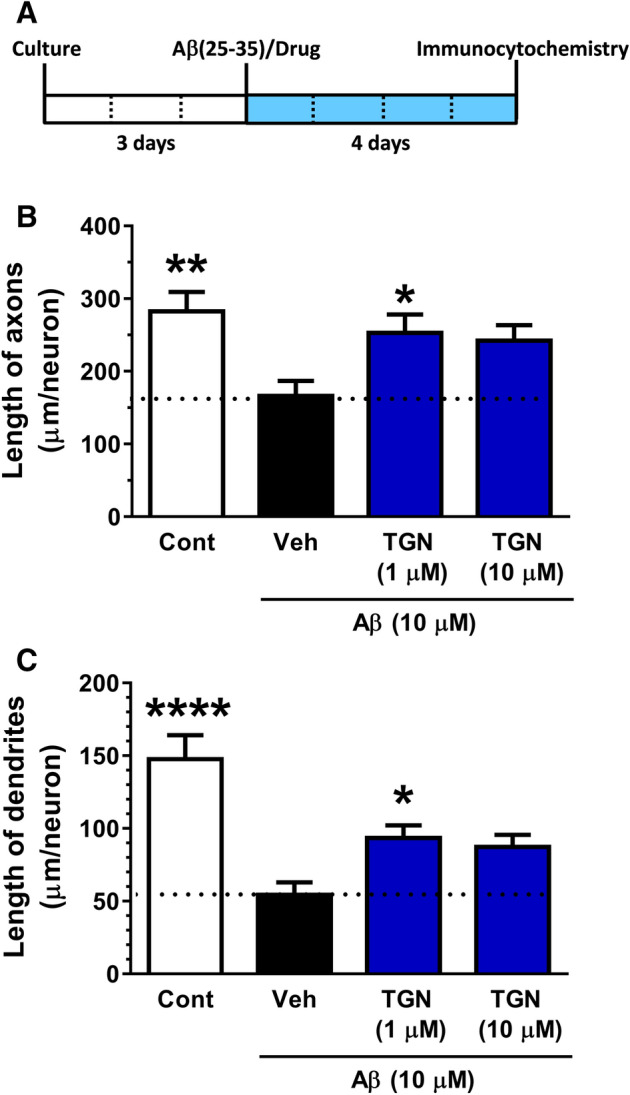
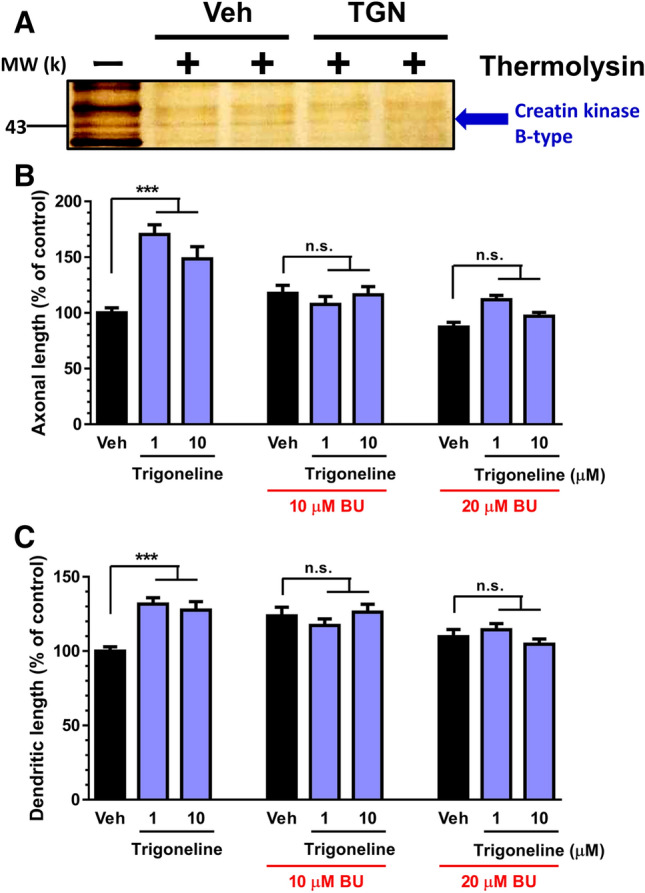
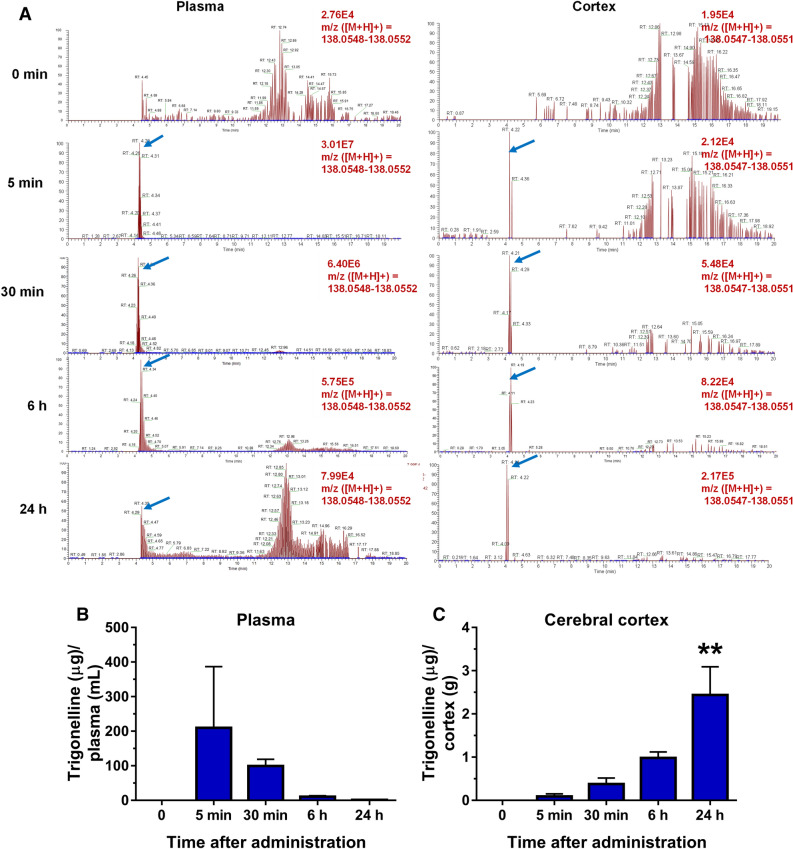
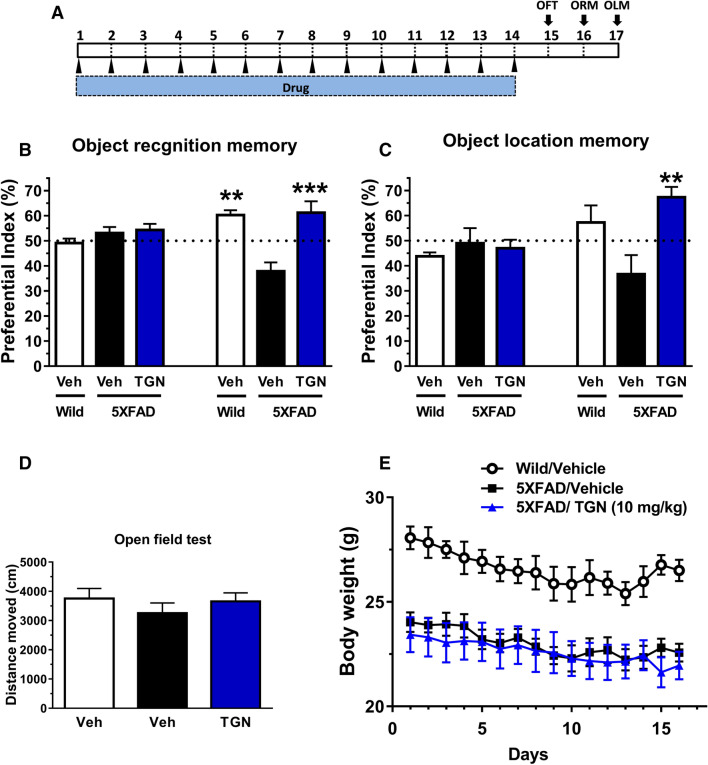
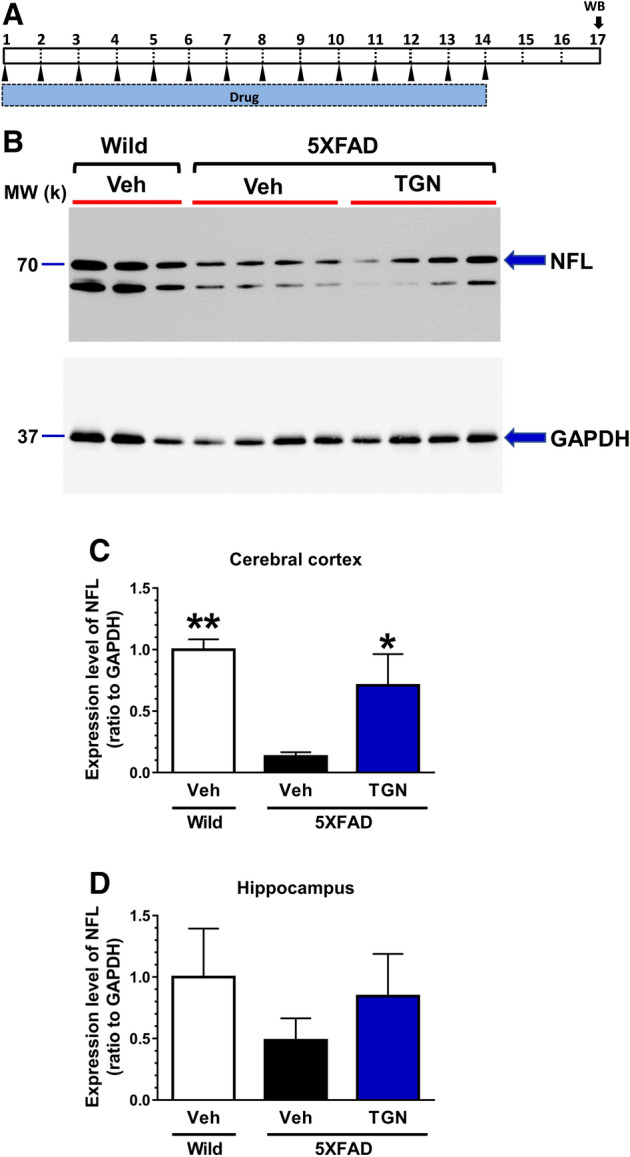
Trigonelline (TGN; 1-methylpyridin-1-ium-3-carboxylate) is a widely distributed alkaloid derived from plants. Since we previously found a neurite outgrowth effect of TGN, we hypothesised that TGN might help to improve memory deficits. Here, the efficacy of TGN in restoring amyloid β (Aβ)-induced axonal degeneration and in improving memory function was investigated in Alzheimer's disease 5XFAD model mice that overexpress mutated APP and PS1 genes. Exposure of Aβ25-35 for 3 days induced atrophy of axons and dendrites. Post treatment of TGN recovered the lengths of axons and dendrites. Following oral administration of TGN in mice, TGN itself was detected in the plasma and cerebral cortex. Oral administration of TGN to 5XFAD mice for 14 days showed significant improvement in object recognition memory (P < 0.001) and object location memory (P < 0.01). TGN administration also normalised neurofilament light levels in the cerebral cortex (P < 0.05), which is an axonal damage-associated biomarker. Analysis of target proteins of TGN in neurons by a drug affinity responsive target stability (DARTS) method identified that creatine kinase B-type (CKB) is a direct binding protein of TGN. Treatment with a CKB inhibitor cancelled the TGN-induced axonal and dendritic growth. In conclusion, we found for the first time that TGN penetrates the brain and may activate CKB, leading to axonal formation. This study shows the potential of TGN as a new drug candidate, and a new target molecule, CKB, in memory recovery signalling.
三羟甲基氨基甲烷(TGN;1-甲基吡啶-1-基-3-羧酸酯)是一种广泛分布于植物中的生物碱。由于我们之前发现 TGN 具有促进神经突生长的作用,因此我们假设 TGN 可能有助于改善记忆缺陷。在这里,我们研究了 TGN 对阿尔茨海默病 5XFAD 模型小鼠中淀粉样β(Aβ)诱导的轴突退化和改善记忆功能的疗效,该模型小鼠过度表达突变的 APP 和 PS1 基因。用 Aβ25-35 孵育 3 天可诱导轴突和树突萎缩。TGN 后处理可恢复轴突和树突的长度。TGN 在小鼠口服后可在血浆和大脑皮层中检测到。TGN 对 5XFAD 小鼠口服给药 14 天可显著改善物体识别记忆(P<0.001)和物体位置记忆(P<0.01)。TGN 给药还可使大脑皮层中的神经丝轻链水平正常化(P<0.05),这是一种与轴突损伤相关的生物标志物。通过药物亲和反应靶标稳定性(DARTS)方法分析 TGN 在神经元中的靶蛋白,发现肌酸激酶 B 型(CKB)是 TGN 的直接结合蛋白。用 CKB 抑制剂处理可取消 TGN 诱导的轴突和树突生长。总之,我们首次发现 TGN 可穿透大脑并可能激活 CKB,从而促进轴突形成。这项研究表明 TGN 作为一种新的药物候选物和记忆恢复信号的新靶标分子 CKB 具有潜力。