Valcin Jennifer A, Udoh Uduak S, Swain Telisha M, Andringa Kelly K, Patel Chirag R, Al Diffalha Sameer, Baker Paul R S, Gamble Karen L, Bailey Shannon M
Division of Molecular and Cellular Pathology, Department of Pathology, University of Alabama at Birmingham, Birmingham, AL, United States.
Division of Nephrology, Department of Medicine, University of Alabama at Birmingham, Birmingham, AL, United States.
Front Physiol. 2020 Sep 7;11:1048. doi: 10.3389/fphys.2020.01048. eCollection 2020.
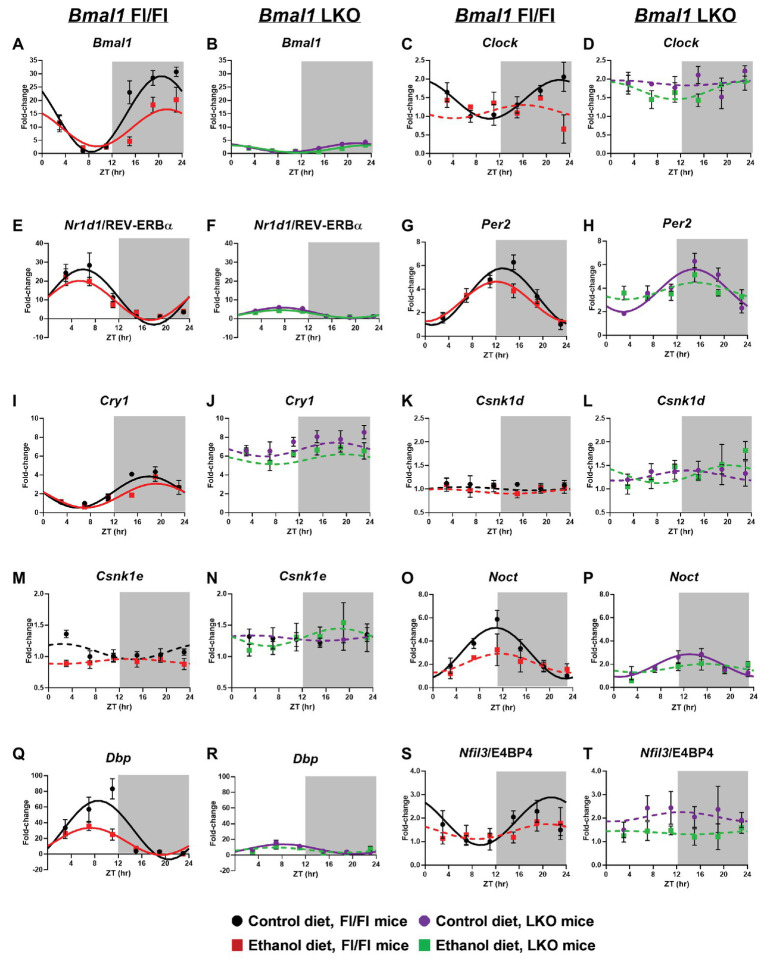
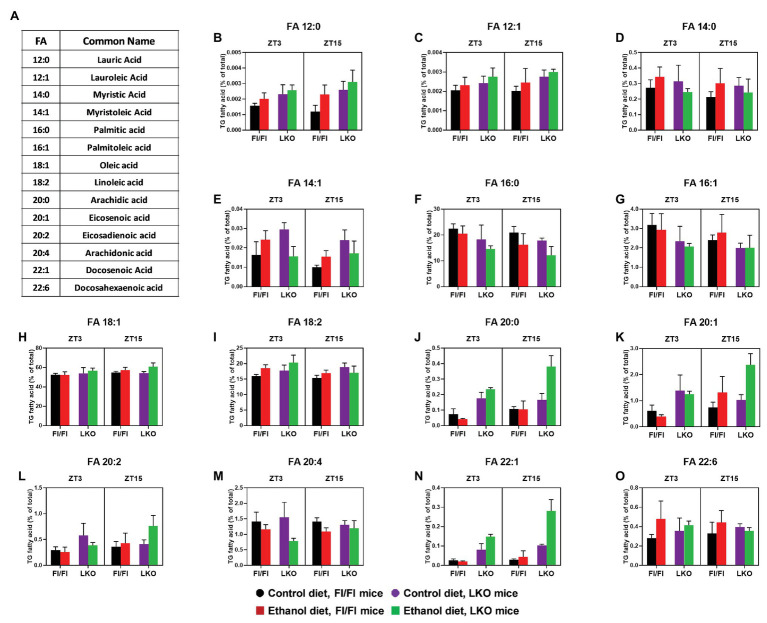
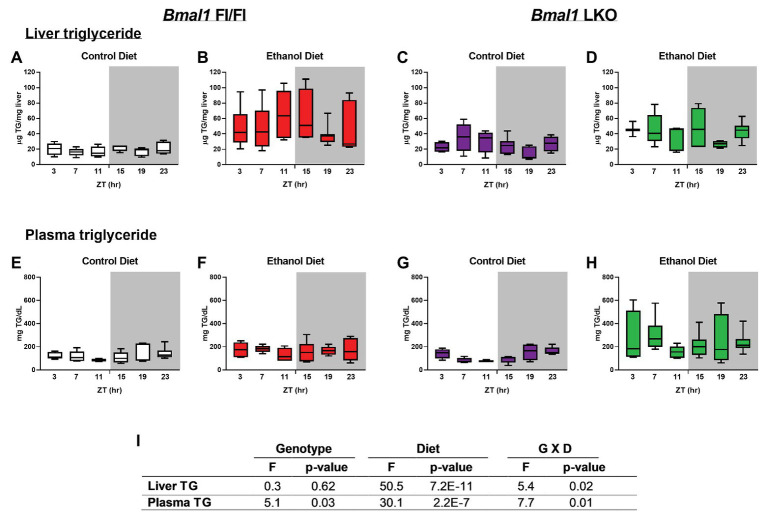
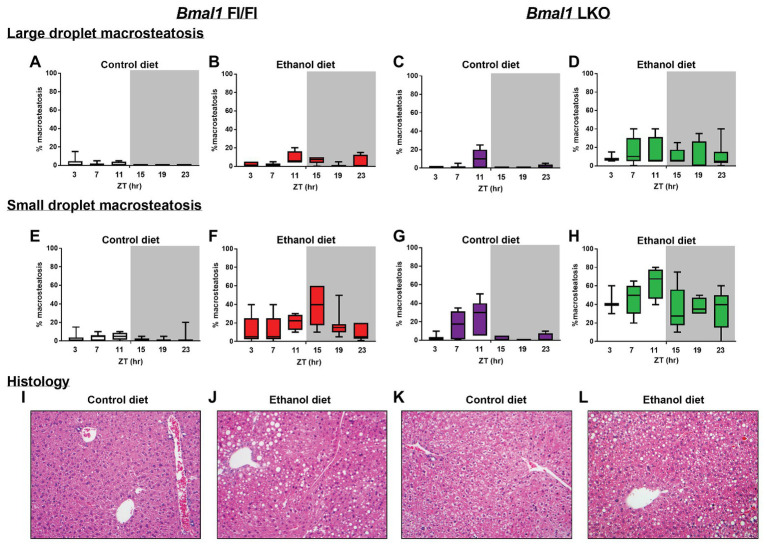
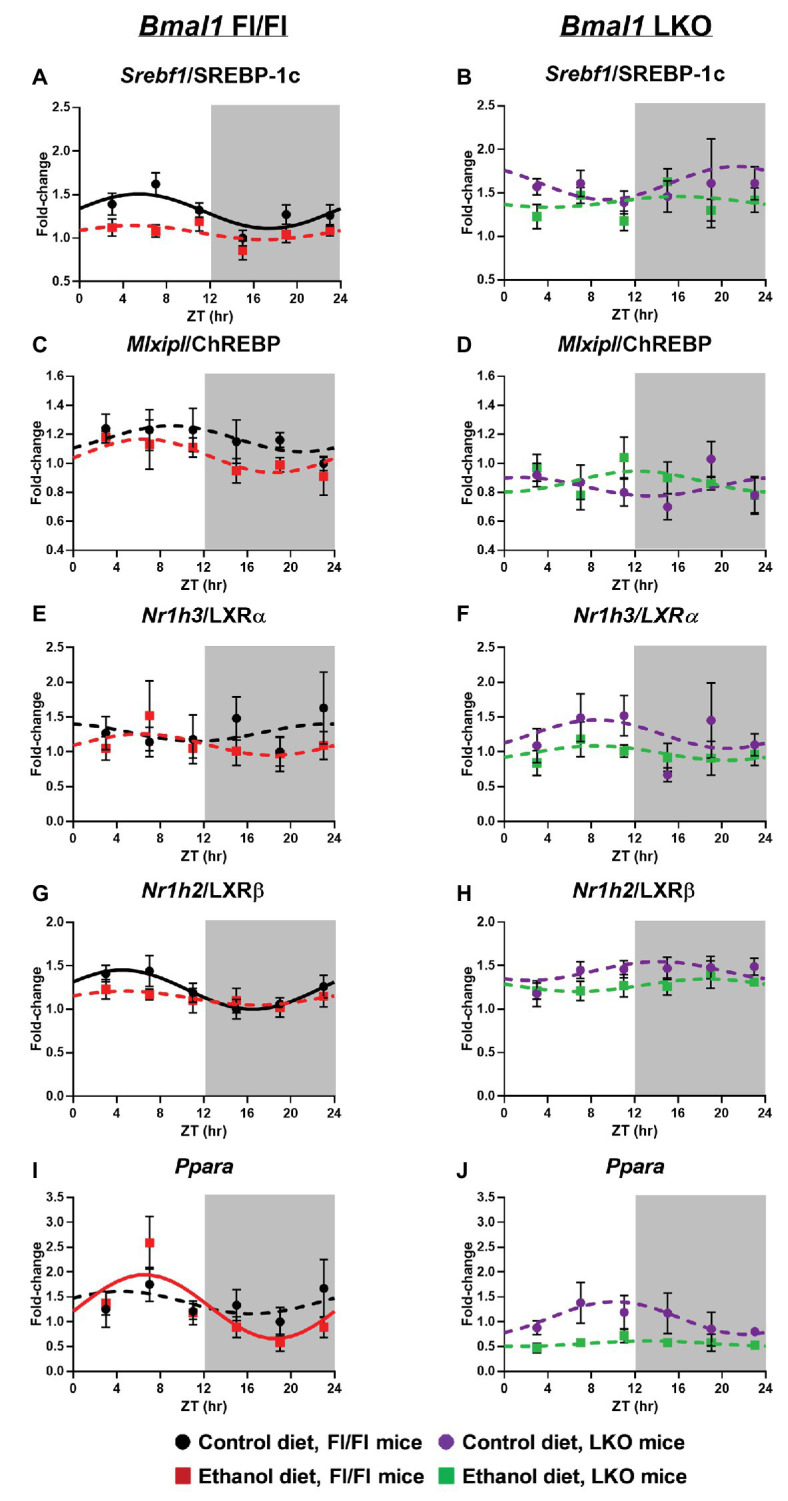
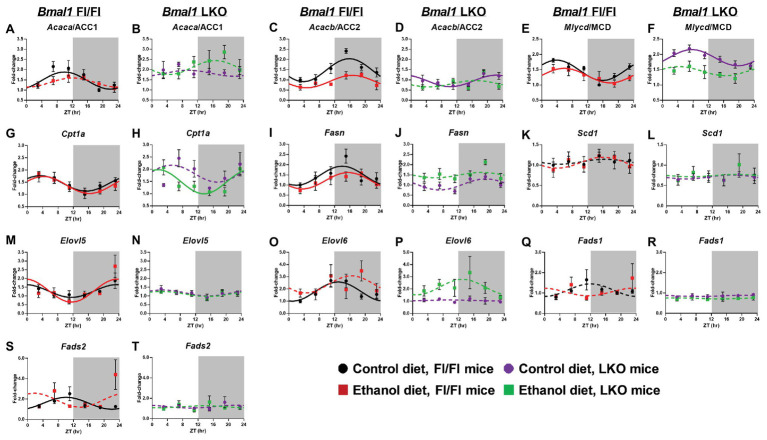
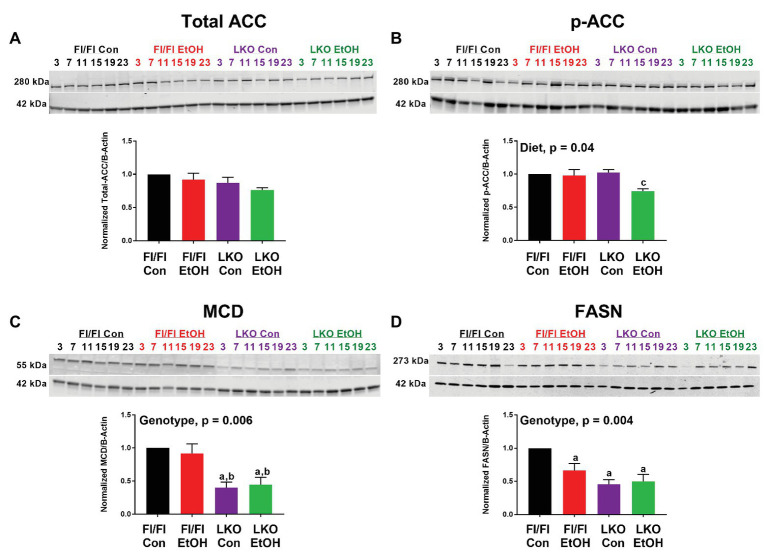
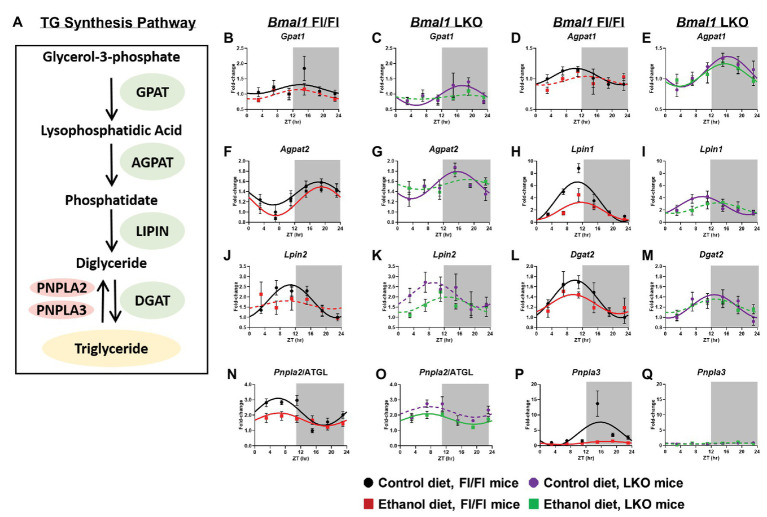
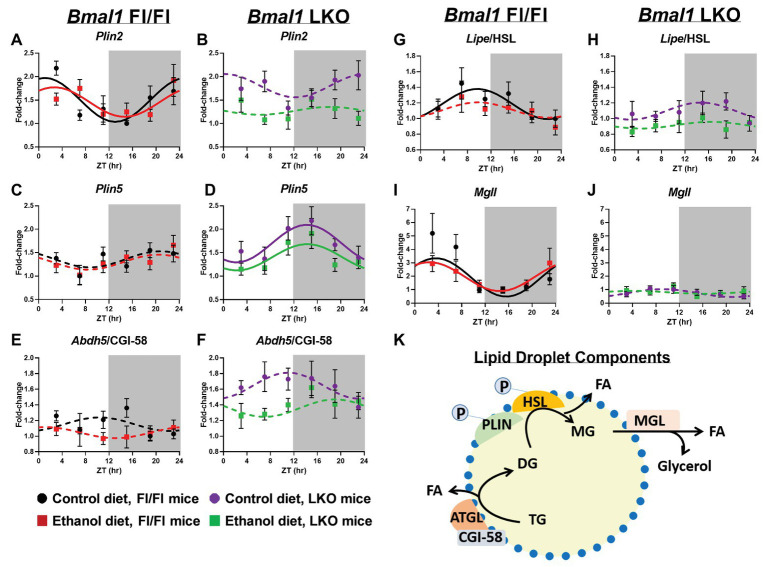
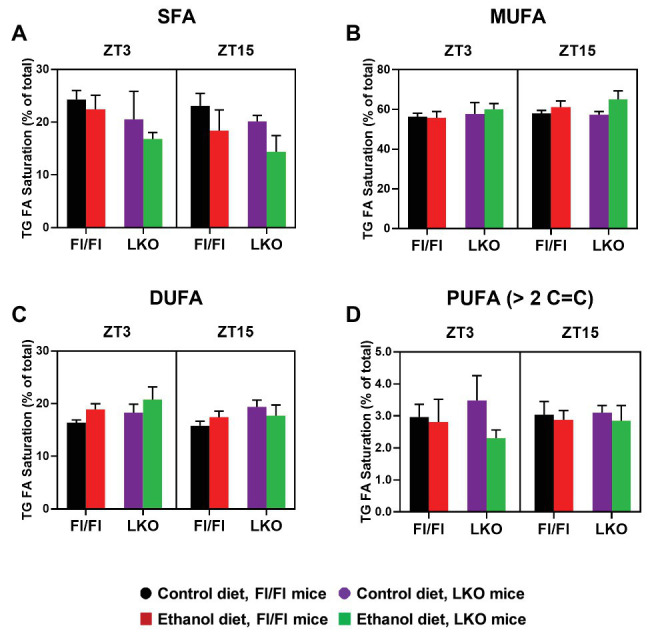
Heavy alcohol drinking dysregulates lipid metabolism, promoting hepatic steatosis - the first stage of alcohol-related liver disease (ALD). The molecular circadian clock plays a major role in synchronizing daily rhythms in behavior and metabolism and clock disruption can cause pathology, including liver disease. Previous studies indicate that alcohol consumption alters liver clock function, but the impact alcohol or clock disruption, or both have on the temporal control of hepatic lipid metabolism and injury remains unclear. Here, we undertook studies to determine whether genetic disruption of the liver clock exacerbates alterations in lipid metabolism and worsens steatosis in alcohol-fed mice. To address this question, male liver-specific knockout (LKO) and flox/flox (Fl/Fl) control mice were fed a control or alcohol-containing diet for 5 weeks. Alcohol significantly dampened diurnal rhythms of mRNA levels in clock genes and , phase advanced /REV-ERBα, and induced arrhythmicity in , , and /E4BP4, with further disruption in livers of LKO mice. Alcohol-fed LKO mice exhibited higher plasma triglyceride (TG) and different time-of-day patterns of hepatic TG and macrosteatosis, with elevated levels of small droplet macrosteatosis compared to alcohol-fed Fl/Fl mice. Diurnal rhythms in mRNA levels of lipid metabolism transcription factors (, , and ) were significantly altered by alcohol and clock disruption. Alcohol and/or clock disruption significantly altered diurnal rhythms in mRNA levels of fatty acid (FA) synthesis and oxidation (, , , , , and ), TG turnover (, , , , and ), and lipid droplet (, , , and ) genes, along with protein abundances of p-ACC, MCD, and FASN. Lipidomics analyses showed that alcohol, clock disruption, or both significantly altered FA saturation and remodeled the FA composition of the hepatic TG pool, with higher percentages of several long and very long chain FA in livers of alcohol-fed LKO mice. In conclusion, these results show that the liver clock is important for maintaining temporal control of hepatic lipid metabolism and that disrupting the liver clock exacerbates alcohol-related hepatic steatosis.
大量饮酒会扰乱脂质代谢,引发肝脂肪变性,这是酒精性肝病(ALD)的第一阶段。分子生物钟在协调行为和代谢的日常节律中起主要作用,生物钟紊乱会导致包括肝病在内的病理状况。先前的研究表明,饮酒会改变肝脏生物钟功能,但酒精或生物钟紊乱,或两者对肝脏脂质代谢和损伤的时间控制的影响仍不清楚。在这里,我们进行了研究,以确定肝脏生物钟的基因破坏是否会加剧酒精喂养小鼠的脂质代谢改变并加重脂肪变性。为了解决这个问题,给雄性肝脏特异性敲除(LKO)和flox/flox(Fl/Fl)对照小鼠喂食对照饮食或含酒精饮食5周。酒精显著抑制了生物钟基因和mRNA水平的昼夜节律,使/REV-ERBα相位提前,并在、和/E4BP4中诱导了节律紊乱,LKO小鼠肝脏中的紊乱更严重。酒精喂养的LKO小鼠表现出血浆甘油三酯(TG)水平较高,肝脏TG和大脂肪变性的时间模式不同,与酒精喂养的Fl/Fl小鼠相比,小滴大脂肪变性水平升高。脂质代谢转录因子(、和)的mRNA水平的昼夜节律因酒精和生物钟紊乱而显著改变。酒精和/或生物钟紊乱显著改变了脂肪酸(FA)合成和氧化(、、、、和)、TG周转(、、、和)以及脂滴(、、、和)基因的mRNA水平的昼夜节律,以及p-ACC、MCD和FASN的蛋白质丰度。脂质组学分析表明,酒精、生物钟紊乱或两者均显著改变了FA饱和度,并重塑了肝脏TG池的FA组成,酒精喂养的LKO小鼠肝脏中几种长链和极长链FA的百分比更高。总之,这些结果表明,肝脏生物钟对于维持肝脏脂质代谢的时间控制很重要,破坏肝脏生物钟会加剧酒精相关的肝脏脂肪变性。