Li Lingling, Luo Dan, Liao Yating, Peng Kailan, Zeng Yanhua
Institute of Pathogenic Biology, Hengyang Medical College, University of South China, Hunan Provincial Key Laboratory for Special Pathogens Prevention and Control, Hengyang, China.
Department of Dermatology and Venereology, The First Affiliated Hospital, University of South China, Hengyang, China.
Front Immunol. 2020 Sep 9;11:2052. doi: 10.3389/fimmu.2020.02052. eCollection 2020.
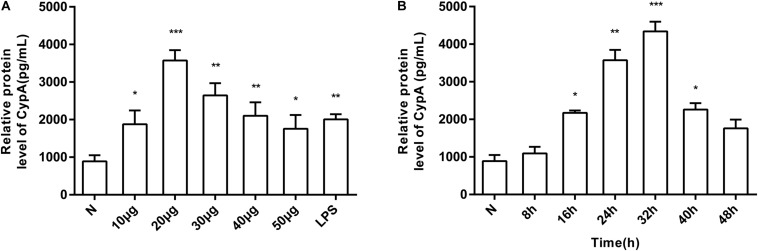
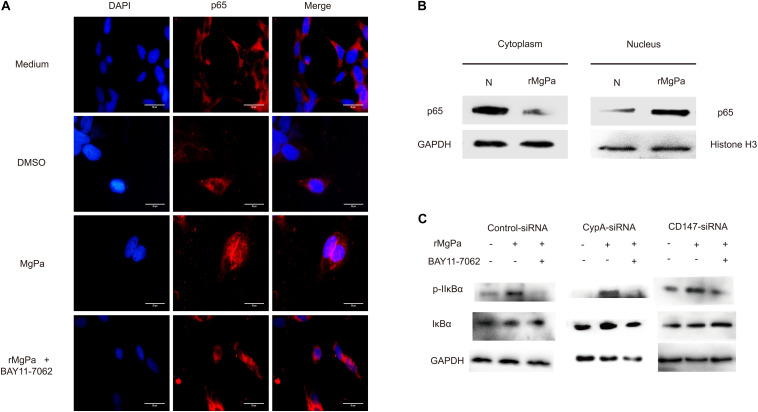
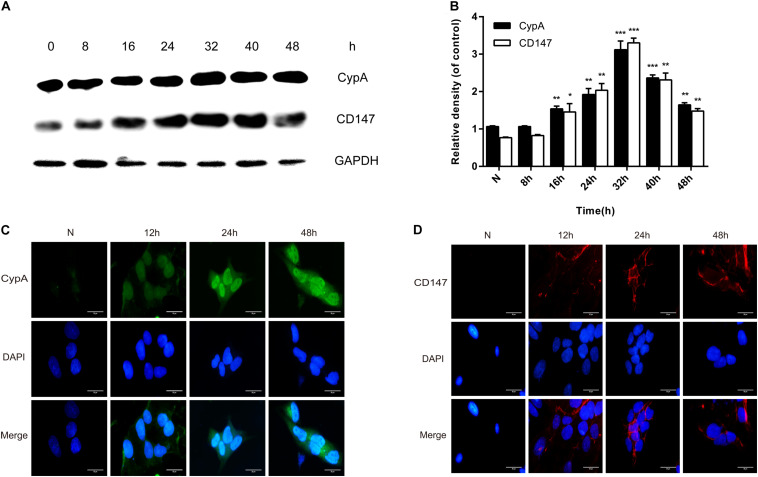
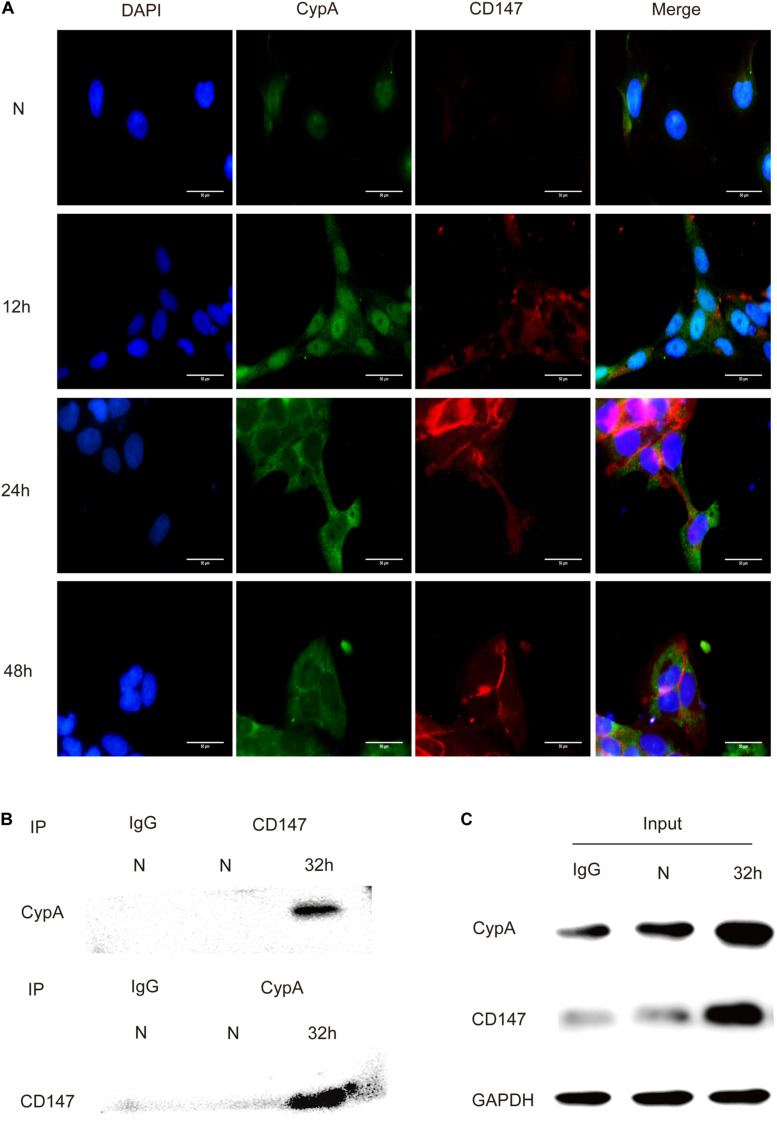
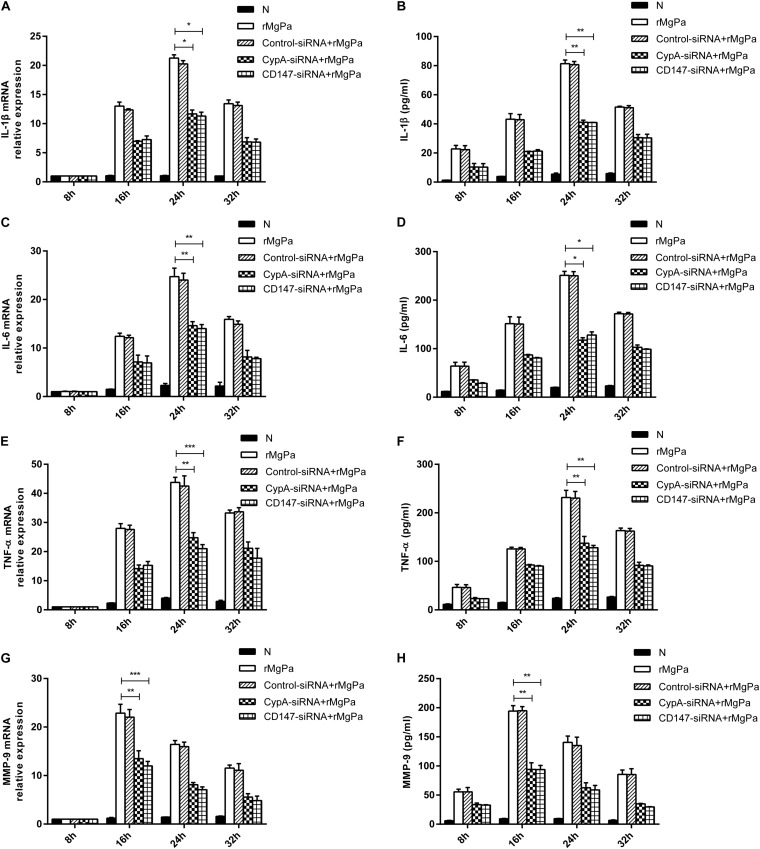
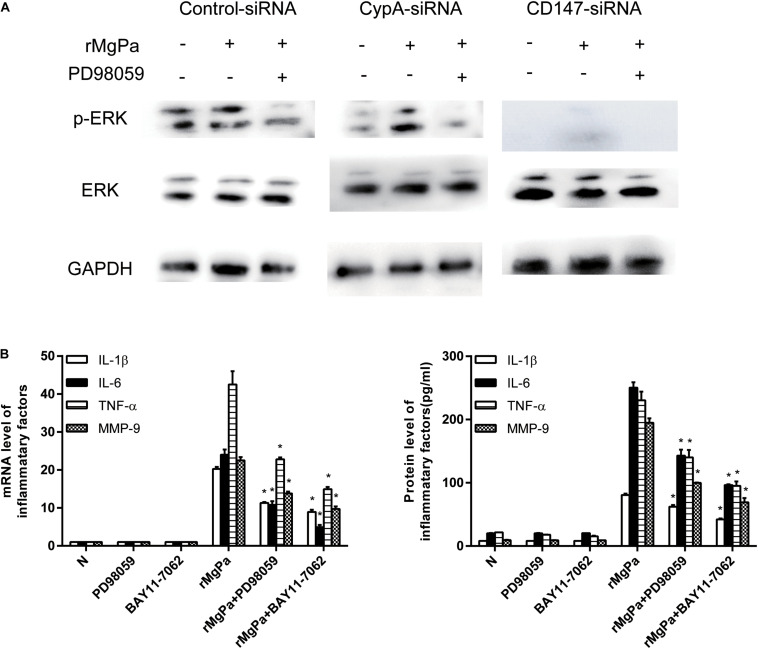
protein of adhesion (MgPa) plays an important role in the process of adhesion and invasion of host cells by , and is thus significant for its pathogenic mechanisms in host cells. Our previous study has demonstrated that cyclophilin A (CypA) is the receptor for MgPa in human urothelial cells (SV-HUC-1) and can, therefore, mediate the adherence and invasion of into host cells by interacting with MgPa. However, the specific pathogenesis of to host cells and the possible pathogenic mechanism involved in the interaction of MgPa and CypA have never been clarified. The study aimed to elucidate the mechanism involved in the pathogenicity of MgPa. Recombinant MgPa (rMgPa) induced extracellular CypA (eCypA) was detected in SV-HUC-1 cells by ELISA, and the interaction between CypA and CD147 was validated using co-localization and co-immunoprecipitation assay. In addition, both extracellular signal-regulated kinases (ERK) phosphorylation and NF-κB activation evoked by rMgPa-induced eCypA were also demonstrated. The findings of this study verified that rMgPa could induce the secretion of eCypA in SV-HUC-1 cells and thus promote the protein and mRNA expression of IL-1β, IL-6, TNF-α and MMP-9 via CypA-CD147 interaction and thus activating ERK-NF-κB pathway, which is beneficial to elucidate the pathogenesis and possible pathogenic mechanism of to host cells.
黏附蛋白(MgPa)在 黏附并侵入宿主细胞的过程中发挥着重要作用,因此对其在宿主细胞中的致病机制具有重要意义。我们之前的研究表明,亲环素A(CypA)是人尿道上皮细胞(SV-HUC-1)中MgPa的受体,因此可以通过与MgPa相互作用介导 黏附并侵入宿主细胞。然而, 对宿主细胞的具体致病机制以及MgPa与CypA相互作用中可能涉及的致病机制从未得到阐明。该研究旨在阐明MgPa致病的机制。通过ELISA在SV-HUC-1细胞中检测重组MgPa(rMgPa)诱导的细胞外CypA(eCypA),并使用共定位和免疫共沉淀试验验证CypA与CD147之间的相互作用。此外,还证实了rMgPa诱导的eCypA引起的细胞外信号调节激酶(ERK)磷酸化和NF-κB激活。本研究结果证实,rMgPa可诱导SV-HUC-1细胞分泌eCypA,从而通过CypA-CD147相互作用促进IL-1β、IL-6、TNF-α和MMP-9的蛋白质和mRNA表达,进而激活ERK-NF-κB途径,这有助于阐明 对宿主细胞的致病机制和可能的致病机制。