Maeda Yasunori, Sasaki Akira, Kasai Shuya, Goto Shinichi, Nishio Shin-Ya, Sawada Kaori, Tokuda Itoyo, Itoh Ken, Usami Shin-Ichi, Matsubara Atsushi
Department of Otorhinolaryngology, Hirosaki University Graduate School of Medicine, Hirosaki, Japan.
Department of Stress Response Science, Center for Advanced Medical Research, Hirosaki University Graduate School of Medicine, Hirosaki, Japan.
Hum Genome Var. 2020 Sep 18;7:27. doi: 10.1038/s41439-020-00115-9. eCollection 2020.
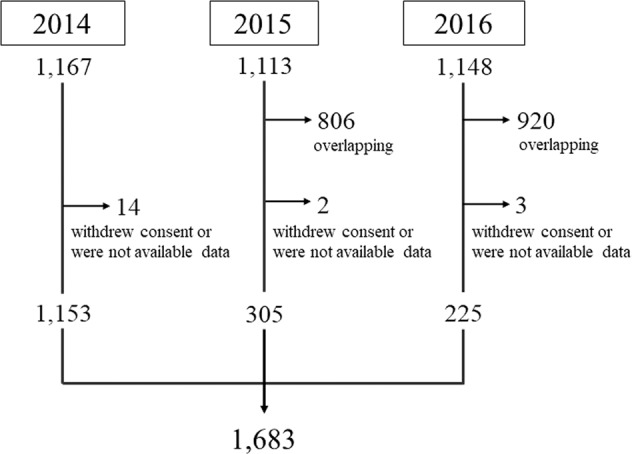
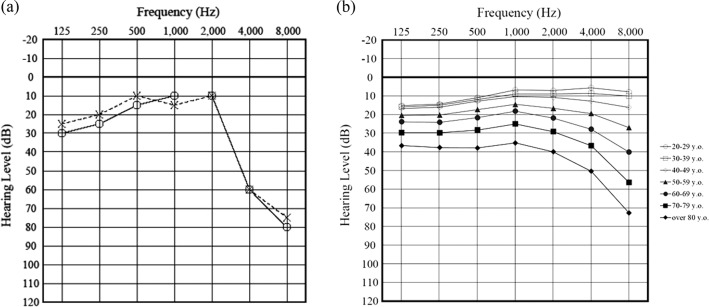
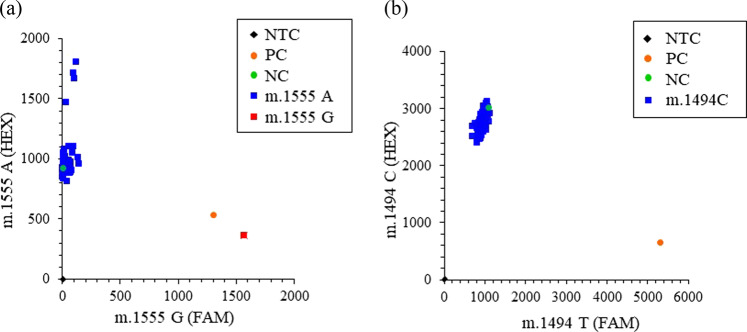
Single nucleotide polymorphisms in mitochondrial DNA, such as mitochondrial 1555 A>G (m.1555 A>G) and mitochondrial 1494 C>T (m.1494 C>T), are known to be causative mutations of nonsyndromic hearing loss following exposure to aminoglycoside antibiotics. The prevalence of the m.1555 A>G and m.1494 C>T mutations has not been reported for the general population in Japan. The purpose of this study was to investigate the prevalence of m.1555 A>G and m.1494 C>T mutations in a community-dwelling population in Japan in order to prevent aminoglycoside-induced hearing loss. We recruited participants older than 20 years of age to the Iwaki Health Promotion Project in 2014, 2015, and 2016, resulting in the recruitment of 1,683 participants. For each participant, we performed a hearing test and a genetic test for the m.1555 A>G and m.1494 C>T mutations using the TaqMan genotyping method. The m.1555 A>G mutation was detected in only 1 of the 1,683 participants (0.06%). This carrier of the m.1555 A>G mutation was a 69-year-old male with bilateral, symmetric, and high-frequency hearing loss. We provided genetic counseling and distributed a drug card advising him to avoid the administration of aminoglycoside antibiotics. In contrast, the m.1494 C>T mutation was not detected in this study population.
线粒体DNA中的单核苷酸多态性,如线粒体1555A>G(m.1555A>G)和线粒体1494C>T(m.1494C>T),已知是接触氨基糖苷类抗生素后非综合征性听力损失的致病突变。日本普通人群中m.1555A>G和m.1494C>T突变的患病率尚未见报道。本研究的目的是调查日本社区居住人群中m.1555A>G和m.1494C>T突变的患病率,以预防氨基糖苷类药物所致的听力损失。我们在2014年、2015年和2016年招募了年龄超过20岁的参与者参加磐城健康促进项目,共招募了1683名参与者。对每位参与者,我们使用TaqMan基因分型方法进行了听力测试以及m.1555A>G和m.1494C>T突变的基因检测。在1683名参与者中仅1人检测到m.1555A>G突变(0.06%)。该m.1555A>G突变携带者是一名69岁男性,患有双侧、对称的高频听力损失。我们提供了遗传咨询并发放了药物卡,建议他避免使用氨基糖苷类抗生素。相比之下,本研究人群中未检测到m.1494C>T突变。