Fellow, Department of Pediatrics, Section of Pulmonology and Sleep Medicine, University of Colorado School of Medicine.
Associate Professor, Department of Pediatrics, University of Colorado School of Medicine; Assistant Dean of Medical Education, University of Colorado School of Medicine.
MedEdPORTAL. 2020 Oct 1;16:10994. doi: 10.15766/mep_2374-8265.10994.
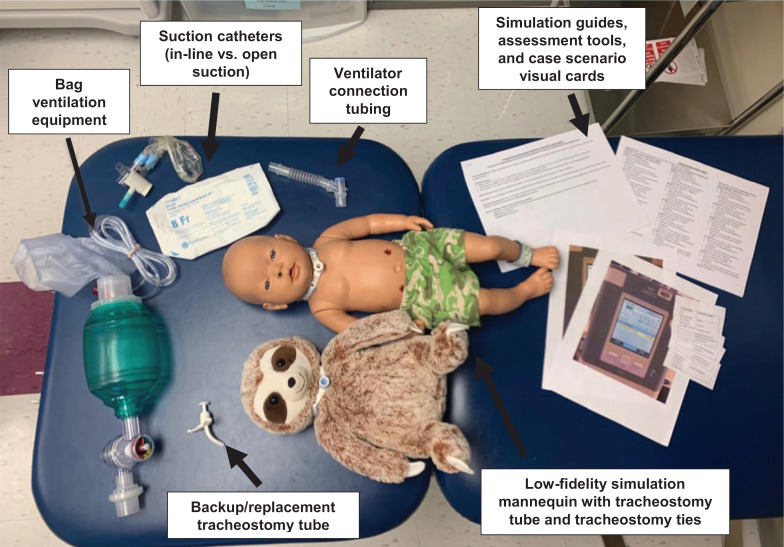
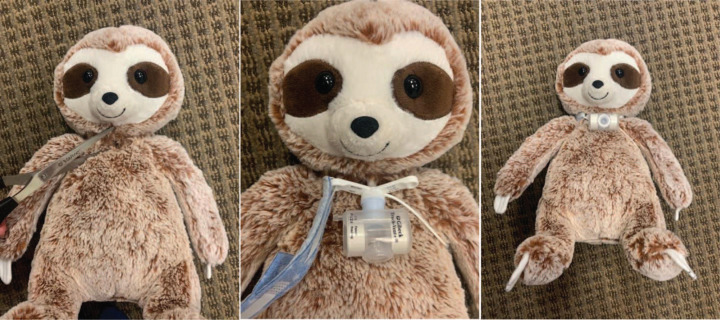
Caring for technology-dependent children, such as those with tracheostomy and ventilator dependence, can be new and frightening for pediatric residents. Education about emergencies in this patient population is important because these children are at risk for in-hospital complications. Safe care of the tracheostomy-dependent child requires the ability to recognize common complications, such as tracheostomy tube obstruction or decannulation, and intervene appropriately by suctioning and/or replacing the tracheostomy tube. This simulation-based curriculum teaches learners to identify and practice the management of these tracheostomy tube complications through low-fidelity simulation exercises.
We created a simulation session with three cases reflecting in-hospital scenarios encountered by resident physicians caring for tracheostomy-dependent children in the inpatient setting. The simulation scenario, simulation environment preparation, materials list, and debriefing outline are provided for the instructor for each simulation case. Validity evidence for the assessment tool was obtained by calculating the interrater reliability of two different raters. Resident feedback was obtained through anonymous surveys.
Twelve pediatric senior residents completed the experience. It received overwhelmingly positive feedback on learner evaluation forms, with 90% finding the experience very or extremely helpful. The intraclass correlation coefficient of interrater reliability for our assessment tool was 0.93.
The simulation was well received by residents. The interrater reliability was acceptable. This low-fidelity simulation exercise can easily be executed with minimal materials or instructor training. High-yield, just-in-time training with postcase debriefing is key to the simulation's success.
照顾依赖技术的儿童,如气管切开和呼吸机依赖的儿童,对于儿科住院医师来说可能是新的和可怕的。对这一患者群体的紧急情况进行教育很重要,因为这些儿童有院内并发症的风险。安全护理气管切开依赖的儿童需要能够识别常见并发症,如气管切开管阻塞或脱管,并通过抽吸和/或更换气管切开管进行适当干预。这个基于模拟的课程通过低保真模拟练习教学习者识别和练习这些气管切开管并发症的管理。
我们创建了一个模拟会议,其中包含三个案例,反映了住院医师在住院环境中照顾气管切开依赖儿童时遇到的院内场景。为每个模拟案例提供了模拟场景、模拟环境准备、材料清单和汇报大纲,以供教师使用。通过计算两名不同评分者的组内相关系数,获得了评估工具的有效性证据。住院医师的反馈是通过匿名调查获得的。
12 名儿科高级住院医师完成了该体验。它在学习者评估表上获得了压倒性的积极反馈,90%的人认为体验非常或极其有帮助。我们评估工具的组内相关系数为 0.93。
模拟受到住院医师的欢迎。评分者之间的可靠性是可以接受的。这种低保真模拟练习可以很容易地用最少的材料或教师培训来执行。高收益、即时培训和案例后汇报是模拟成功的关键。