Zhang Yi, Wang Yuzhi, Tian Gang, Jiang Tianhua
Department of Blood Transfusion, People's Hospital of Deyang City, Deyang.
Department of Laboratory Medicine, Affiliated Hospital of Southwest Medical University, Luzhou, Sichuan, China.
Medicine (Baltimore). 2020 Oct 2;99(40):e22203. doi: 10.1097/MD.0000000000022203.
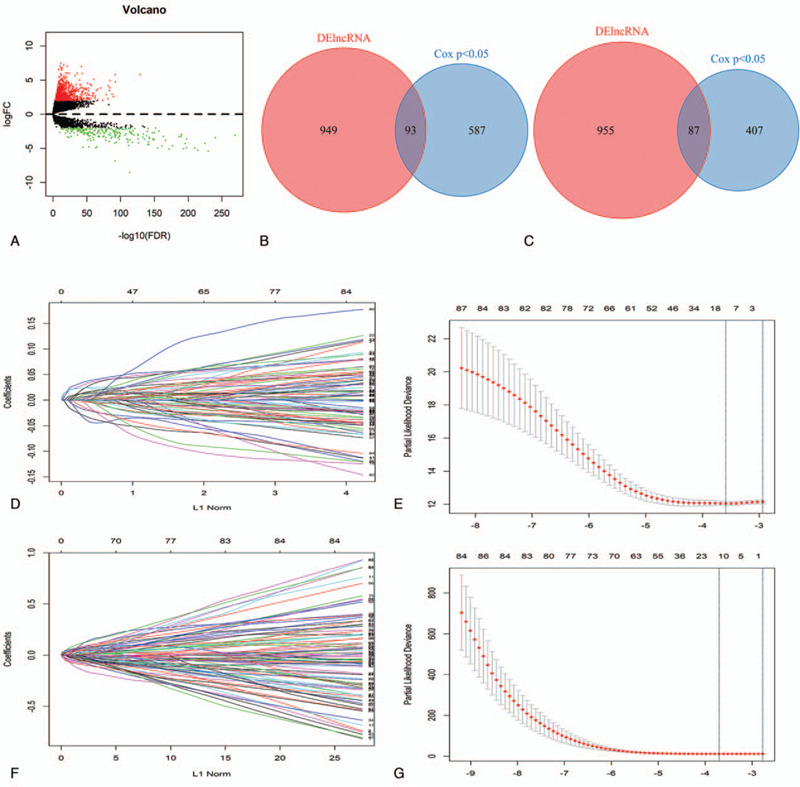
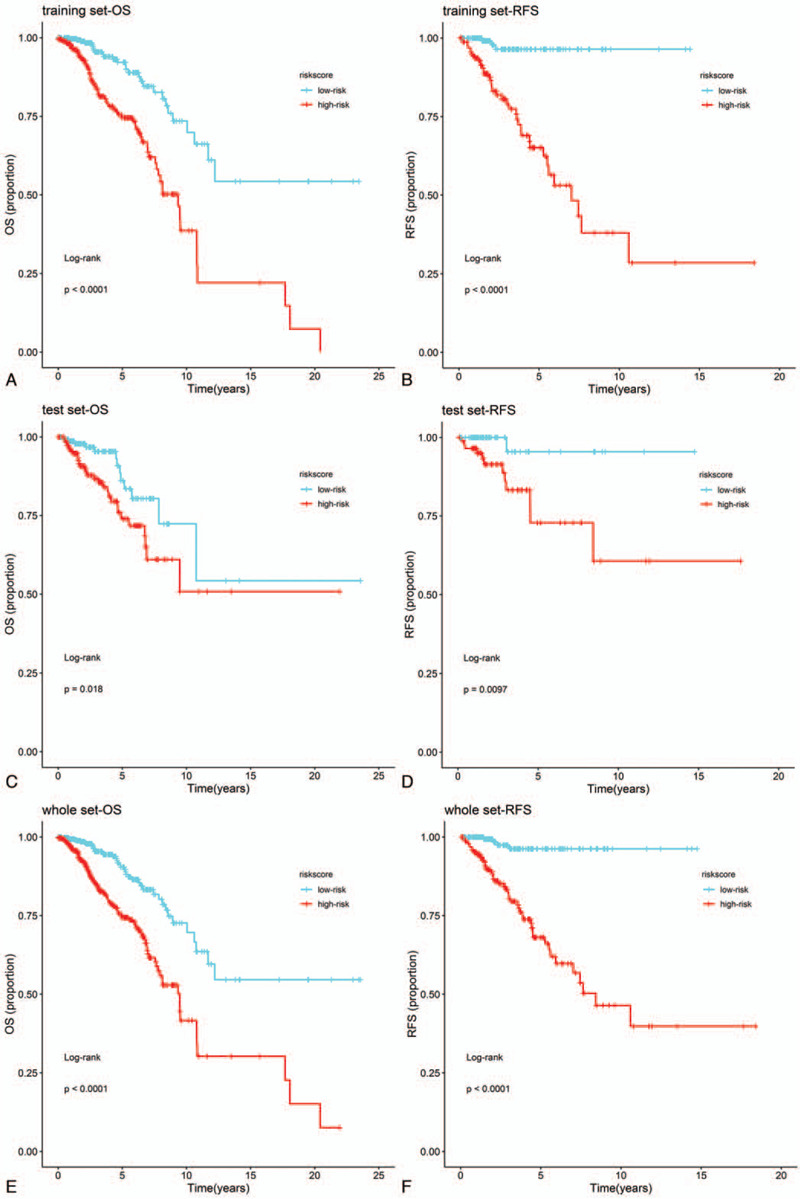
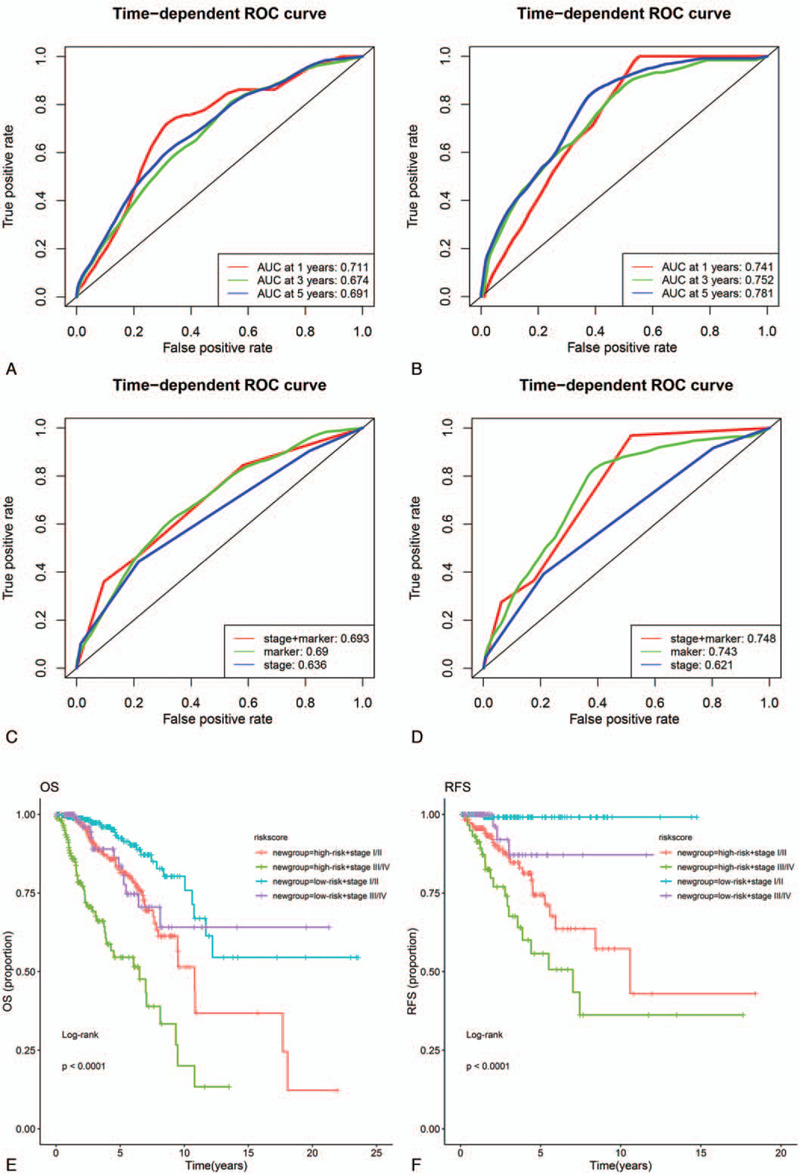
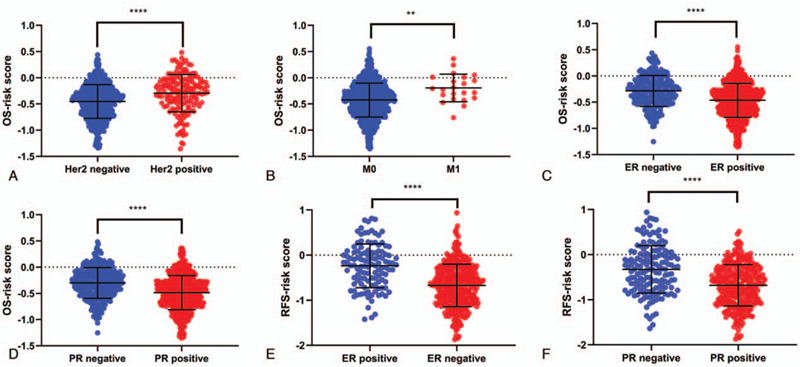
Breast cancer (BC) is a disease of high mortality rate because of high malignant, while early diagnosis and personal management may make a better prognosis possible. This study aimed to establish and validate lncRNAs signatures to improve the prognostic prediction for BC.RNA sequencing data along with the corresponding clinical information of patients with BC were gained from The Cancer Genome Atlas (TCGA). Prognostic differentially expressed lncRNAs were obtained using differentially expressed lncRNAs analysis (P value <.01 and |fold change| > 2) and univariate cox regression (P value <.05). By applying least absolute shrinkage and selection operation (LASSO) Cox regression analysis along with 10-fold cross-validation, 2 lncRNA-based signatures were constructed in the training, test and whole set.A 14-lncRNAs signature and a 10-lncRNAs signature were built for overall survival (OS) and relapse-free survival (RFS) respectively in the 3 sets. BC patients were divided into high-risk groups and low-risk groups depended on median risk score value. Significant differences were found for OS and RFS between 2 groups in the 3 sets. The time-dependent receiver operating characteristic (ROC) curves analysis demonstrated that our lncRNAs signatures had better predictive capacities of survival and recurrence for BC patients as well as enhancing the predictive ability of the tumor node metastasis (TNM) stage system.These results indicate that the 2 lncRNAs signatures with the potential to be biomarkers to predict the prognosis of BC for OS and RFS.
乳腺癌(BC)由于恶性程度高,是一种死亡率很高的疾病,而早期诊断和个体化管理可能使更好的预后成为可能。本研究旨在建立并验证长链非编码RNA(lncRNAs)特征,以改善对BC的预后预测。从癌症基因组图谱(TCGA)获取了BC患者的RNA测序数据以及相应的临床信息。使用差异表达lncRNAs分析(P值<.01且|倍数变化|>2)和单变量cox回归(P值<.05)获得预后差异表达lncRNAs。通过应用最小绝对收缩和选择算子(LASSO)Cox回归分析以及10倍交叉验证,在训练集、测试集和全集中构建了2个基于lncRNA的特征。在这3个数据集中,分别构建了一个由14个lncRNAs组成的特征和一个由10个lncRNAs组成的特征用于总生存期(OS)和无复发生存期(RFS)。根据中位风险评分值将BC患者分为高风险组和低风险组。在这3个数据集中,两组之间的OS和RFS存在显著差异。时间依赖性受试者工作特征(ROC)曲线分析表明,我们的lncRNAs特征对BC患者的生存和复发具有更好的预测能力,同时增强了肿瘤淋巴结转移(TNM)分期系统的预测能力。这些结果表明,这2个lncRNAs特征有潜力成为预测BC患者OS和RFS预后的生物标志物。