College of Veterinary Medicine, China Agricultural University, Beijing, China.
CAS Key Laboratory of Pathogenic Microbiology and Immunology, Institute of Microbiology, Chinese Academy of Sciences (CAS), Beijing, China.
mBio. 2020 Oct 6;11(5):e02315-20. doi: 10.1128/mBio.02315-20.
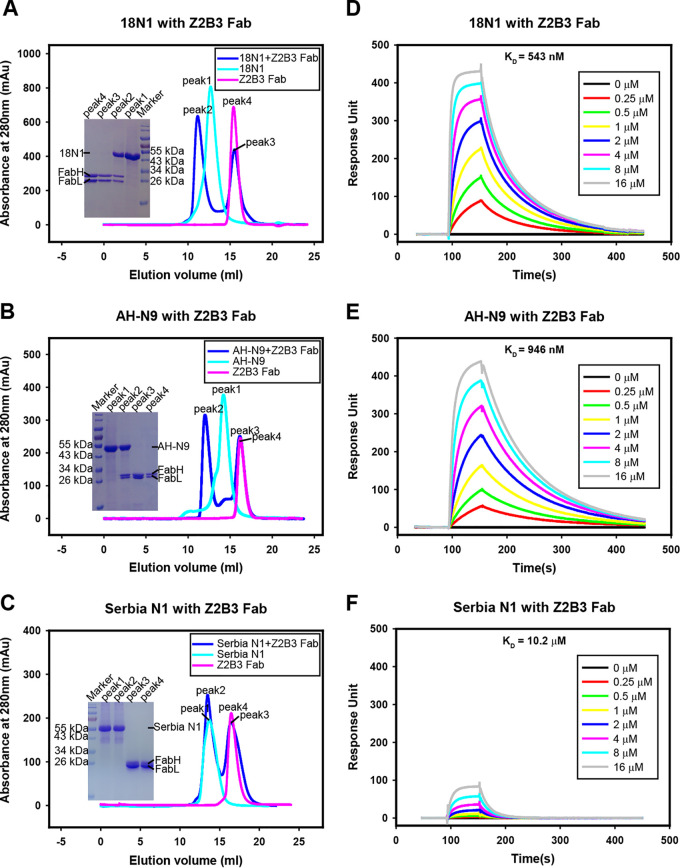
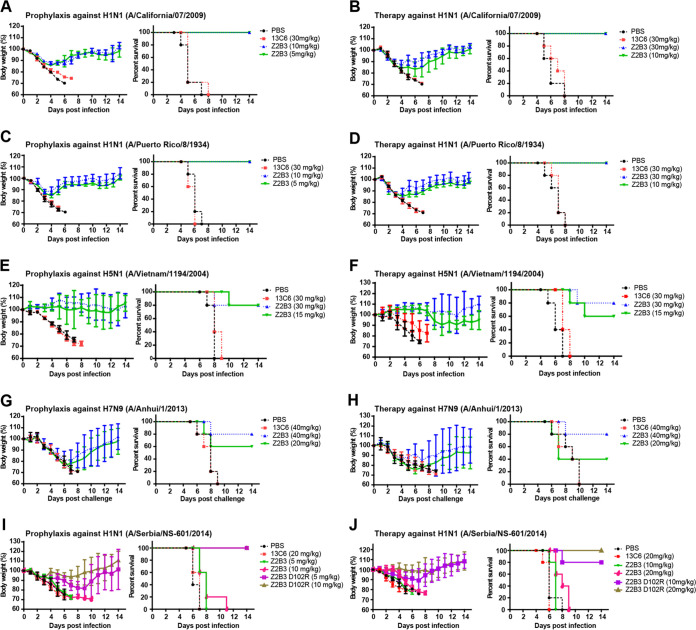
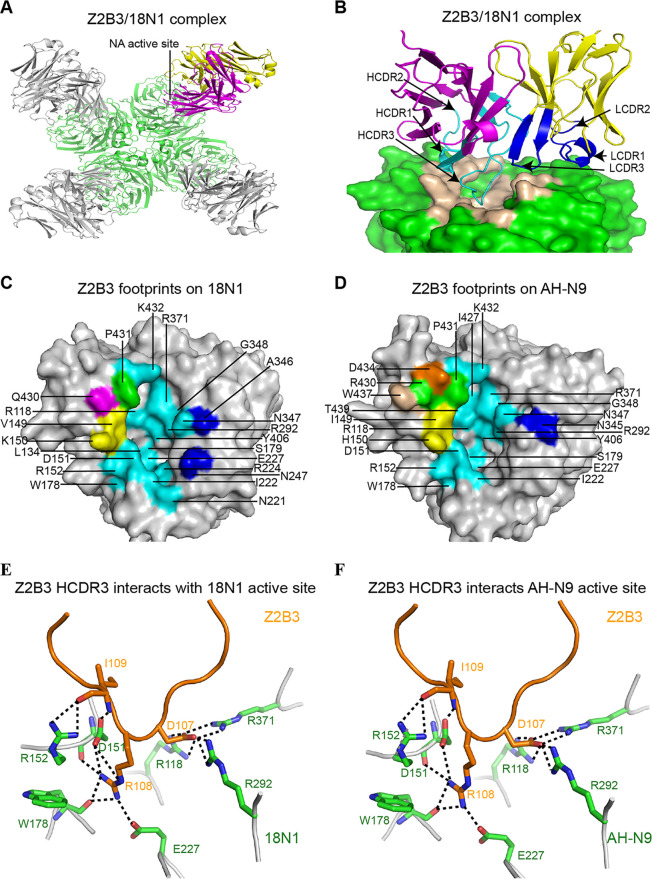
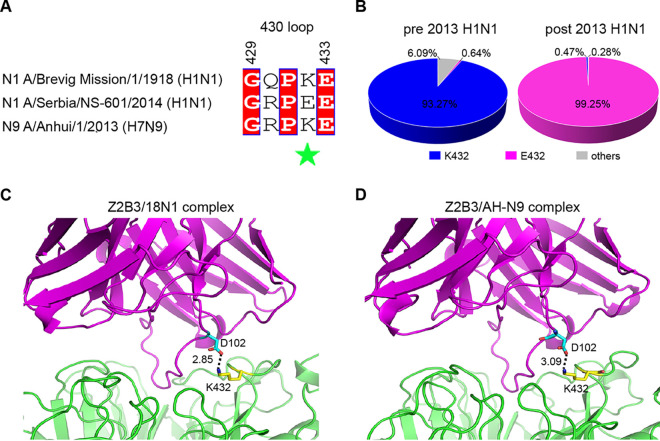
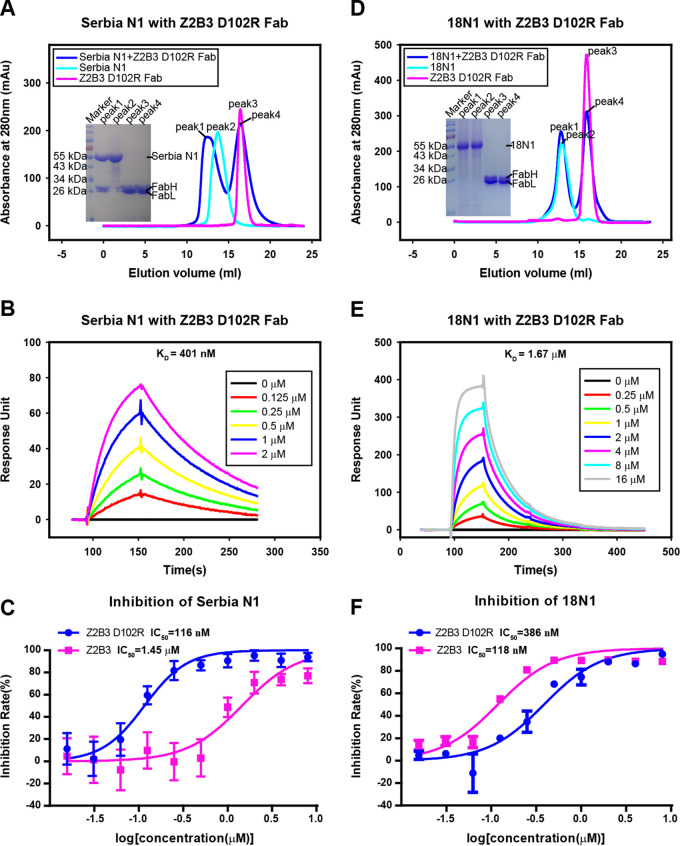
Here, we investigate a monoclonal antibody, Z2B3, isolated from an H7N9-infected patient, that exhibited cross-reactivity to both N9 (group 2) and a broad range of seasonal and avian N1 (group 1) proteins but lost activity to the N1 with the substitution K432E. This substitution exists in 99.25% of seasonal influenza strains after 2013. The NA-Z2B3 complex structures indicated that Z2B3 binds within the conserved active site of the neuraminidase (NA) protein. A salt bridge between D102 in Z2B3 and K432 in NA plays an important role in binding. Structure-based modification of Z2B3 with D102R in heavy chain reversed the salt bridge and restored the binding and inhibition of N1 with E432. Furthermore, Z2B3-D102R can protect mice from A/Serbia/NS-601/2014 H1N1 virus (NA contains E432) infection while the wild-type Z2B3 antibody shows no protection. This study demonstrates that a broadly reactive and protective antibody to NA can be in principle edited to restore binding and inhibition to recently drifted N1 NA and regain protection against the variant influenza strain. The immune system produces antibodies to protect the human body from harmful invaders. The monoclonal antibody (MAb) is one kind of effective antivirals. In this study, we isolated an antibody (Z2B3) from an H7N9 influenza virus-infected child. It shows cross-reactivity to both group 1 (N1) and group 2 (N9) neuraminidases (NAs) but is sensitive to N1 NA with a K432E substitution. Structural analysis of the NA-antibody fragment antigen-binding (Fab) complex provides a clue for antibody modification, and the modified antibody restored binding and inhibition to recently drifted N1 NA and regained protection against the variant influenza strain. This finding suggests that antibodies to NA may be a useful therapy and can be in principle edited to defeat drifted influenza virus.
在这里,我们研究了一种从 H7N9 感染患者中分离出来的单克隆抗体 Z2B3,它对 N9(第 2 组)和广泛的季节性和禽源 N1(第 1 组)蛋白均具有交叉反应性,但对 N1 的活性丧失,因为 N1 发生了 K432E 取代。该取代在 2013 年后存在于 99.25%的季节性流感株中。NA-Z2B3 复合物结构表明,Z2B3 结合在神经氨酸酶(NA)蛋白的保守活性位点内。Z2B3 中的 D102 与 NA 中的 K432 之间的盐桥在结合中起着重要作用。通过对 Z2B3 进行结构基础修饰,在重链中用 D102R 取代 D102,可逆转盐桥并恢复对 N1 的结合和抑制作用。此外,Z2B3-D102R 可以保护小鼠免受 A/塞尔维亚/NS-601/2014 H1N1 病毒(NA 含有 E432)感染,而野生型 Z2B3 抗体则没有保护作用。这项研究表明,可对具有广泛反应性和保护性的 NA 抗体进行编辑,以恢复对最近漂移的 N1 NA 的结合和抑制作用,并重新获得对变异流感株的保护。免疫系统产生抗体来保护人体免受有害入侵者的侵害。单克隆抗体(MAb)是一种有效的抗病毒药物。在这项研究中,我们从一名感染 H7N9 流感病毒的儿童中分离出一种抗体(Z2B3)。它对第 1 组(N1)和第 2 组(N9)神经氨酸酶(NA)均具有交叉反应性,但对具有 K432E 取代的 N1 NA 敏感。NA-抗体片段抗原结合(Fab)复合物的结构分析为抗体修饰提供了线索,修饰后的抗体恢复了对最近漂移的 N1 NA 的结合和抑制作用,并重新获得了对变异流感株的保护。这一发现表明,NA 抗体可能是一种有用的治疗方法,并且可在原则上进行编辑以击败漂移的流感病毒。