Department of Internal Medicine, School of Medicine, Keio University, 35 Shinanomachi, Shinjuku-ku, Tokyo, 160-8582, Japan.
Sci Rep. 2020 Oct 6;10(1):16626. doi: 10.1038/s41598-020-73638-4.
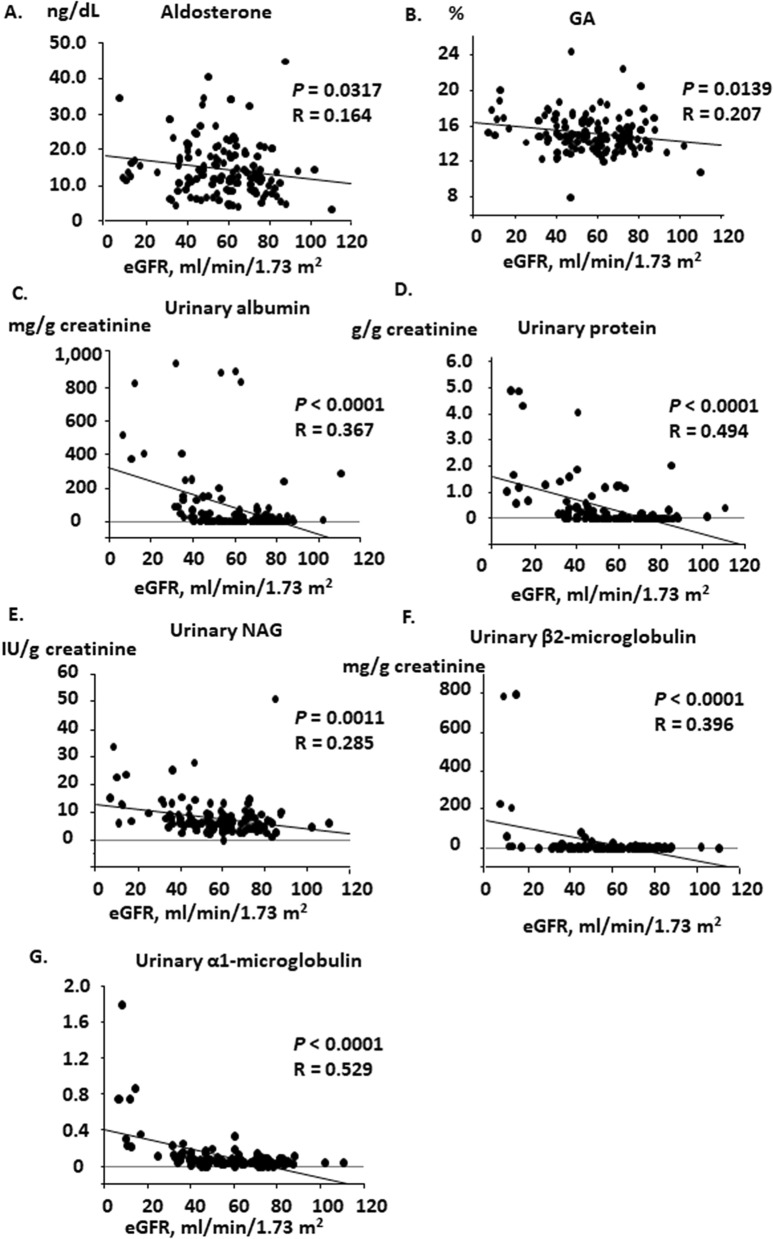
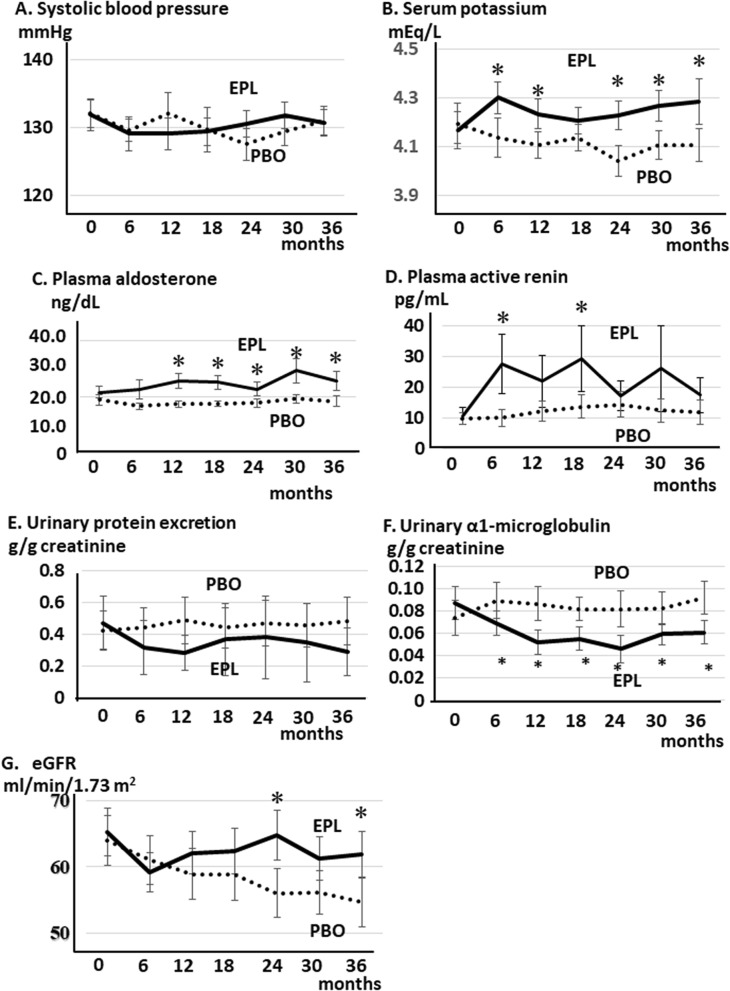
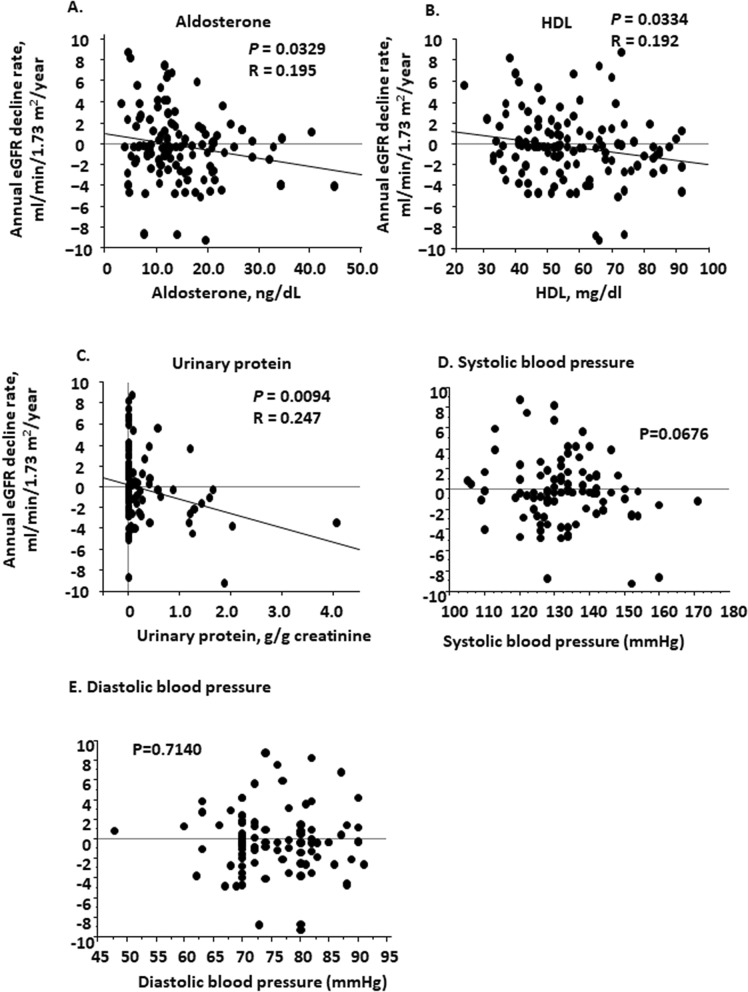
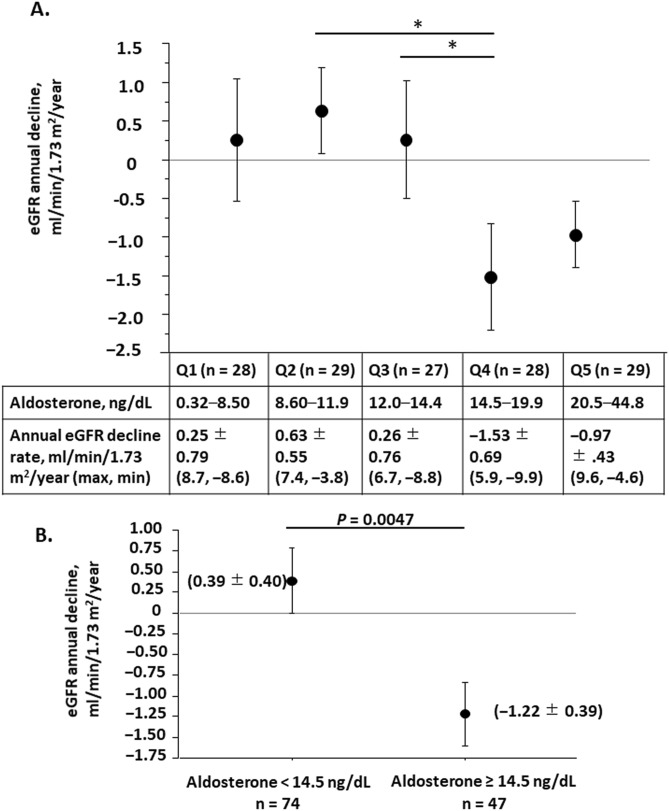
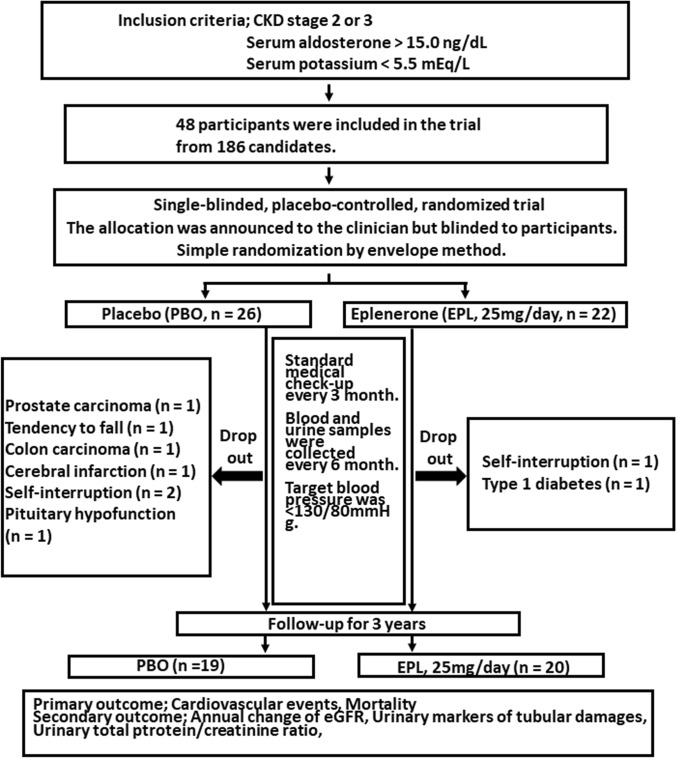
The progression of chronic kidney disease (CKD) cannot be completely inhibited. We first explored factors contributing to CKD progression in patients with CKD in a prospective observational study. In the next phase, we focused on the effects of aldosterone, conducting a single-blinded placebo-controlled study using the selective mineralocorticoid receptor antagonist (MRA), eplerenone (25 mg/day). We recruited patients with CKD stage 2 and 3 whose plasma aldosterone concentration was above 15 ng/dL based on the prior data of a prospective observational study. In the CKD cohort study (n = 141), baseline plasma aldosterone concentration was identified as an independent contributory factor for the future rate of change in estimated glomerular filtration rate (eGFR). When the cut-off value for aldosterone was set at 14.5 ng/dL, the decline rate was significantly higher in patients with higher plasma aldosterone concentration (- 1.22 ± 0.39 ml/min/1.73 m/year vs. 0.39 ± 0.40 ml/min/1.73 m/year, p = 0.0047). In the final intervention study, in the eplerenone group, eGFR dropped at 6 months after the initiation of the study, and thereafter eGFR was maintained until the end of the study. At 24 months and 36 months, eGFR was significantly higher in the eplerenone group than in the placebo group. In conclusion, MRA can be an effective strategy in preventing CKD progression, especially in patients with high plasma aldosterone.
慢性肾脏病(CKD)的进展无法完全抑制。我们首先在一项前瞻性观察研究中探索了 CKD 患者 CKD 进展的相关因素。在下一阶段,我们专注于醛固酮的作用,使用选择性盐皮质激素受体拮抗剂(MRA)依普利酮(25mg/天)进行了一项单盲安慰剂对照研究。我们招募了 CKD 2 期和 3 期的患者,其血浆醛固酮浓度根据前瞻性观察研究的先前数据超过 15ng/dL。在 CKD 队列研究(n=141)中,基线血浆醛固酮浓度被确定为估计肾小球滤过率(eGFR)未来变化率的独立影响因素。当醛固酮的截止值设定为 14.5ng/dL 时,血浆醛固酮浓度较高的患者的下降速度明显更快(-1.22±0.39ml/min/1.73m/年比 0.39±0.40ml/min/1.73m/年,p=0.0047)。在最终的干预研究中,在依普利酮组中,eGFR 在研究开始后 6 个月下降,此后 eGFR 一直维持到研究结束。在 24 个月和 36 个月时,依普利酮组的 eGFR 明显高于安慰剂组。总之,MRA 可能是预防 CKD 进展的有效策略,特别是在血浆醛固酮水平较高的患者中。