Yuan Chao, Zhang Ke, Yue Yaojing, Guo Tingting, Liu Jianbin, Niu Chune, Sun Xiaoping, Feng Ruilin, Wang Xiaolong, Yang Bohui
Sheep Breeding Engineering Technology Research Center, Lanzhou Institute of Husbandry and Pharmaceutical Sciences of Chinese Academy of Agricultural Sciences, Lanzhou, Gansu, China.
College of Animal Science and Technology, Northwest A&F University, Yangling, Shaanxi, China.
PeerJ. 2020 Sep 22;8:e9957. doi: 10.7717/peerj.9957. eCollection 2020.
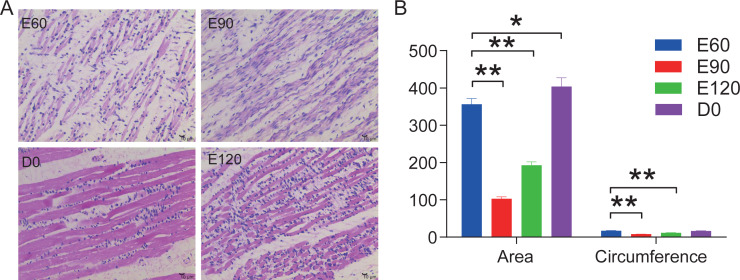
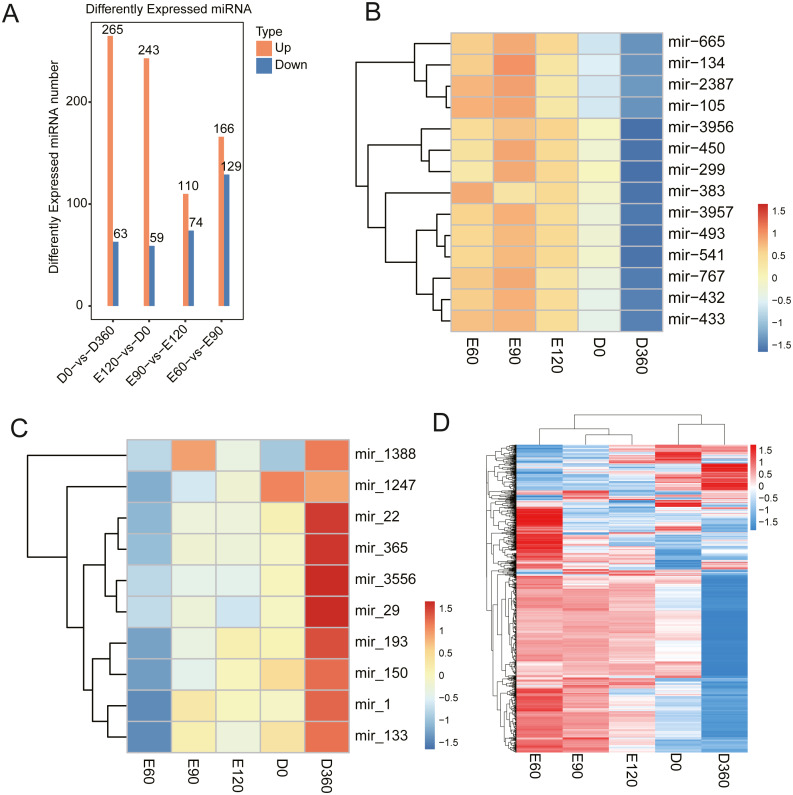
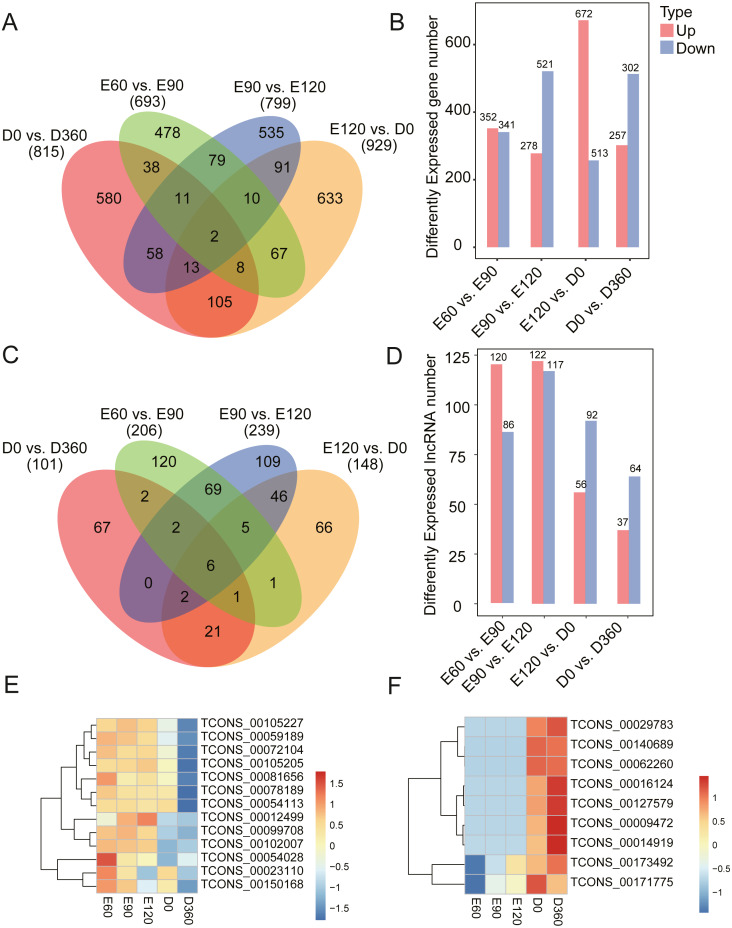
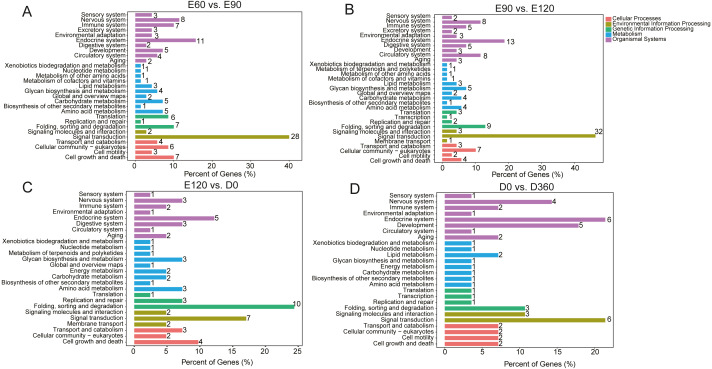
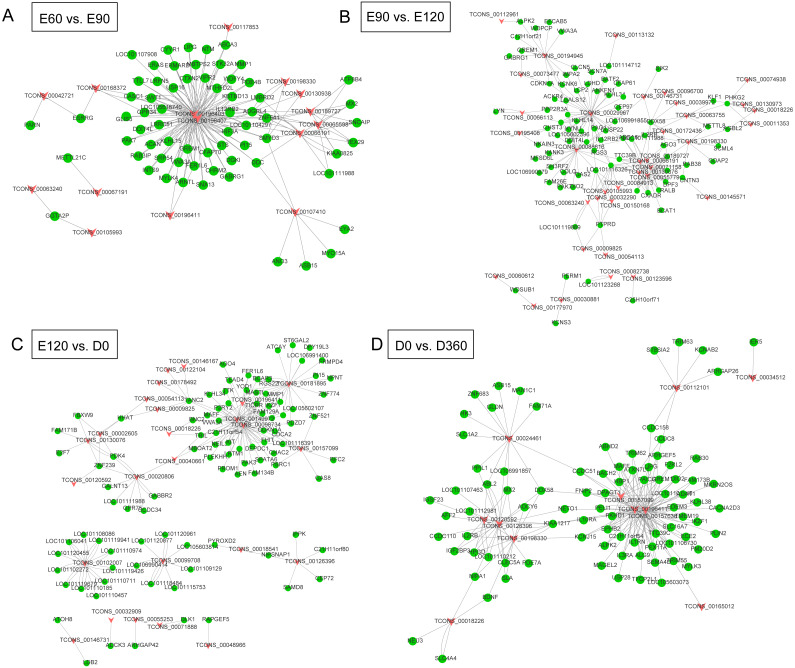
The sheep is an economically important animal, and there is currently a major focus on improving its meat quality through breeding. There are variations in the growth regulation mechanisms of different sheep breeds, making fundamental research on skeletal muscle growth essential in understanding the regulation of (thus far) unknown genes. Skeletal muscle development is a complex biological process regulated by numerous genes and non-coding RNAs, including microRNAs (miRNAs) and long non-coding RNAs (lncRNAs). In this study, we used deep sequencing data from sheep longissimus dorsi (LD) muscles sampled at day 60, 90, and 120 of gestation, as well as at day 0 and 360 following birth, to identify and examine the lncRNA and miRNA temporal expression profiles that regulate sheep skeletal myogenesis. We stained LD muscles using histological sections to analyse the area and circumference of muscle fibers from the embryonic to postnatal development stages. Our results showed that embryonic skeletal muscle growth can be characterized by time. We obtained a total of 694 different lncRNAs and compared the differential expression between the E60 vs. E90, E90 vs. E120, E120 vs. D0, and D0 vs. D360 lncRNA and gene samples. Of the total 701 known sheep miRNAs we detected, the following showed a wide range of expression during the embryonic stage: miR-2387, miR-105, miR-767, miR-432, and miR-433. We propose that the detected lncRNA expression was time-specific during the gestational and postnatal stages. GO and KEGG analyses of the genes targeted by different miRNAs and lncRNAs revealed that these significantly enriched processes and pathways were consistent with skeletal muscle development over time across all sampled stages. We found four visual lncRNA-gene regulatory networks that can be used to explore the function of lncRNAs in sheep and may be valuable in helping improve muscle growth. This study also describes the function of several lncRNAs that interact with miRNAs to regulate myogenic differentiation.
绵羊是一种具有重要经济价值的动物,目前主要致力于通过育种来提高其肉质。不同绵羊品种的生长调节机制存在差异,因此对骨骼肌生长进行基础研究对于理解(迄今为止)未知基因的调控至关重要。骨骼肌发育是一个受众多基因和非编码RNA调控的复杂生物学过程,包括微小RNA(miRNA)和长链非编码RNA(lncRNA)。在本研究中,我们使用了来自妊娠60天、90天和120天以及出生后0天和360天采集的绵羊背最长肌(LD)的深度测序数据,以鉴定和研究调控绵羊骨骼肌生成的lncRNA和miRNA的时间表达谱。我们使用组织学切片对LD肌肉进行染色,以分析从胚胎期到出生后发育阶段的肌纤维面积和周长。我们的结果表明,胚胎骨骼肌生长具有时间特征。我们总共获得了694种不同的lncRNA,并比较了E60与E90、E90与E120、E120与D0以及D0与D360的lncRNA和基因样本之间的差异表达。在我们检测到的总共701种已知绵羊miRNA中,以下几种在胚胎期表现出广泛的表达:miR-2387、miR-105、miR-767、miR-432和miR-433。我们提出,检测到的lncRNA表达在妊娠和出生后阶段具有时间特异性。对不同miRNA和lncRNA靶向的基因进行GO和KEGG分析表明,这些显著富集的过程和途径与所有采样阶段随时间变化的骨骼肌发育一致。我们发现了四个可视化的lncRNA-基因调控网络,可用于探索lncRNA在绵羊中的功能,可能有助于改善肌肉生长。本研究还描述了几种与miRNA相互作用以调节肌源性分化的lncRNA的功能。